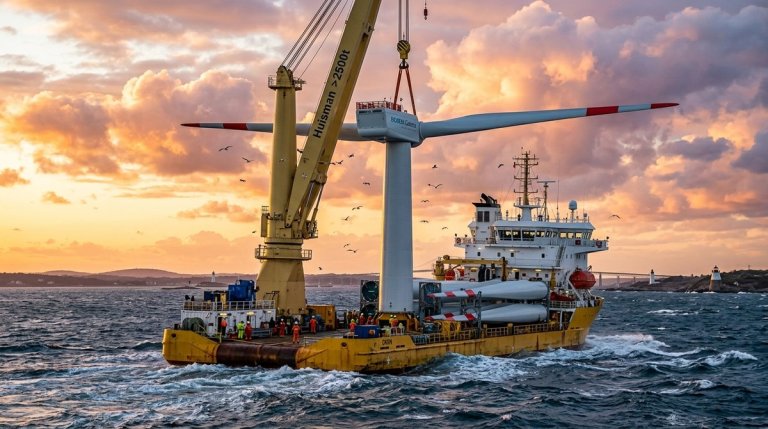

Permitting reform is a big, controversial bet for the energy transition
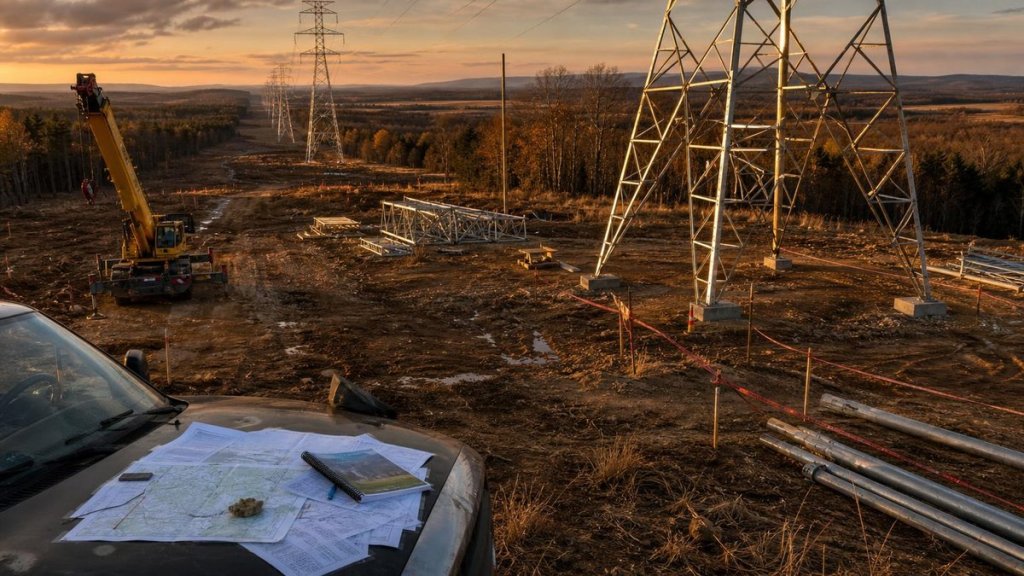
The last time Congress tried to pass a permitting reform bill, it collapsed under its own weight. Not because anyone loves the current system, but because fixing it means picking winners, and in energy policy, everyone has a different idea of who should win.
The stakes keep climbing. The U.S. needs transmission lines built faster than it has in decades. Wind and solar projects sit in queues for years. Paperwork drags on. The planet does not wait. Permitting reform keeps coming back in new packaging, backed by shifting coalitions, stuck on the same fight: speed versus scrutiny.
Why the Current System Grinds So Slowly
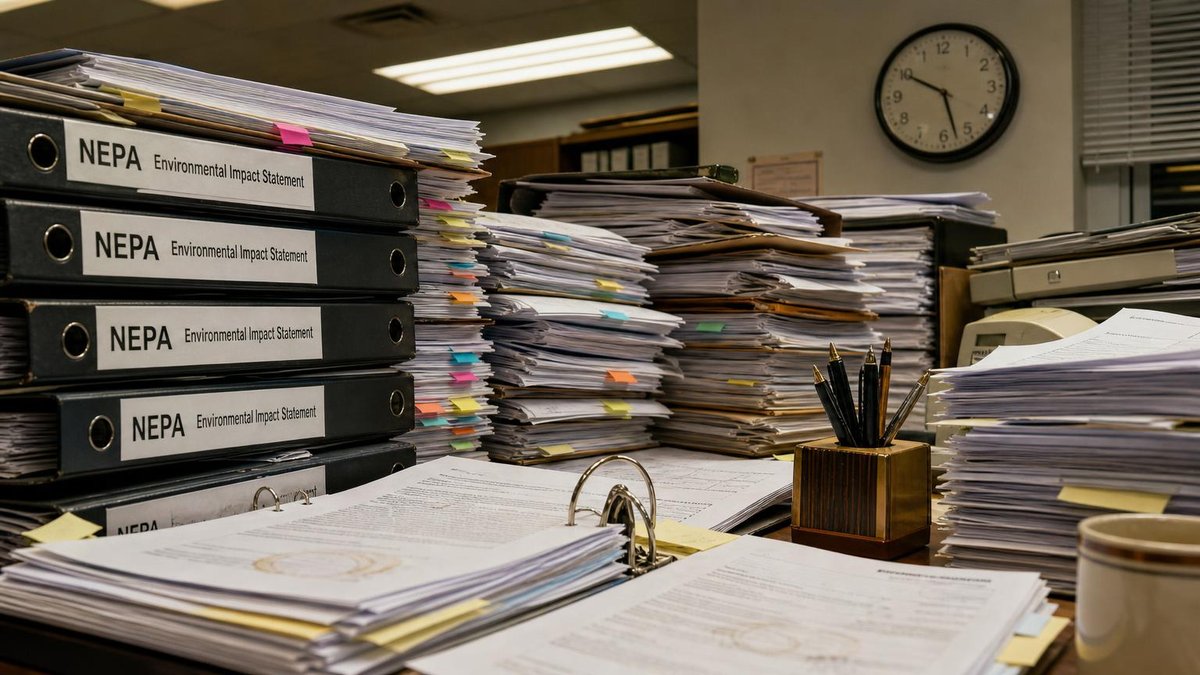
Building something big in America? You know the drill. Environmental impact statements. Comment periods. Agency consultations. Tribal consultations. State reviews running parallel to federal ones. NEPA, signed in 1970, forced real ecological thinking into planning. That worked. It also built a process that, per White House estimates, can swallow seven to ten years for major projects.
No single step is the problem. The stack is.
One transmission line might need sign-off from the Bureau of Land Management, the Forest Service, the Army Corps, state utility commissions, multiple tribal nations. Each runs its own calendar with its own triggers. Developers now bake half-decade waits into their financial models. Renewable delays have become that routine.
The milestone of clean energy reaching 40% of global electricity in 2024 makes the gap hard to ignore. Other countries move faster. The U.S. has the resources and the tech. What it lacks is bureaucratic bandwidth at deployment speed.
The Political Geography of Speed
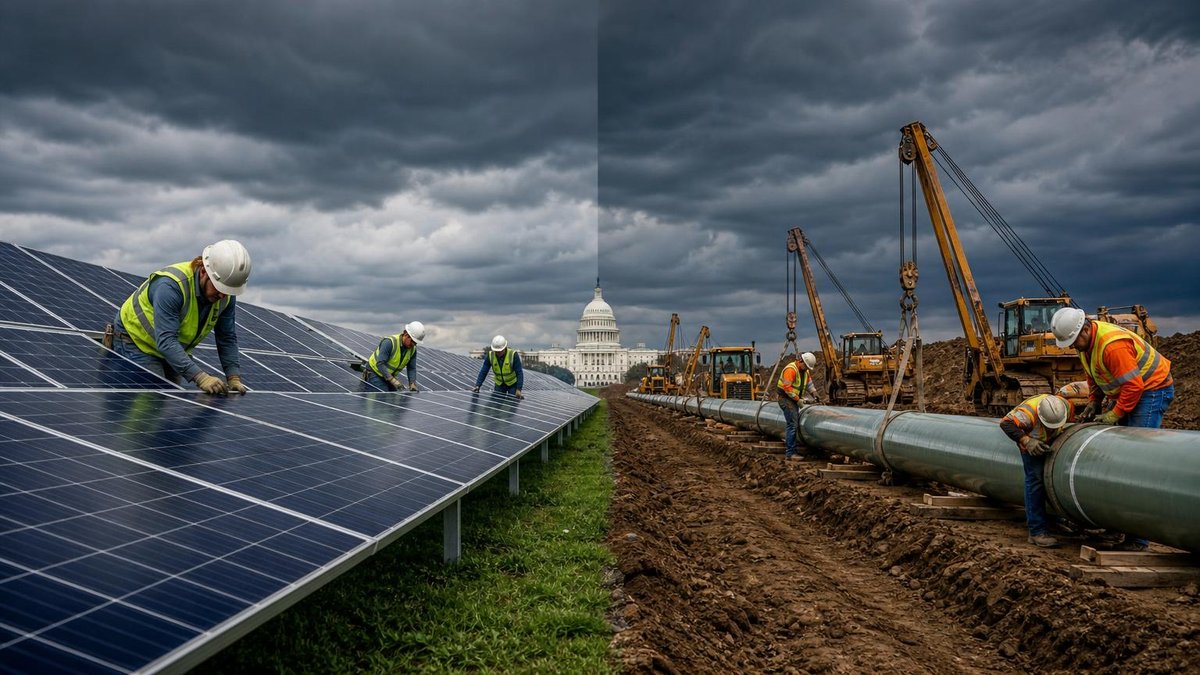
Here is where it gets complicated. Faster permitting sounds like an environmental win if it helps solar farms and offshore wind. It sounds like a loss if it helps natural gas pipelines or oil export terminals. This ambiguity has scrambled the usual political map.
Some environmental groups have come around to selective speeding up, particularly for transmission and renewables. Others remain deeply skeptical, arguing that streamlining energy project permits inevitably weakens community protections and tribal consultation. On the right, support for permitting reform often comes bundled with demands to limit judicial review or narrow the scope of environmental law.
Former Senator Joe Manchin of West Virginia became the face of this tension. His push for energy permitting reform, tied to the Inflation Reduction Act negotiations, collapsed in 2022 when progressive Democrats and Republicans combined to block it, though for opposite reasons. Progressives feared weakened environmental safeguards. Republicans, led by then-Majority Leader Mitch McConnell, were not about to hand Manchin a political victory. The permitting reform bill died. Manchin kept trying through 2023 and 2024, each attempt narrower than the last.
The broader lesson: permitting reform congress dynamics are less about energy policy than about trust. No coalition currently trusts the others not to tilt the process toward their preferred outcomes.
What Reform Actually Looks Like on Paper
Despite the political paralysis, there is surprising agreement on what needs fixing. The disagreement is over what to trade away to get there.
Most proposals hit a few recurring notes. Hard deadlines for environmental reviews. More federal authority over interstate transmission, displacing the patchwork of state-by-state approval. Tighter limits on judicial challenges, which can stall projects for years after permits technically clear. Nearly everyone wants more staff and funding for reviewing agencies; backlogs are partly a resource problem, after all.
The table below compares major legislative approaches that have surfaced in recent years, drawing on Congressional Research Service and Department of Energy analyses of the federal permitting landscape.
| Proposal element | Typical proponent position | Typical opponent concern |
|---|---|---|
| NEPA review time limits | Reduces uncertainty for developers; projects move faster to construction | Rushed analysis misses cumulative impacts; courts reject records anyway |
| Federal transmission siting authority | Overcomes state-level veto of interstate lines critical for grid reliability | Preempts state environmental standards and local land use control |
| Judicial review limits | Stops litigation from becoming a second permitting process | Removes accountability mechanism; affected communities lose recourse |
| Agency funding increases | Hires staff to process applications faster without cutting corners | Funding can be redirected; does not address statutory complexity |
The work of policy researchers like Leah Stokes has shown how these design choices shape what actually gets built. A process that speeds everything equally might accelerate renewables, or it might just as easily lock in fossil infrastructure for another generation. The details matter enormously.
Transmission: The Narrower Front

If broad permitting reform is stuck, transmission permitting reform news suggests a narrower opening. The Federal Energy Regulatory Commission has used existing authority to push some changes, including Order 2023, which reforms how generators connect to the grid. But FERC cannot unilaterally solve siting. For that, Congress would need to act.
The case for transmission-specific fixes is easier to make in climate terms. Every major decarbonization study, from Princeton’s Net-Zero America to the National Renewable Energy Laboratory’s work, finds that high-voltage transmission expansion is a bottleneck. Without it, the cheapest clean energy stays stranded in windy plains and sunny deserts, while coastal load centers keep burning gas.
Transmission line approval challenges stay stubbornly local, though. Farmers do not want towers across their fields. Suburban neighborhoods fight substations. Tribal nations raise valid concerns about sacred sites and treaty rights. The environmental review reform debate pits these ground-level objections against national climate goals. No procedural tweak dissolves that tension.
A few states have tested their own fixes. Texas, running a partially isolated grid, created competitive renewable energy zones that streamlined transmission for wind development. Costs dropped. Deployment jumped. Texas also ran weak land use regulation and thin environmental review. Other states see that tradeoff and balk.
The Bipartisan Mirage and the Partisan Reality
Every few months, someone announces a breakthrough on bipartisan energy policy legislation. The reality is more modest. There are individual Republicans and Democrats who want faster permitting. But the party structures, and their respective bases, are not aligned.
Republican permitting reform proposals often emphasize limiting NEPA, narrowing standing for lawsuits, and accelerating fossil fuel export infrastructure. Democratic proposals tend to pair speed with labor standards, community benefit requirements, and explicit preferences for clean energy. The overlap is real but thin.
The Energy Permitting Reform Act of 2024, introduced by Manchin and others, tried to thread this needle. Transmission provisions. Some NEPA deadlines. Agency staff funding. It took fire from both sides. Environmental justice groups said it shortchanged disadvantaged communities. Conservative Republicans wanted more fossil fuel access. No floor vote ever happened.
The framing shift is hard to miss. Ten years back, permitting reform read as an industry talking point. Now it sits at the center of climate strategy. The Biden administration’s $6 billion investment in clean energy manufacturing only tightens the screws. Subsidizing factories makes little sense if the projects they feed cannot get permitted.
What Happens If Nothing Changes
Status quo is itself a choice, and it has consequences. The Department of Energy has documented interconnection queues stretching past 2,000 gigawatts of proposed generation and storage, much of it solar and wind. Not all will be built. But the wait times, often five years or more, kill projects that would otherwise make economic sense.
Climate targets keep slipping out of reach. The U.S. pledged 100% clean electricity by 2035. That is barely ten years out. Hitting it means deciding now, permitting soon, building already. The math is brutal.
Developers hunt workarounds. Smaller projects that trigger lighter review. Battery storage, which permits faster than transmission. States building their own streamlined tracks. None of it replaces systemic federal change.
Frequently Asked Questions
The basics of permitting reform
What is permitting reform, and why does it matter for clean energy?
Permitting reform refers to changes in the laws and procedures that govern how major infrastructure projects get government approval. For clean energy, it matters because the current process can take five to ten years for large projects, creating renewable energy project delays that slow the transition away from fossil fuels. Without reform, the U.S. is unlikely to build transmission and generation fast enough to meet its climate commitments.
Is permitting reform only about environmental rules?
No. While environmental review under NEPA gets the most attention, delays also come from:
- Multiple agencies with overlapping jurisdiction
- Lack of coordinated federal and state processes
- Insufficient agency staffing and funding
- Legal challenges that extend well beyond the initial review period
- Complex tribal consultation requirements without clear timelines
Politics and current legislative prospects
What happened to Joe Manchin’s energy permitting reform efforts?
Manchin negotiated a permitting reform bill as part of the 2022 Inflation Reduction Act deal, but it failed when progressive Democrats and Republicans both opposed it for different reasons. He continued pushing narrower versions through 2023 and 2024, including the Energy Permitting Reform Act of 2024, without success. His retirement from the Senate at the end of 2024 ended that particular legislative path.
Is there any bipartisan agreement on transmission permitting reform?
Transmission sees more cross-party alignment than permitting broadly. Not enough to pass anything, though. Grid reliability concerns give both parties skin in the game. Republicans generally lean toward preempting state siting authority. Democrats usually insist on attaching labor standards and environmental justice protections. That gap has blocked every attempt at consensus.
What is the latest permitting reform news today?
As of early 2025, major legislative action remains stalled in Congress. The Trump administration has signaled interest in executive actions to accelerate energy infrastructure, though courts have blocked some previous attempts. Transmission permitting reform news focuses more on incremental FERC actions and state-level experiments than on comprehensive federal legislation.
Does permitting reform help fossil fuels more than renewables?
This is the core political dispute. A genuinely neutral process that speeds all projects equally would likely help both. But the location of renewable resources, far from population centers, makes transmission expansion especially critical for clean energy. Some environmental advocates argue that any reform broad enough to help also risks accelerating fossil fuel projects. Others counter that the climate math requires taking that risk.
Sources
- Congressional Research Service, 2023, “Federal Permitting and Environmental Review for Energy and Infrastructure Projects,” https://crsreports.congress.gov/product/pdf/IF/IF11549
- U.S. Department of Energy, 2023, “National Transmission Needs Study,” https://www.energy.gov/oe/articles/doe-releases-national-transmission-needs-study
- White House Council on Environmental Quality, 2023, “NEPA Implementation: Final Rule,” https://www.whitehouse.gov/ceq/news-updates/2023/04/19/ceq-issues-final-rule-to-more-efficiently-and-effectively-implement-nepa/
- Federal Energy Regulatory Commission, 2023, “Order No. 2023: Improvements to Generator Interconnection Procedures and Agreements,” https://www.ferc.gov/news-events/news/ferc-issues-final-rule-reform-generator-interconnection-procedures
- Princeton University Net-Zero America Project, 2021, “Net-Zero America: Potential Pathways, Infrastructure, and Impacts,” https://netzeroamerica.princeton.edu/
- U.S. Department of Energy, Office of Policy, 2022, “Queued Up: Characteristics of Power Plants Seeking Transmission Interconnection,” https://www.energy.gov/oe/articles/queued-characteristics-power-plants-seeking-transmission-interconnection
This article is for informational purposes only.
Reference: https://www.canarymedia.com/articles/politics/permitting-reform-uncertain-bet

Dr. Alexander Tabibi is an entrepreneur, investor, and advocate for sustainable innovation with a deep commitment to leveraging technology for environmental and social good. As a thought leader at the intersection of business and sustainability, Dr. Tabibi brings a strategic vision to Green.org, helping guide its mission to inspire global climate awareness and actionable change.
With a background in both medicine and business, Dr. Tabibi combines analytical rigor with entrepreneurial insight.