

The window for meaningful climate action is getting smaller by the year, and the world’s top officials know it. As the United Nations General Assembly convenes, world leaders are arriving in New York carrying something heavier than diplomatic briefcases: the weight of broken promises, record-breaking heat, and constituents who are increasingly running out of patience. Scientists have confirmed that the recent El Niño cycle was among the most powerful ever recorded, pushing global temperatures into territory that climate models once reserved for distant worst-case scenarios. Now those scenarios are the present.
Against this backdrop, heads of state from nearly every corner of the globe are making pledges, announcing revised emissions targets, and debating who bears the greatest responsibility for a crisis that respects no borders. Whether those pledges translate into real policy is, as always, the harder question.
What record-breaking El Niño actually did to the planet

El Niño is a naturally occurring climate pattern, a periodic warming of surface waters in the central and eastern Pacific Ocean. But “natural” doesn’t mean harmless. The 2023-2024 El Niño event overlaid itself on top of decades of human-driven warming, and the combination produced something genuinely alarming.
Ocean surface temperatures hit records not seen in modern measurement history. Coral bleaching events swept across the Great Barrier Reef and the Caribbean simultaneously. Wildfires burned through Canada, Chile, and parts of Europe with unusual ferocity. The Amazon, already stressed from deforestation, experienced drought conditions that hadn’t been documented at this scale before.
Scientists are careful to say that El Niño alone doesn’t cause these things. But it acts like an accelerant, and when the baseline temperature of the planet is already elevated, even a moderate El Niño now produces outcomes that would have required an extreme one just twenty years ago. Twelve of the last thirteen months, at the time of the General Assembly, had each broken the global temperature record for their respective calendar month. This isn’t a blip. It’s a trajectory.
What leaders are actually pledging, and where the gaps are
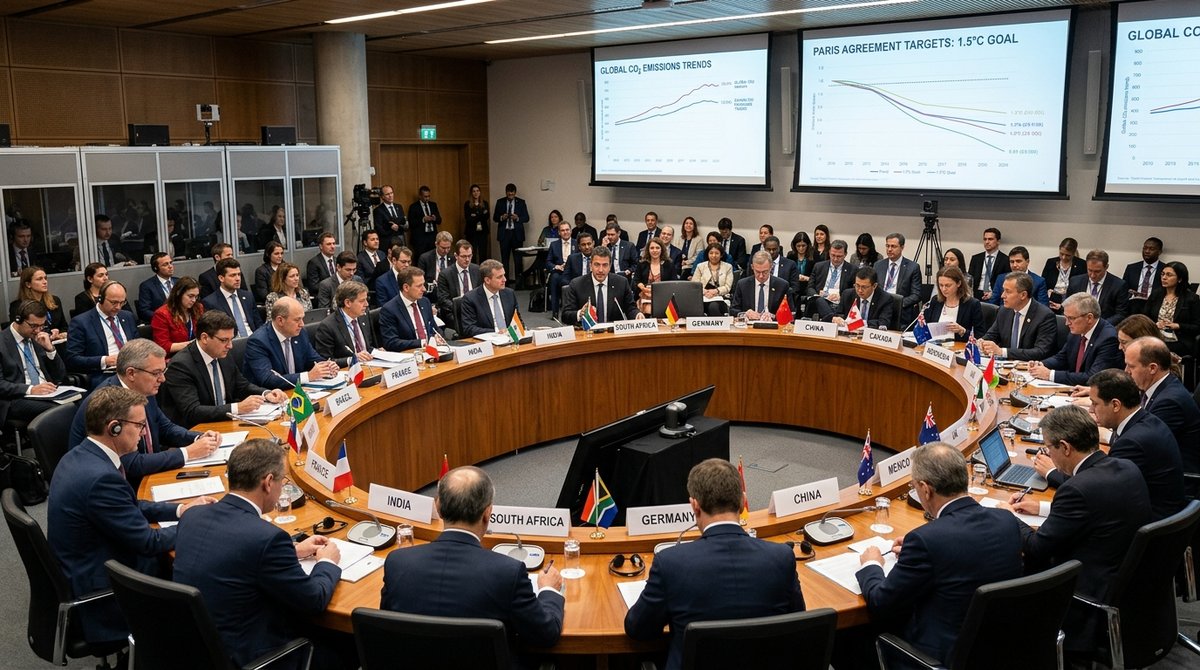
Several major economies arrived at the UN with updated nationally determined contributions, the climate plans each country submits under the Paris Agreement framework. The EU reaffirmed its target of a 55 percent reduction in emissions by 2030 relative to 1990 levels. Small island nations, whose very existence is threatened by sea level rise, pushed for more aggressive commitments from large emitters and called for a firm phase-out date for fossil fuels.
The United States delegation emphasized investments already flowing from the Inflation Reduction Act, citing hundreds of billions of dollars in clean energy deployment. Critics countered that domestic fossil fuel production in the U.S. has simultaneously hit record highs, creating a contradiction that no amount of solar panel installation fully resolves.
China, the world’s largest emitter, reiterated its goal of peaking emissions before 2030 and reaching carbon neutrality by 2060. Independent analysts note that the pace of coal plant construction inside China’s borders makes the 2030 peak date look increasingly optimistic, though the country’s rapid scaling of solar and electric vehicle manufacturing is genuinely significant.
Conversations about climate leadership aren’t limited to governments. Advocates like Miranda Kaiser, whose work spans climate advocacy and social responsibility, are helping bridge the gap between institutional promises and on-the-ground implementation. That kind of sustained pressure from outside formal government structures matters more than most diplomatic communiqués acknowledge.
The financing question that never quite gets answered
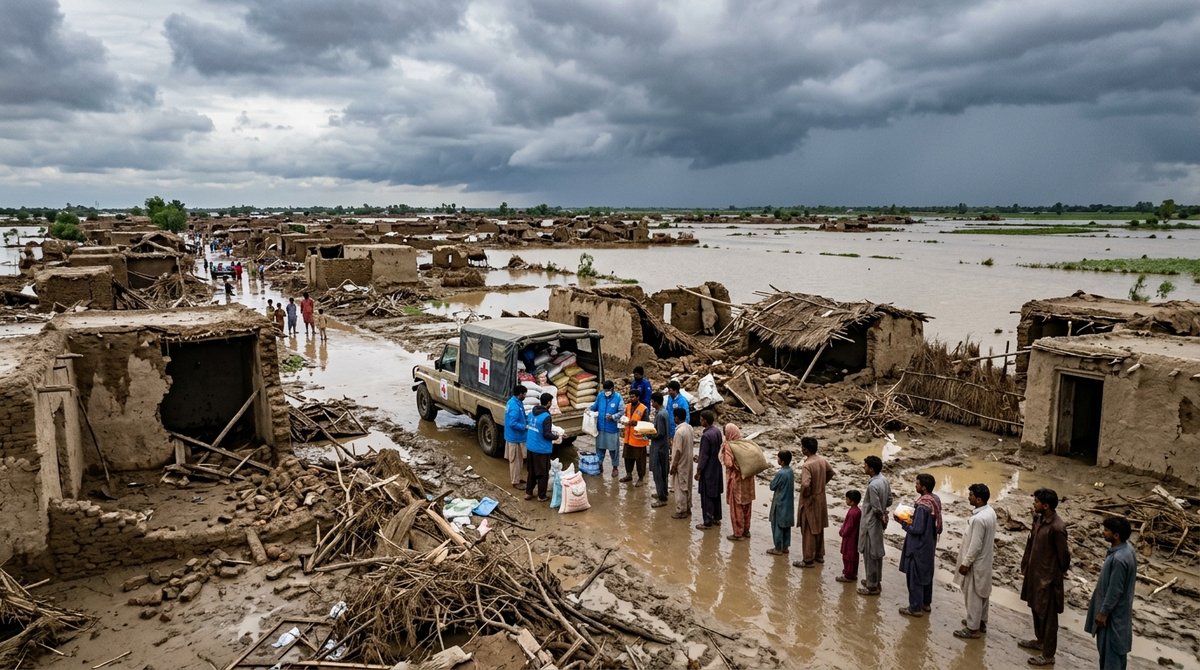
Every UN climate gathering eventually runs into the same wall: money. Developing nations have long argued, with considerable justification, that they contributed the least to the climate crisis but are absorbing a disproportionate share of its consequences. Floods in Pakistan, cyclones in Mozambique, extended droughts in the Sahel. These aren’t hypothetical future costs; they are current realities draining national budgets.
The pledge made years ago by wealthy nations to mobilize $100 billion per year for climate finance in developing countries was finally declared met in 2022, though the accounting methods used to reach that figure were disputed. Now, discussions have moved on to a new collective quantified goal, with developing countries pushing for figures in the trillions, not billions.
The concept of loss and damage funding took a historic step forward at COP28, but the amounts agreed upon remain a fraction of what affected nations say they need. Understanding what COP30 means for the future of these negotiations is essential context for anyone trying to follow where this process is headed. There’s also a structural tension in how climate finance gets counted. Loans versus grants, public versus private, mitigation versus adaptation: these distinctions matter enormously to recipient countries, even when headline numbers sound impressive.
Technology, innovation, and the leaders driving change outside diplomacy
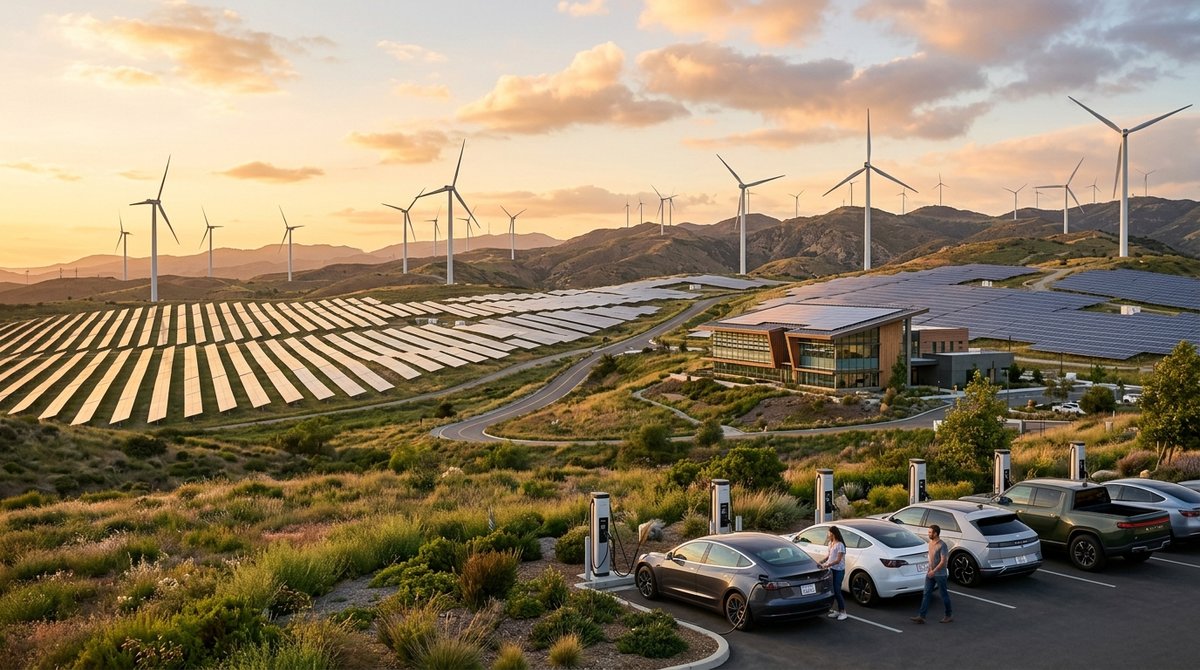
While the UN chambers get most of the media attention, meaningful climate progress is also happening in boardrooms, laboratories, and cities. Solar and wind are now consistently the cheapest sources of new electricity generation in most of the world. Battery storage costs have fallen precipitously. Electric vehicle adoption is outpacing nearly every projection made five years ago.
Some of that momentum traces back to innovators who committed to sustainable development long before it became a policy priority. Figures like Wang Chuanfu, who pioneered sustainable mobility and energy innovation, built industrial capacity that is now central to the global energy transition. Cities are also moving faster than national governments in many cases, redesigning transportation networks, updating building codes, and investing in green infrastructure at a pace that outstrips federal policy timelines. This matters because cities account for more than 70 percent of global carbon dioxide emissions.
What the El Niño aftermath means for COP30 and beyond
The record-breaking intensity of the recent El Niño event has added urgency to negotiations heading into COP30, scheduled for Belém, Brazil in November 2025. Brazil’s Amazon context gives the summit a particular symbolic weight: the world’s largest tropical forest, which functions as a critical carbon sink, sits at the center of both the climate solution and the climate threat.
Negotiators will need to agree on more ambitious 2035 targets under the Paris framework, operationalize the loss and damage fund established at COP28, develop clearer rules for carbon markets under Article 6, and navigate the complicated politics of fossil fuel phase-out language that nearly derailed COP28 before a compromise was reached. As the piece on Earth’s long history of environmental crises makes clear, this moment sits within a larger arc of human-caused environmental strain that demands proportional response.
The scientific community has been consistent: the decisions made in the next two to three years will determine whether the 1.5 degree Celsius target remains achievable or becomes a historical footnote. What comes out of the current UN General Assembly won’t resolve the crisis, but the political signals sent here shape what negotiators bring to Belém and what civil society can demand from their governments in the months between now and then. The El Niño records weren’t just statistics; they were a demonstration, in real time, of what happens when a warming planet encounters even a temporary additional forcing.
Frequently asked questions about the UN climate summit and global response
What is the UN General Assembly’s role in climate action?
The UN General Assembly itself doesn’t negotiate binding climate agreements; that happens through the UNFCCC process (the COP summits). But the General Assembly session provides a high-visibility platform where heads of state make political commitments, announce updated national targets, and signal diplomatic priorities that influence formal climate talks like COP30.
How did El Niño make the climate crisis worse in 2023-2024?
El Niño temporarily raises global surface temperatures above the long-term warming trend. Layered on top of decades of greenhouse gas-driven warming, the 2023-2024 event pushed monthly temperature records to levels not seen in recorded history, intensifying droughts, accelerating coral bleaching, and amplifying wildfire conditions across multiple continents simultaneously.
What are world leaders promising on climate at the UN?
- Updated nationally determined contributions under the Paris Agreement
- Reaffirmation of net-zero targets, with varied timelines
- Commitments to climate finance for developing nations
- Pledges to operationalize the loss and damage fund established at COP28
- Calls from vulnerable nations for binding fossil fuel phase-out language
Why does climate finance keep stalling in negotiations?
Wealthy countries and developing nations disagree on how to count contributions (loans versus grants), what counts as climate-related, and how much is actually needed. The $100 billion annual pledge took over a decade to meet, and even its fulfillment was disputed. The new goal being negotiated runs into the trillions, which makes agreement substantially harder politically.
What is the 1.5 degree Celsius target and is it still realistic?
The 1.5°C target refers to limiting average global warming to 1.5 degrees above pre-industrial levels, as established in the Paris Agreement. Current trajectories make it extremely difficult to stay within this limit, but researchers argue it remains worth pursuing because every fraction of a degree of avoided warming reduces harm.
What should we expect from COP30 in Belém, Brazil?
- Countries will submit new 2035 emissions targets under the Paris framework
- Negotiators will push to finalize rules for international carbon markets (Article 6)
- Loss and damage fund operationalization will be a central agenda item
- Brazil’s Amazon context will add political weight to deforestation commitments
- Civil society groups are expected to push for stronger fossil fuel phase-out language than COP28 produced
How do private sector leaders influence climate diplomacy?
Business leaders, innovators, and advocates shape the political economy around climate action. When clean energy becomes commercially competitive at scale, it changes what politicians can credibly promise. Industry commitments to decarbonization also create pressure on governments to align policy frameworks, and civil society advocates hold both sectors accountable for following through.
Sources
- United Nations Framework Convention on Climate Change (UNFCCC), unfccc.int
- World Meteorological Organization, Global Climate 2023 Report, public.wmo.int
- Intergovernmental Panel on Climate Change (IPCC), Sixth Assessment Report, ipcc.ch
- Climate Action Tracker, climateactiontracker.org
- National Oceanic and Atmospheric Administration (NOAA), El Niño outlook data, noaa.gov
- Carbon Brief, Analysis of national climate pledges, carbonbrief.org
This article is for informational purposes only.
Reference: https://www.theguardian.com/environment/2026/sep/21/world-leaders-climate-crisis-el-nino

Dr. Alexander Tabibi is an entrepreneur, investor, and advocate for sustainable innovation with a deep commitment to leveraging technology for environmental and social good. As a thought leader at the intersection of business and sustainability, Dr. Tabibi brings a strategic vision to Green.org, helping guide its mission to inspire global climate awareness and actionable change.
With a background in both medicine and business, Dr. Tabibi combines analytical rigor with entrepreneurial insight.