

Antarctica holds enough frozen water to reshape the world’s coastlines permanently. Among its many glaciers, one stands out as a focal point of urgent scientific concern: the Thwaites Glacier, a colossal mass of ice roughly the size of Florida or Great Britain. Now think about that mass of water entering the oceans.
Scientists, journalists, and policy experts have long referred to it as the “doomsday glacier,” a nickname that first appeared in Rolling Stone magazine in 2017 – and while that label is alarming – it is grounded in real and measurable data. Recent findings suggest that a critical section of the glacier – its floating ice shelf – could detach at virtually any moment, accelerating a chain of events that would threaten coastal cities across the globe – bye bye Venice 🙁
What Makes Thwaites So Significant?
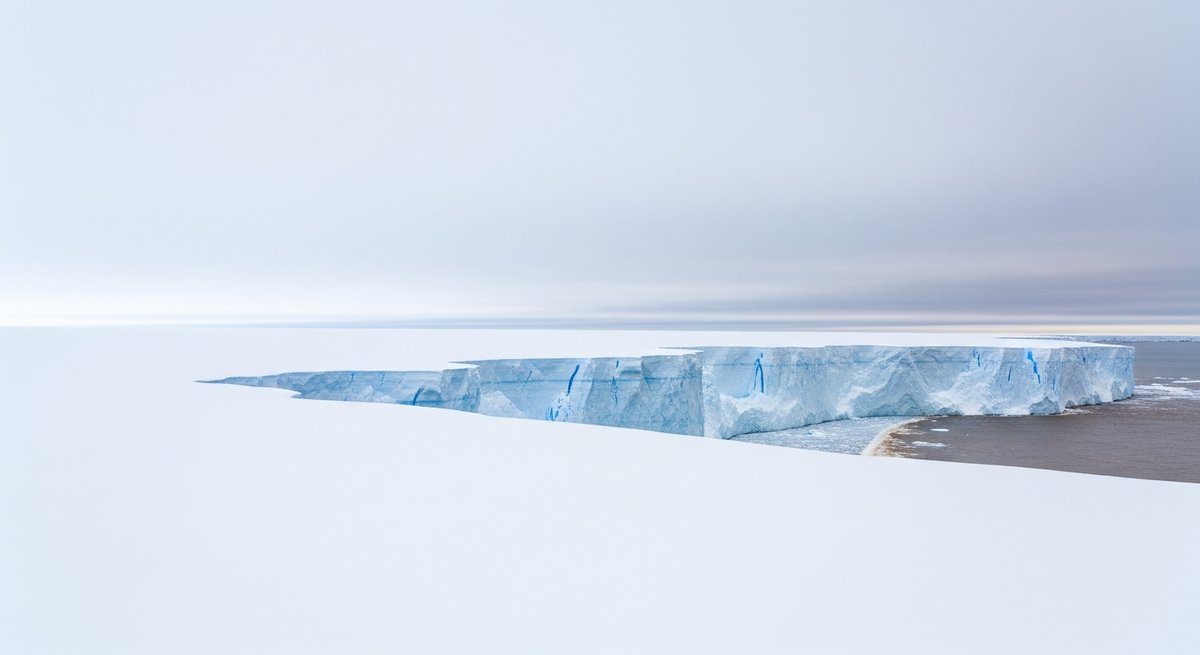
To understand the scale of the threat, it helps to picture Antarctica as a continent buried under ice roughly two kilometers thick. Thwaites is not operating under stable conditions and has been losing ice at an extraordinary rate, driven largely by shifts in ocean circulation that are allowing warmer water – still cold by human standards, around plus one degree Celsius, but three degrees above the freezing point of seawater – to creep beneath the glacier and melt it from below.
What makes Thwaites particularly vulnerable is its geography in that the glacier rests on bedrock that lies below sea level, making it especially susceptible to the intrusion of warm ocean water. Alongside its neighbor, Pine Island Glacier, Thwaites has been described as the “weak underbelly” of Antarctica. Together, they represent a potential tipping point for the entire West Antarctic Ice Sheet.
For a deeper look at how the Thwaites Glacier has developed into one of the defining climate threats of our era, see our earlier report on the doomsday glacier and its impact on sea level rise.
The Ice Shelf Is About to Break Away
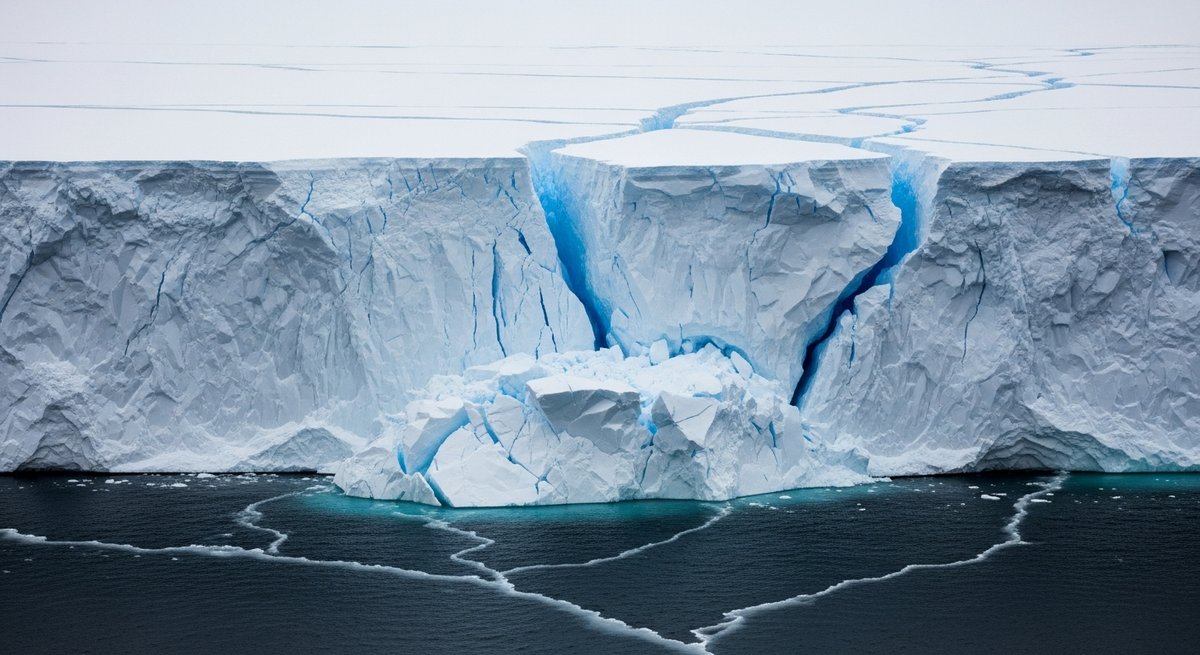
At the front of the Thwaites Glacier, a floating tongue of ice known as an ice shelf extends out over the ocean. This shelf plays a critical buttressing role, slowing the flow of inland ice toward the sea. In the past, it was anchored to a raised ridge on the ocean floor – essentially a natural doorstop – that kept it in place. That anchoring has failed, and as a result the shelf has lost much of its ability to hold back the glacier behind it.
The Thwaites ice shelf is approximately 1,500 square kilometers in area and around 350 meters thick. According to scientists who have recently studied it, massive rifts and crevasses have been forming across the shelf at a rate that has shocked even experienced glaciologists. One researcher described it as watching a windshield shatter in slow motion. Another, Karen Alley of the University of Manitoba, says that satellite images of the glacier now look completely unrecognizable compared to six years ago due to the fracturing.
The ice shelf could detach at any time and satellites capable of imaging the glacier pass overhead only every six to twelve days, meaning scientists check the latest images with the expectation that a dramatic rupture may have already occurred. When the moment comes, the enormous rifts running through the shelf will connect and the floating section will sever from the main glacier, likely breaking into multiple large fragments.
Why the Collapse Would Trigger a Domino Effect
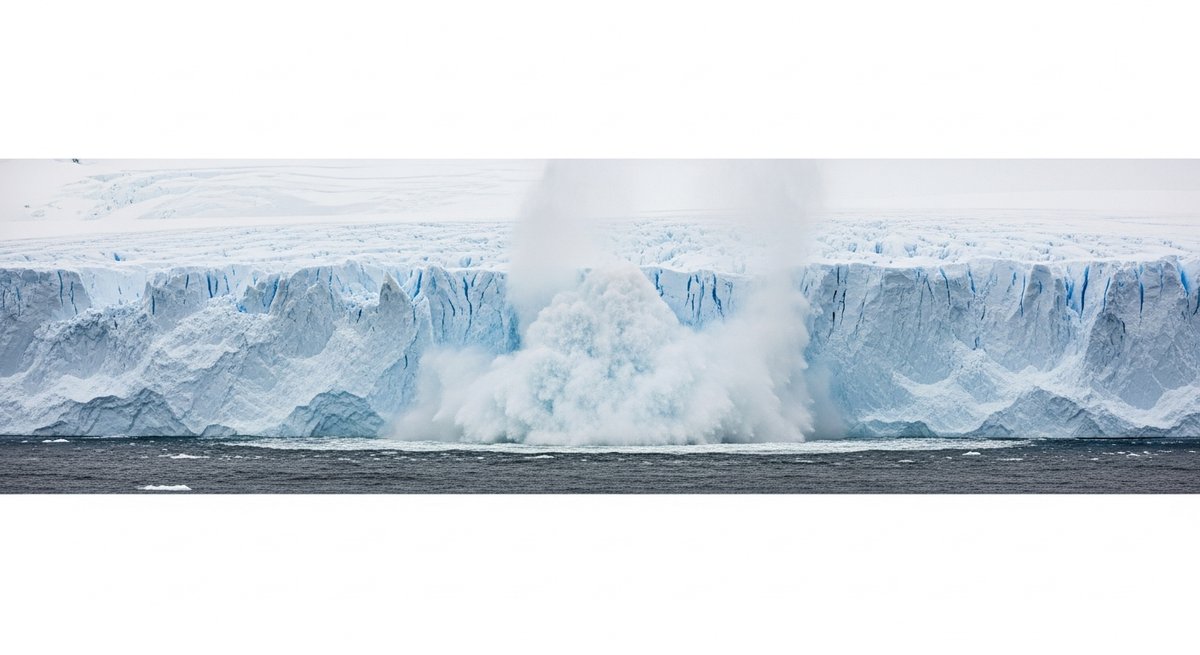
The loss of the ice shelf itself is not the primary concern as in glaciological terms, ice breaking off into the ocean is a normal process. The real alarm comes from what happens afterward sd with the buttressing shelf gone, the flow of ice from the interior of the continent toward the sea is expected to accelerate dramatically. Data already shows that Thwaites has sped up its flow by roughly 33 percent over the past six years alone. These are astronomical figures – and I will repeat what I have said many time. If the earth were my patient – I would send her straight to the ICU.
If Thwaites collapses fully, it could raise global sea levels by approximately 3.3 meters – enough to threaten major coastal cities including New York, London, and Shanghai and beyond Thwaites, scientists warn that its collapse could trigger a wider domino effect across the West Antarctic Ice Sheet. Pine Island Glacier appears to be undergoing a similar process of destabilization, and if both glaciers contribute to a broader regional collapse, the sea level consequences would be catastrophic on a civilizational scale.
Changes in ocean circulation are a key driver of what is happening at Thwaites and an analysis of the potential collapse of the Antarctic Circumpolar Current explains how disruptions to these deep ocean systems are connected to ice loss across the continent.
The Challenges of Researching Thwaites
Studying Thwaites up close is a logistical feat that borders on the extraordinary as it is among the most remote places on Earth. A recent expedition led by researcher Woon Sang Lee from the Korean Polar Research Institute spent 55 days at sea, with only two weeks spent near the glacier itself but poor weather reduced the window for core field work to just a couple of days.
Despite these limitations, researchers continue pushing for more data because the stakes are so high. Finding out not just whether the collapse will happen – scientists largely agree that it will – but how quickly it will unfold is now one of the most pressing questions in climate science. Technology is playing an increasingly important role in gathering this data. For a closer look at how robotics and autonomous systems are being deployed in frozen environments, see our feature on ice robots protecting the planet’s melting ice caps.
Can Geoengineering Save the Glacier?
Given the enormity of the threat, some scientists have proposed geoengineering interventions. The most discussed idea involves constructing a massive underwater curtain, roughly 100 kilometers wide, that would block warm ocean water from reaching the base of the glacier. In theory, this could preserve the ice and buy crucial time.
In practice, the obstacles are overwhelming. The logistics of operating in one of Earth’s most inhospitable regions make construction of such a structure extraordinarily difficult, and there is no guarantee it would function as intended even under ideal conditions. The project has been compared to the largest civil engineering undertaking in human history, with cost estimates running into tens of billions of dollars.
Some experts point out that even that sum would be vastly cheaper than the global economic damage caused by several meters of sea level rise. But scientific consensus remains firm: reducing carbon dioxide emissions as rapidly as possible is the only intervention proven to reduce the underlying forces driving glacier loss. Thwaites is not the only system under threat. Greenland’s ice sheet faces its own existential pressures, with some models suggesting a similar pattern of runaway loss could unfold there as well.
The Timeline: Decades, Not Days
It is important to be precise about timescales. The detachment of the Thwaites ice shelf could happen any day now. The full collapse of the glacier itself is a process that will unfold over decades, with projections suggesting that by the turn of the century the glacier will be in runaway collapse mode. This is not an event that requires anyone to run for higher ground tomorrow. It is, however, a process already underway that future generations will be forced to contend with in a profound and costly way. The doomsday glacier may be a dramatic name, but the science behind it is sober and well-documented.
But there’s no ICU big enough and we have to take care of Mother Earth stat!!!
Frequently Asked Questions About the Thwaites Glacier
What is the Thwaites Glacier and why is it called the doomsday glacier?
Thwaites Glacier is a massive glacier in West Antarctica roughly the size of Florida or Great Britain. It earned the nickname “doomsday glacier” – first coined by Rolling Stone magazine in 2017 – because its potential collapse could raise global sea levels by approximately 3.3 meters and trigger a wider collapse of the West Antarctic Ice Sheet, threatening coastal cities worldwide.
What is the Thwaites ice shelf and why does it matter?
The Thwaites ice shelf is the floating extension of the glacier that protrudes out over the ocean. It acts as a buttress, slowing the flow of ice from the interior of the continent into the sea. Scientists believe it is on the verge of detaching, which would remove that braking effect and accelerate ice loss significantly.
What is causing the Thwaites Glacier to collapse?
- Shifts in ocean circulation are allowing water around plus one degree Celsius – well above the freezing point of seawater – to reach the base of the glacier and melt it from below.
- The glacier rests on bedrock below sea level, making it especially vulnerable to warm water intrusion.
- The ice shelf has lost its natural anchor point on the ocean floor, removing a key stabilizing force.
- The broader warming of the global climate system is altering the conditions that once kept the glacier in relative balance.
How much could Thwaites raise sea levels?
Scientists estimate that the full collapse of Thwaites alone could raise global sea levels by approximately 3.3 meters. If the glacier’s collapse triggers a broader destabilization of the West Antarctic Ice Sheet, the total rise could be considerably higher, posing an existential threat to low-lying coastal areas and cities.
When will the Thwaites ice shelf break away?
Scientists say the detachment could happen at any moment. The massive crevasses and rifts forming across it are expected to connect and sever the shelf from the glacier, but predicting the exact timing is comparable to predicting an earthquake – researchers know it is coming but cannot pinpoint exactly when.
Is there anything that can be done to stop the collapse?
- Some researchers have proposed building a massive underwater curtain to block warm ocean water from reaching the glacier, but the logistical and financial challenges make this extremely difficult.
- The scientific consensus is that reducing global carbon dioxide emissions remains the most effective and proven strategy for slowing the forces driving the collapse.
- Geoengineering proposals are being studied, but none have been tested at the scale required and none offer a guaranteed solution.
Will sea levels rise suddenly when the ice shelf breaks?
No. The detachment of the ice shelf will not cause an immediate or dramatic sea level jump. The shelf is already floating, so its breakup has minimal direct effect on sea levels. The danger lies in what happens afterward: the loss of the shelf’s buttressing effect will allow inland ice to flow toward the ocean faster, contributing to sea level rise over decades rather than days.
Sources
- New Scientist Podcast: “The World, the Universe and Us” – featuring Dr. Rowan Hooper, Dr. Penny Sarchet, and Allison George, former British Antarctic Survey scientist
- Korean Polar Research Institute – expedition led by Woon Sang Lee, December 2023 to January 2024
- University of Manitoba – research commentary from Karen Alley on Thwaites ice shelf fracturing
- British Antarctic Survey – ongoing satellite monitoring of the Thwaites Glacier ice shelf
- Rolling Stone – origin of the “doomsday glacier” designation, 2017
This article is for informational purposes only.
Reference: https://youtu.be/Bz-AKBbxAR8?si=rf69RPyYvCUAwFOw

Dr. Alexander Tabibi is an entrepreneur, investor, and advocate for sustainable innovation with a deep commitment to leveraging technology for environmental and social good. As a thought leader at the intersection of business and sustainability, Dr. Tabibi brings a strategic vision to Green.org, helping guide its mission to inspire global climate awareness and actionable change.
With a background in both medicine and business, Dr. Tabibi combines analytical rigor with entrepreneurial insight.