

Something unusual happened recently in the world of climate science. A plan to literally cool the Earth – one that had been quietly developed behind closed doors – found its way into public view – and depending on who you ask, that’s either a breakthrough moment for climate transparency or a serious line not to be crossed.
The project centers on a technique called stratospheric aerosol injection, or SAI. In simple terms, it involves spraying reflective particles into the upper atmosphere to bounce a portion of sunlight back into space before it can warm the planet. While the science isn’t new – researchers have studied this concept for decades – but the idea of actually doing it, at scale, without full global consensus is where things get complicated.
This latest revelation has reignited debates about who gets to make decisions for the entire planet, what the risks really are, and whether geoengineering to cool the planet is a genuine solution or a dangerous shortcut dressed up in scientific language.
What the revealed plan actually involves

Details that surfaced through investigative reporting and leaked research materials point to a coordinated, privately funded effort to advance solar geoengineering beyond the theoretical stage. The plan, according to sources familiar with the project, includes deployment frameworks, atmospheric modeling data, and even preliminary logistics for high-altitude aircraft operations.
It’s not just whiteboard science. This appears to be an operational blueprint.
The core method being proposed is stratospheric aerosol injection – releasing sulfur dioxide or calcium carbonate particles at altitudes above 15 kilometers, where they’d spread globally and reflect incoming solar radiation. Supporters argue this could reduce global average temperatures by 1 to 1.5 degrees Celsius relatively quickly – a figure that aligns almost exactly with the threshold scientists warn we must not exceed to avoid catastrophic climate tipping points.
The appeal is obvious. Cutting emissions, restoring forests, rewiring entire economies – that takes decades. SAI, in theory, could be deployed within years. That speed is what makes it attractive to some, and terrifying to others.
The science behind solar radiation management
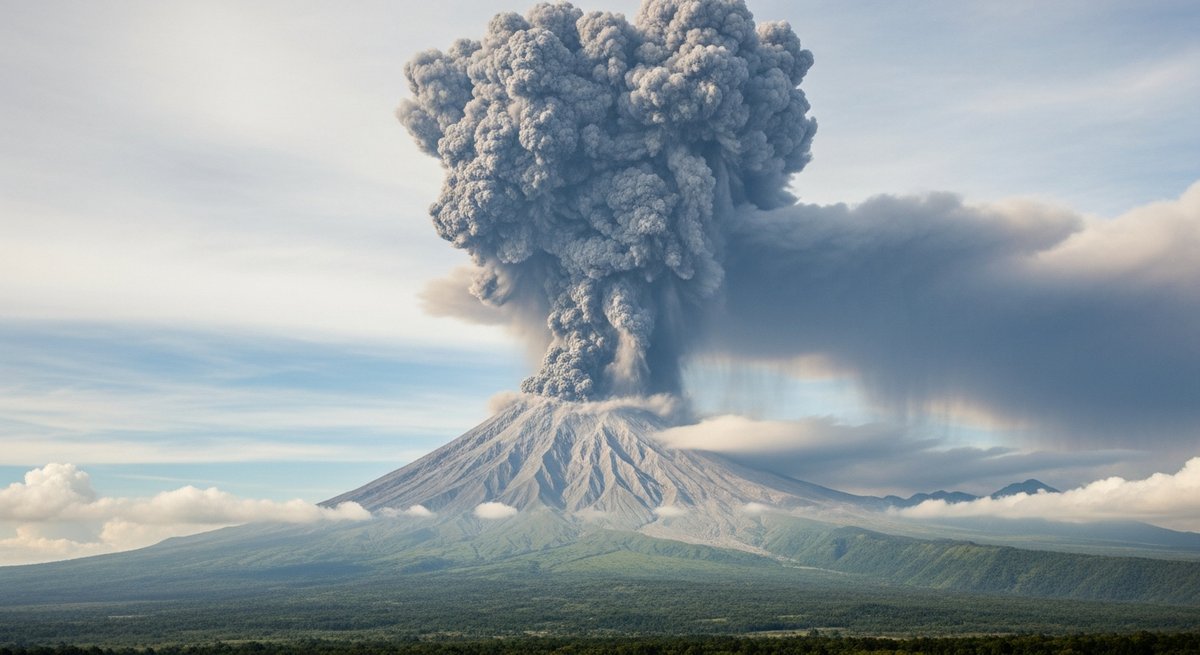
Solar radiation management isn’t science fiction. We’ve actually seen it happen naturally. When Mount Pinatubo erupted in 1991, it ejected roughly 20 million tonnes of sulfur dioxide into the stratosphere. Global temperatures dipped by about 0.5°C the following year. Scientists noticed, took notes, and some started asking whether that effect could be deliberately replicated.
What makes this approach so technically fascinating – and so politically explosive – is that it doesn’t address the underlying problem. Carbon dioxide would still accumulate. Ocean acidification would continue. SAI is essentially a temperature management tool, not a climate fix.
Proponents compare it to managing a fever with medication. You treat the symptom while you work on the underlying infection. Critics point out that abruptly stopping SAI once started – what researchers call “termination shock” – could cause temperatures to spike rapidly, potentially faster than ecosystems or agricultural systems could adapt. That’s not a minor footnote; it’s a fundamental risk built into the strategy.
There’s also growing concern about regional impacts. Aerosol injection at scale could alter monsoon patterns, shift rainfall distribution, and reduce the effectiveness of solar panels across entire continents. The planet isn’t a uniform system, and interventions at this scale don’t affect everyone equally.
Meanwhile, other Earth temperature reduction methods – including experimental technologies designed to protect and restore polar ice – have been gaining traction as more targeted, less globally disruptive approaches to climate intervention.
Who’s behind it, and why the secrecy?

Here’s where the story gets genuinely strange. The entities involved in developing this plan reportedly include a mix of private philanthropists, defense-adjacent research institutions, and a small number of venture-backed climate tech startups. Government involvement appears indirect at best – more awareness than endorsement.
The secrecy, insiders suggest, wasn’t about hiding something sinister. It was about avoiding the kind of political firestorm that kills research programs before they can generate useful data. There’s some precedent for that concern. A prominent stratospheric aerosol experiment in the UK, called SCoPEx, was effectively shut down by public pressure before a single particle was released.
But keeping a plan to alter the global climate behind closed doors raises serious ethical alarms. Climate intervention strategies that affect every nation, every ecosystem, and every person on Earth arguably shouldn’t be developed by a small group of well-funded actors operating outside international frameworks. The governance gap here is enormous – and largely unaddressed.
This is also happening at a moment when trust in institutions around environmental commitments is already fraying. More than half of global nations are already falling short on biodiversity commitments – the idea that the same global community could coordinate on something as complex and consequential as planetary-scale solar geoengineering seems optimistic, at minimum.
The ethics of engineering a cooler planet

Let’s be blunt about what solar geoengineering actually means: a small group of humans deciding to change the climate for everyone, without everyone’s consent.
That’s not a hypothetical concern. It’s the literal description of what’s being proposed. And the communities that would be most affected – smallholder farmers in sub-Saharan Africa, coastal populations in Southeast Asia, Indigenous communities in Arctic regions – are rarely, if ever, at the table when these conversations happen.
There’s a name for this in climate ethics: unilateral geoengineering. It’s considered by many scholars to be one of the most dangerous precedents that could be set in the history of international relations. If one country, or one coalition of private actors, can deploy technology that alters global weather patterns, the geopolitical fallout could be severe. Nations that experience drought or crop failure after deployment would have legitimate grievances. Who pays? Who decides? Who stops it?
The conversation also intersects with questions about where climate investment should go. Ecological restoration projects that blend conservation with capital – like the models explored in combining private equity and ecological restoration – offer pathways that work with natural systems rather than overriding them. Whether that approach can scale fast enough is the central tension.
Some researchers argue that dismissing SAI outright is also an ethical failure. If global temperatures continue rising and conventional mitigation efforts remain insufficient, the suffering that results falls hardest on the world’s most vulnerable populations. Refusing to even study climate intervention strategies – out of principle or politics – may not be the high-ground position it appears to be.
What happens next in the cool Earth plan debate
The revelation of this plan has already triggered responses across the scientific and policy communities. Several climate researchers have publicly called for an international moratorium on outdoor solar geoengineering experiments until a proper governance framework exists. Others have pushed back, arguing that a moratorium would simply cede the research space to less transparent actors.
The United Nations Environment Programme has acknowledged the growing pressure to develop international oversight mechanisms for climate intervention strategies. Progress, though, has been slow. Geoengineering governance is caught in a familiar trap: nations agree something needs to happen, but disagree on what, who leads it, and who bears liability if things go wrong.
In the meantime, private research continues. Balloons have been launched. Models have been run. And while no large-scale deployment appears imminent, the infrastructure for it is slowly being assembled – with or without a global conversation about whether it should be.
What’s clear is that the cool Earth plan revealed isn’t a finished product. It’s a draft of a future that some people are already building. Whether the rest of the world gets a meaningful say in that future depends on how loudly the governance question gets asked – and by whom.
The coming years will likely see this move from fringe scientific debate to mainstream policy discussion. Given the pace of warming and the continued gap between climate pledges and actual emissions reductions, pressure to find faster interventions will only grow. Solar geoengineering isn’t going away. The question is whether it develops transparently, under international scrutiny, or quietly, under private funding and closed-door logistics.
Frequently asked questions about geoengineering to cool the planet
What is stratospheric aerosol injection and how does it work?
Stratospheric aerosol injection involves releasing reflective particles – typically sulfur dioxide or calcium carbonate – into the stratosphere, roughly 15 to 25 kilometers above Earth’s surface. These particles scatter incoming sunlight, reducing the amount of solar radiation that reaches and warms the planet’s surface. The effect is similar to what occurs naturally after large volcanic eruptions.
Is solar geoengineering the same as fixing climate change?
No, and this distinction matters a lot. Solar radiation management addresses surface temperature but does nothing to reduce atmospheric carbon dioxide. It would need to be maintained indefinitely and wouldn’t stop ocean acidification or other CO2-driven impacts. Most scientists describe it as a potential supplement to emissions reduction, not a replacement.
What are the biggest risks of stratospheric aerosol injection?
- Termination shock: if SAI is stopped suddenly, temperatures could rebound rapidly and with more intensity than if it had never been used.
- Altered precipitation patterns: aerosol injection could disrupt monsoon systems and reduce rainfall in regions dependent on seasonal rains for agriculture.
- Unequal regional impacts: some areas could experience cooling while others face drought or crop failure.
- Reduced solar energy generation: widespread aerosol cover could lower the output of solar panels globally.
- Geopolitical conflict: nations harmed by deployment could have legitimate legal and security grievances against deploying parties.
Currently, no binding international legal framework governs solar geoengineering. The United Nations Environment Programme and various scientific bodies have discussed governance, but no enforceable rules exist. This is one of the central concerns raised by critics of the recently revealed cool Earth plan – the absence of legitimate oversight structures means almost anyone with sufficient funding and technical capacity could attempt deployment.
Have any solar geoengineering experiments actually been conducted?
Small-scale research has occurred, but no large-scale outdoor experiments have been completed. The Harvard SCoPEx project was among the most prominent planned experiments, involving a high-altitude balloon to release a small amount of aerosol. It was halted before outdoor testing began following opposition from Indigenous communities and environmental groups in Sweden, where atmospheric tests were planned.
Are there alternative Earth temperature reduction methods being developed?
- Marine cloud brightening, which involves spraying sea salt particles to make low-level clouds more reflective.
- Ocean-based carbon capture methods using phytoplankton and kelp ecosystems.
- Ice restoration technologies that aim to refreeze polar regions using pumps or reflective materials.
- Urban cooling strategies like green roofs, reflective surfaces, and vertical gardens.
Could geoengineering create international conflict?
This is a serious concern among geopolitical analysts and climate lawyers. If one nation or private actor deploys aerosols that alter weather patterns in another country – causing drought, floods, or crop failure – the affected nation has no clear legal recourse under current international law. Some researchers consider unilateral geoengineering to be one of the most destabilizing technological risks of the coming decades.
Where can I follow responsible, science-based discussion on climate intervention?
Academic journals like Nature Climate Change and Earth’s Future publish peer-reviewed research on climate intervention strategies. The Carnegie Climate Governance Initiative (C2G) focuses specifically on governance questions around geoengineering. For broader climate context, following coverage from independent science journalists and organizations like Green.org provides ongoing analysis of how these technologies intersect with policy, ethics, and real-world environmental conditions.
This article is for informational purposes only.
Reference: https://apple.news/ANAyakpjCTMyT1YvxjBNoFQ

Dr. Alexander Tabibi is an entrepreneur, investor, and advocate for sustainable innovation with a deep commitment to leveraging technology for environmental and social good. As a thought leader at the intersection of business and sustainability, Dr. Tabibi brings a strategic vision to Green.org, helping guide its mission to inspire global climate awareness and actionable change.
With a background in both medicine and business, Dr. Tabibi combines analytical rigor with entrepreneurial insight.