
Rooftop after rooftop, lined with panels. Drive through parts of Karachi and you’ll notice it almost immediately. Solar has gone from a curiosity to something that looks, increasingly, like survival. And when the US-Iran war sent oil prices lurching upward and Pakistan’s grid started groaning under fresh pressure, a quiet question emerged: had the country’s solar boom actually softened the blow?
The answer is complicated – and it depends almost entirely on who you ask, and what neighborhood they live in.
How Pakistan became the world’s top importer of Chinese solar panels
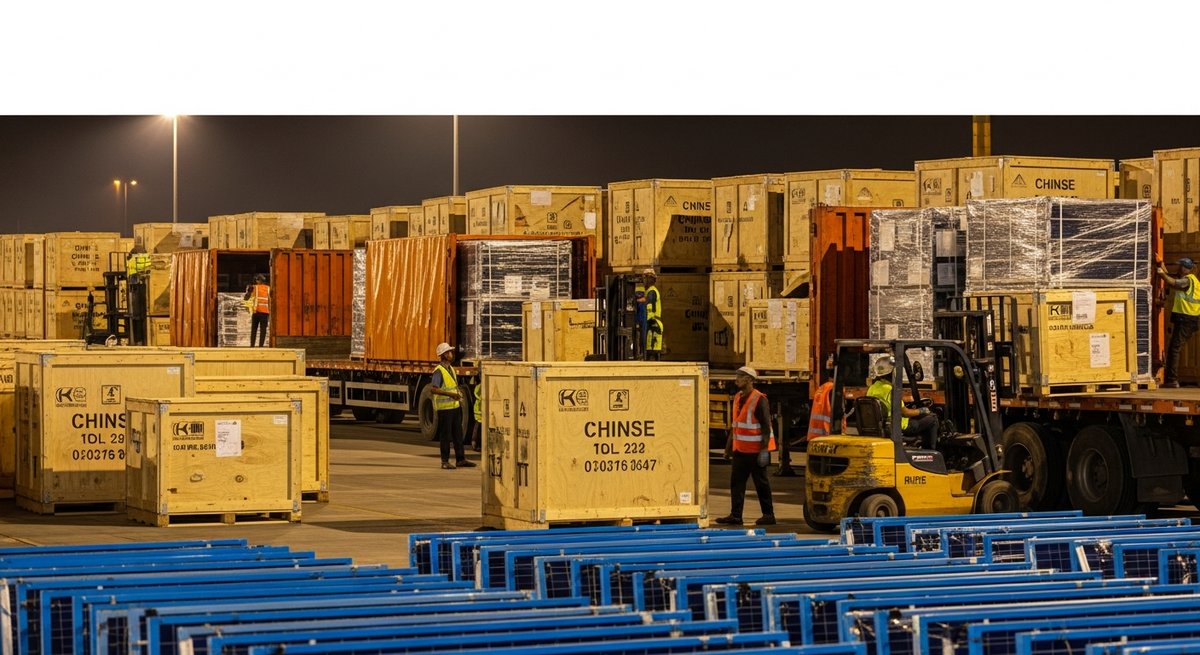
Between 2021 and 2024, grid tariffs in Pakistan rose by 155%. That’s not a typo. Electricity became genuinely unaffordable for millions of households, and the state offered no easy fix. What the market offered instead was cheap, Chinese-made solar panels flooding in at prices that kept falling even as everything else got more expensive.
By 2024, Pakistan had claimed the top spot globally as the largest importer of Chinese solar panels. That’s a remarkable thing for a country still grappling with debt crises, a trade deficit, and fragile foreign currency reserves. People weren’t buying solar because they cared about carbon footprints. They were buying it because their electricity bills were breaking them.
One business owner in Karachi described his office electricity bill dropping from 100,000 rupees a month to nearly zero over three years after installing panels. That kind of return on investment doesn’t require a government subsidy or a climate pledge – it just requires a working calculator.
This grassroots adoption mirrors a broader global pattern. Wind, solar, and battery storage have been displacing fossil fuels not just in wealthy nations but across developing economies where grid instability makes the case for energy independence even more urgent.
The energy shock from the US-Iran war hit an already stressed system
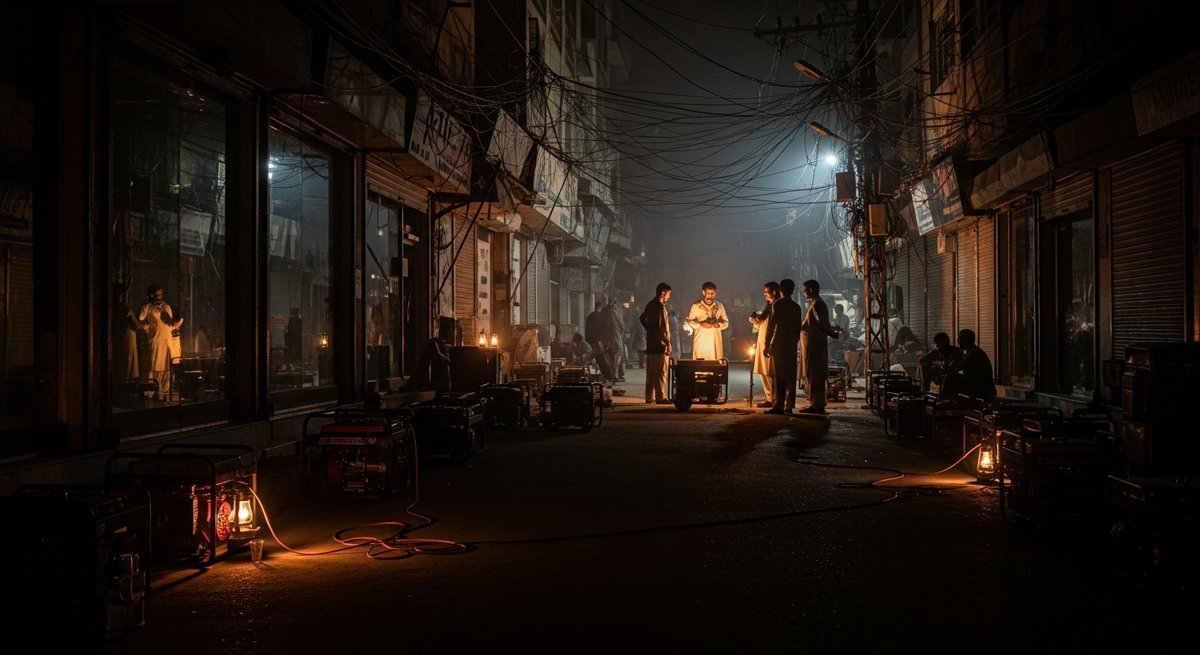
Pakistan was not starting from a position of strength when the Iran conflict began. The national grid was already under strain, load shedding was a daily reality for many, and liquefied natural gas (LNG) – a significant fuel source for electricity generation – was already expensive. Add diesel generators into the picture, which millions of Pakistanis rely on when the grid fails, and you have a system with enormous exposure to oil price swings.
When the conflict escalated, petrol and diesel jumped roughly 20% in a single week. Generator costs shot up almost immediately. LNG became more expensive to procure. Load shedding increased and blackouts stretched longer.
Electricity bills hadn’t yet caught up at the time of writing – energy cost increases tend to filter through to consumer tariffs on a lag – but economists were clear that the pressure was building. “The impact of the oil prices has today just been felt at the gas stations,” one analyst noted. “That impact has not yet been translated into electricity rates. Once electricity rates go up, they will rush for it.”
The “they” in that sentence matters. Because the rush to solar is not happening equally across Pakistani society, and the war has made that gap harder to ignore.
Solar as a shield – but only for some
For households and businesses that had already made the switch before the conflict, the geopolitical shock arrived and… passed by. Not entirely, but significantly. They weren’t dependent on grid electricity priced to LNG costs. They weren’t paying more for generator diesel on top of that. Their energy bill was largely fixed, sitting on their rooftop, absorbing sunlight.
One family noted their monthly electricity bill had dropped 20 to 25% after switching to solar. The money saved went to petrol, groceries, household goods – the things that actually keep a family running. When a war halfway across the region sends fuel costs spiraling, having your electricity supply decoupled from fossil fuel markets is exactly the kind of resilience that energy policy people discuss in abstract terms. In Pakistan, it became very concrete, very fast.
This is what genuine solar energy as a low-cost electricity option looks like in practice – not a luxury upgrade but a financial firewall against price volatility. The households that could build that firewall did. The ones that couldn’t were left fully exposed.
But the divide is stark. Apartment dwellers can’t put panels on a shared roof. Renters can’t modify properties they don’t own. And families in Pakistan’s lower income brackets who might want to invest simply don’t have the 500,000 to 600,000 rupees that a basic home system costs – even if that investment would pay itself back within a few years.
Balochistan – where solar independence became a necessity, not a choice
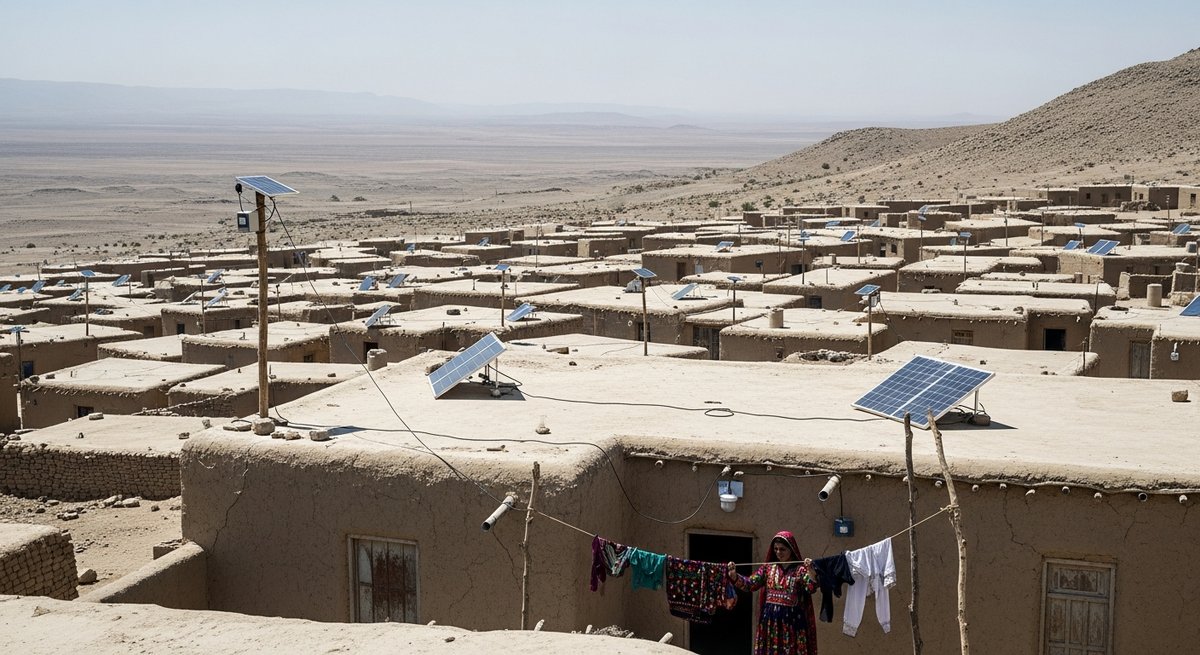
If you want to understand what energy poverty looks like alongside solar self-reliance, Balochistan is the place to look. The province has more sunshine than anywhere else in Pakistan. It also has nearly 90% of its villages with no connection to the national grid at all. For communities here, solar wasn’t a lifestyle choice or a response to high bills – it was the only option.
Some residents have been running private solar systems for years with almost no state support. A university in the region has been powered by solar since 2022. One homeowner described installing a 5 kW system after chronic load shedding became unbearable – his bill dropped 40 to 50%, costing around 500,000 to 600,000 rupees upfront, a significant sum not everyone can access.
Balochistan is an extreme case, but it illustrates something important: in places where the grid is weakest and most expensive, solar adoption has the deepest roots. The US-Iran war’s downstream effects on fuel prices hit Balochistan differently than Karachi. For grid-connected households in Karachi, rising electricity tariffs are the main threat. In Balochistan’s off-grid villages, the immediate pressure was always on diesel and generator costs. The resilience that solar creates there is also the most precarious, because it has developed without infrastructure, without policy support, and now faces active policy headwinds.
The government’s response – and why critics are furious
Here’s where things get politically messy. Just as the solar boom was delivering real relief to households, the Pakistani government moved in a direction that alarmed renewable energy advocates.
Taxes were placed on solar panel imports. The solar buyback rate – what grid-connected solar households receive when they sell surplus power back to the utility – was cut by 60%. Taxes were also applied to battery imports from China, which are the storage components people need most when the grid keeps going down.
The government’s stated rationale: protecting grid consumers from rising costs. The critics’ counter: protecting utility revenue, plain and simple.
The economics behind the policy are real, even if the outcome is frustrating. Pakistan doesn’t manufacture solar panels or batteries domestically. Every panel and battery is imported, costing foreign currency that Pakistan has very little of. A wider trade deficit creates macroeconomic risk. The government is caught between encouraging energy independence and protecting already fragile national finances.
One analyst put it bluntly: “If the government reduces the taxation and incentivizes use of solar, that increases the budget deficit. So it’s a balancing act the government will have to do.”
Residents in Balochistan were less diplomatic. “The government is taxing solar panels now. It’s expensive and not as many people can buy it. We request the government to kindly reduce the tax. This is the need of every family so they can cook and power the water motor.”
The tension here is not unique to Pakistan. Governments around the world have struggled with how to integrate distributed solar into grid economics without undermining either utility finances or household adoption. Getting incentive structures right is genuinely difficult, and cutting buyback rates while raising import taxes is one of the less elegant approaches to that problem.
What this means for developing countries facing energy geopolitics
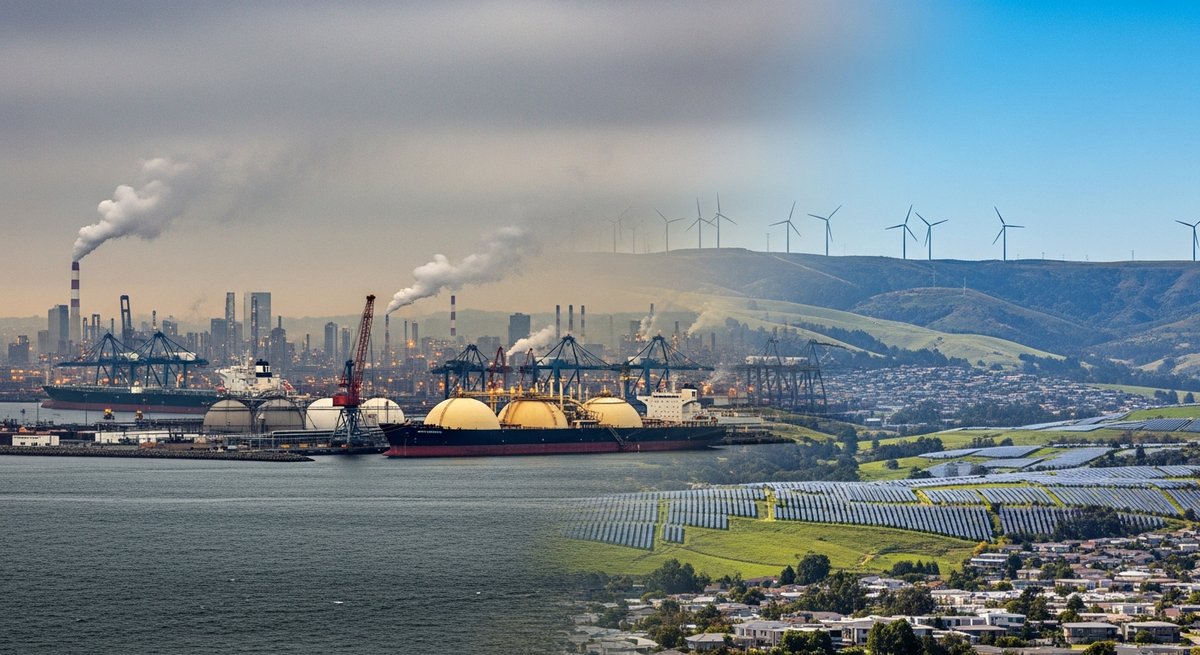
Pakistan’s experience with the US-Iran war’s energy fallout is a case study worth paying attention to – not just for South Asia but for any import-dependent developing economy.
The countries most exposed to geopolitical energy shocks import the most oil and gas, have grids that rely heavily on those fuels, and have limited domestic alternatives. Pakistan fits that profile closely. What’s interesting is that market forces – not government policy – drove a partial solution. Cheap Chinese solar panels arrived at the right moment and were snapped up by anyone who could afford them.
The partial insulation that resulted was real. It prevented the war’s energy impact from being catastrophically worse for a significant slice of Pakistani society. But “partial” and “significant slice” are doing a lot of work in that sentence. Households that couldn’t afford to go solar – apartment renters, the genuinely poor, those in rural areas without savings – faced the full brunt.
Energy security through distributed solar is a genuine strategy. It reduces dependence on global fuel markets, provides price stability, and creates resilience against exactly the kind of geopolitical shocks that have always destabilized developing economies. But it only works as broad social protection if the cost of entry is low enough for most people to access it, and if government policy supports rather than undermines adoption. Right now in Pakistan, neither of those conditions fully holds.
Frequently asked questions about Pakistan’s solar boom and energy shock resilience
How did Pakistan’s solar adoption happen so quickly?
Electricity tariffs rose 155% between 2021 and 2024, making grid power unaffordable for many. At the same time, Chinese solar panel prices kept falling. Households and businesses acted out of economic necessity rather than environmental motivation. By 2024, Pakistan was the world’s largest importer of Chinese solar panels – a shift driven entirely by market incentives, not government planning.
Did solar panels actually protect Pakistani households from the US-Iran war’s energy impact?
Yes, for those who already had panels installed. Solar adopters were shielded from the immediate fuel price spike because their electricity didn’t depend on LNG or diesel. The protection was real but unequal – wealthier households who went solar earlier were mostly insulated, while lower-income families and renters remained fully exposed to rising grid costs and generator fuel prices.
Why is Pakistan taxing solar panels and batteries?
- Pakistan doesn’t manufacture solar panels or batteries domestically, so all imports cost foreign currency.
- The country has a significant trade deficit and limited dollar reserves.
- The government argues taxes protect grid consumers from costs created when solar households reduce their grid payments.
- Critics say the real motivation is protecting utility company revenues.
What is the situation in Balochistan specifically?
Balochistan gets more sunlight than any other province in Pakistan, but nearly 90% of its villages have no national grid connection. Residents adopted private solar systems out of necessity years ago, with little state support. The province represents both the potential of distributed solar and the depth of energy poverty – some households have cut bills by 40 to 50%, while others remain without reliable power of any kind.
What happened to the solar buyback rate in Pakistan?
The government cut the net metering buyback rate by 60%, meaning households that sell surplus solar power back to the grid now earn significantly less than before. This dramatically changes the financial calculus for new solar installations and reduces the incentive for grid-connected households to install larger systems.
Could Pakistan’s solar boom fully replace grid dependency?
Not under current conditions. The boom has been substantial but uneven. Apartment dwellers, renters, and low-income households cannot access rooftop solar easily. Battery storage – necessary for true grid independence – is now taxed on import. And the national grid still needs to function for industries and urban density that rooftop solar alone cannot serve. Broader energy independence would require domestic manufacturing, stronger policy support, and much lower system costs.
Is Pakistan’s experience relevant to other developing countries?
Very much so. Countries that import most of their fuel are inherently exposed to geopolitical energy shocks. Pakistan’s experience shows that distributed solar can act as a partial buffer, but only for those who can afford the upfront investment. The lesson for other developing nations is that solar adoption without equity-focused policy still leaves the most vulnerable populations fully exposed when global energy markets are disrupted.
Sources
- Al Jazeera English video report on Pakistan’s solar boom and the US-Iran war’s energy impact (transcript, 2025)
- Pakistan Bureau of Statistics – electricity tariff data, 2021-2024
- International Energy Agency – solar panel import trends, 2024
- Pakistan Economic Survey – energy sector overview
- Bloomberg NEF – global solar panel pricing data
- Government of Pakistan – net metering policy amendments, 2024-2025

Dr. Alexander Tabibi is an entrepreneur, investor, and advocate for sustainable innovation with a deep commitment to leveraging technology for environmental and social good. As a thought leader at the intersection of business and sustainability, Dr. Tabibi brings a strategic vision to Green.org, helping guide its mission to inspire global climate awareness and actionable change.
With a background in both medicine and business, Dr. Tabibi combines analytical rigor with entrepreneurial insight.