
The glossy marketing photos never show the other side. You’ve seen the pristine factory shots, robots welding chassis with millimeter precision, the promise of a cleaner tomorrow wrapped in vegan leather and touchscreen dashboards. What you won’t find in a dealership brochure, or in those polished dixon ford vw photos, is the scarred earth thousands of miles away where battery materials begin their journey.
Investigative reporting and supply chain audits have traced nickel, cobalt, and lithium used by Volkswagen, Ford, and Tesla to mining operations linked to deforestation of indigenous territories. The disconnect is staggering. A driver in Illinois browsing dixon ford vw used cars for a family SUV likely has no idea that the battery beneath the floorboard may carry a hidden environmental cost extracted from someone else’s homeland.
How Battery Metals Travel From Rainforest to Road
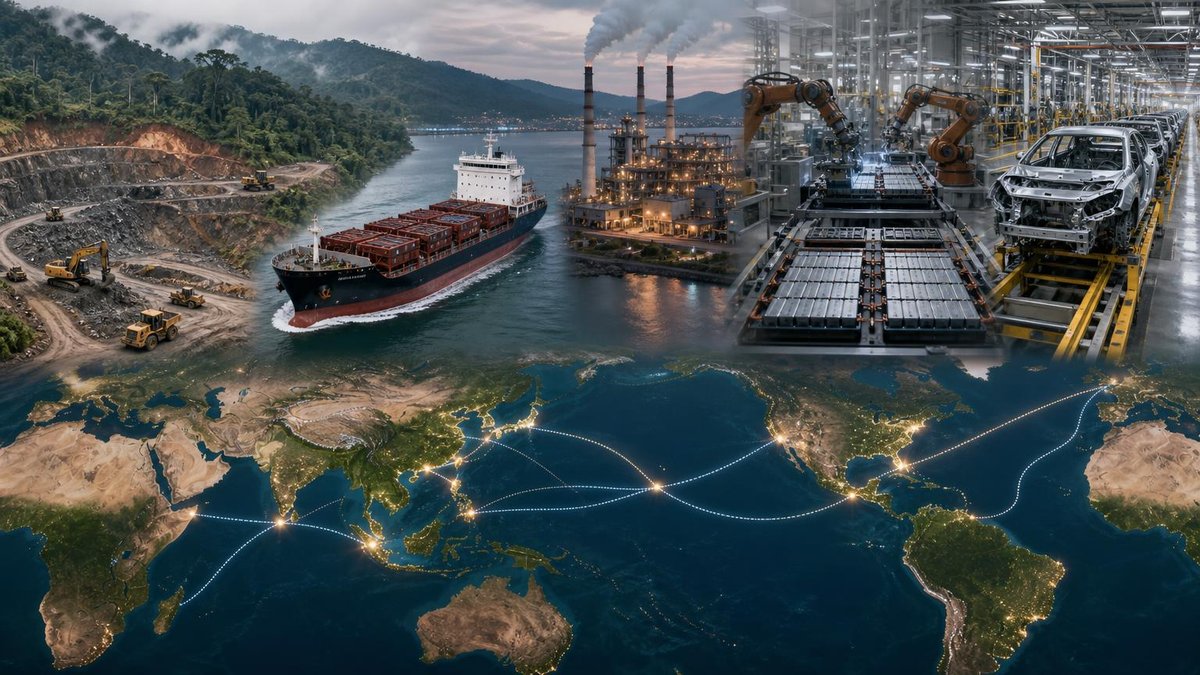
The electric vehicle battery supply chain is notoriously opaque. It stretches across continents, through layers of subcontractors, traders, and processors, before landing in a cell factory and eventually a vehicle assembly line. For consumers comparing a vw atlas vs ford explorer, this complexity means the ethical footprint stays invisible at the point of sale.
Indonesia holds the world’s largest nickel reserves. The islands of Sulawesi, Halmahera, and Obi have seen explosive growth in laterite nickel mining to feed stainless steel and, increasingly, battery-grade nickel sulfate. Much of this land sits inside or borders territories claimed by indigenous communities: the Suku Banggai, the Suku Tobelo, Maluku peoples who’ve kept these forests standing for generations.
Here’s what the chain typically looks like for nickel destined for EV batteries:
- Laterite ore is strip-mined from tropical forest areas, often after land clearing
- Ore moves to smelters, many using coal-fired power or polluting pyrometallurgical processing
- Intermediate nickel products (matte, MHP, or sulfate) ship to cathode precursor plants
- Cathode material goes to cell manufacturers like LG Energy Solution, CATL, or Panasonic
- Finished battery packs integrate into vehicles at VW, Ford, or Tesla assembly plants
Each step adds distance. And plausible deniability. By the time a battery reaches a dealer lot in Dixon, Illinois, the forest it consumed is just a statistical abstraction.
What Investigations Have Uncovered

Researchers at the London-based Environmental Justice Foundation spent months documenting nickel mining in Indonesia’s Raja Ampat region. The area is a marine biodiversity hotspot. Deforestation and sediment runoff from operations there have threatened coral ecosystems and indigenous fishing grounds. Their 2022 investigation traced material through to supply chains serving major automakers.
Mighty Earth’s 2023 report cut closer. It identified nickel from deforested Indonesian areas entering multiple EV manufacturers’ supply chains. Satellite imagery, shipping records, corporate disclosures; the group used all three to map connections between specific mining concessions and battery producers.
Tesla’s caught particular heat. In 2020 it signed a multiyear supply deal with Vale, the Brazilian mining giant with significant nickel operations. PT Vale Indonesia, the company’s local arm, has spent over a decade fending off claims of ecological damage and forced relocations. Tesla’s since diversified suppliers and published annual impact reports. Critics still call its supply chain transparency selective.
Volkswagen has at least acknowledged the problem. Its 2022 sustainability report admitted that “raw material extraction, particularly for battery cells, is associated with environmental and social risks.” VW joined the Global Battery Alliance and committed to enhanced due diligence. The timelines stretch years ahead.
Ford’s F-150 Lightning and Mustang Mach-E rely on batteries from SK On and CATL. SK On’s partnership with Australian mining company BHP for nickel from Western Australia represents a cleaner sourcing path, but Ford has also been linked to Indonesian nickel through broader industry supply pools. In 2023 the company announced expanded supply chain auditing. Full traceability targets are set for 2025.
| Automaker | Verified Indonesian Nickel Link | Public Response / Commitment |
|---|---|---|
| Tesla | Vale supply agreement; CATL indirect links | Annual impact reports; supplier code of conduct; no explicit deforestation commitment for nickel |
| Volkswagen | LG Energy Solution, Samsung SDI supply chains | Global Battery Alliance membership; human rights due diligence program; 2025 responsible sourcing target |
| Ford | Industry supply pool connections; SK On partnership | Supply chain auditing announced 2023; full traceability by 2025 |
Why Indigenous Lands Bear the Brunt
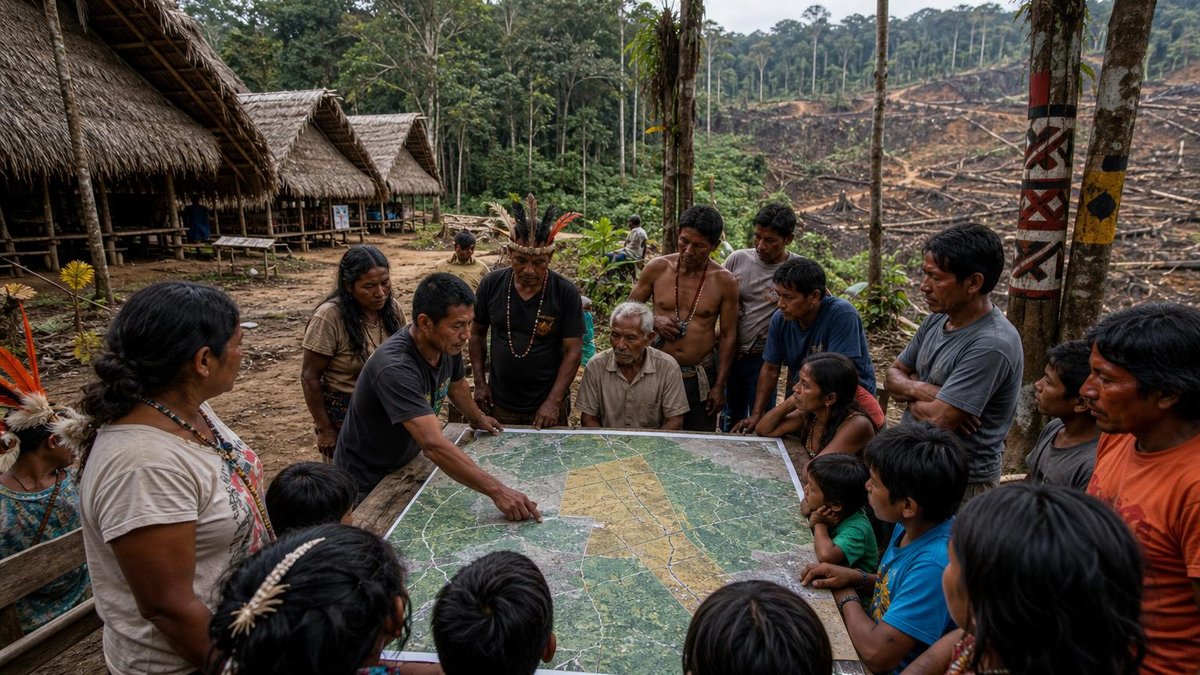
Indigenous territories contain approximately 80% of the world’s remaining biodiversity, according to the United Nations Permanent Forum on Indigenous Issues. They also overlap significantly with mineral deposits mapped in recent years as demand for energy transition materials accelerates.
The legal frameworks governing these lands are often fragmented. Indonesia’s 2013 Constitutional Court ruling recognized indigenous customary forests (hutan adat). Landmark on paper. On the ground, implementation has crawled. The Indigenous Peoples Alliance of the Archipelago (AMAN) estimates that only a fraction of claimed territories have received formal recognition. Millions of hectares remain exposed to mining concessions granted without free, prior, and informed consent.
The environmental justice dimension is stark. Communities near nickel operations report loss of forest-based food sources, water contamination from mine runoff, respiratory illness linked to dust and smelter emissions, displacement without adequate compensation, and criminalization of land defenders protesting extraction.
The Lithium Mining Environmental Impact Beyond Nickel

Nickel dominates the Indonesia story, but the EV lithium mining environmental impact carries its own pattern of ecosystem disruption. In Chile’s Atacama Desert, lithium extraction through brine evaporation has depleted water tables affecting indigenous Atacameño communities and flamingo populations. Hard rock lithium mining in Australia generates spoil heaps and energy-intensive processing.
The scale of projected demand intensifies every concern. The IEA’s Global EV Outlook 2024 noted that announced battery manufacturing capacity by 2030 would require lithium supply roughly six times 2022 production levels. Nickel demand for batteries is projected to grow from roughly 330,000 tonnes in 2022 to over 1.5 million tonnes by 2030.
These projections assume continued dominance of nickel-cobalt-manganese (NCM) and nickel-cobalt-aluminum (NCA) cathode chemistries. Lithium iron phosphate (LFP), which uses no nickel or cobalt, has gained market share, particularly in Chinese-made vehicles and Tesla’s standard-range models. Ford has announced LFP adoption for some variants. This shift reduces specific supply chain risks but doesn’t eliminate them; LFP still requires lithium, and phosphate mining carries its own footprint.
What Actual Accountability Would Look Like
Voluntary corporate commitments have proven insufficient. The Responsible Minerals Initiative, the Global Battery Alliance, and various OECD-aligned due diligence frameworks create reporting structures without enforcement mechanisms. Third-party audits are spotty, and supply chain mapping typically extends only to direct suppliers while environmental destruction happens at extraction.
Meaningful change would require mandatory supply chain disclosure to the mine level with public reporting, legal liability for environmental harm in sourcing jurisdictions enforceable in consumer market courts, binding free, prior, and informed consent protocols with indigenous communities, preferential purchasing from operations with verified no-deforestation commitments, and investment in alternative chemistries and battery recycling to reduce virgin extraction pressure.
Lithium-ion battery recycling remains underdeveloped at scale, but the technical pathways exist. Redwood Materials, Li-Cycle, and multiple European ventures are building capacity to recover nickel, cobalt, and lithium at purity levels suitable for new batteries. The U.S. Department of Energy has funded recycling research through the ReCell Center and the Bipartisan Infrastructure Law’s battery recycling grants. If scaled, recycling could eventually provide a significant share of battery materials without new mining.
Until then, every EV sold carries a geological debt. The question is whether consumers, regulators, and manufacturers will force that debt to be paid transparently rather than shifted to the powerless.
What Car Buyers Can Actually Do
Individual action has limits against global supply chains, but it’s not meaningless. For someone genuinely weighing a ford explorer vs vw atlas purchase, or browsing dixon ford vw reviews for a used hybrid, several practical steps exist.
First, prioritize smaller batteries where possible. A plug-in hybrid with 40 miles of electric range uses dramatically less battery material than a 120 kWh electric truck. For many household trip patterns, the emissions reduction is nearly equivalent.
Second, investigate manufacturer sourcing disclosures before purchase. Tesla publishes annual impact reports with supplier lists, though with notable gaps. Ford and VW provide less detail but are improving.
Third, consider vehicle longevity. The most sustainable car is often the one already built. A well-maintained used vehicle, including dixon ford vw cars from earlier model years, may have lower total lifecycle impact than a new EV with a massive battery, depending on grid electricity sources and driving patterns.
Fourth, engage politically. Battery supply chain regulation is advancing in the European Union through the Battery Regulation (2023), which will require carbon footprint declarations, recycled content minimums, and due diligence for social and environmental risks. Similar frameworks in North America remain weaker.
Frequently Asked Questions
Supply Chain Transparency and Sourcing
How can I find out where my EV battery materials actually come from?
Complete traceability to the mine level is rarely available to consumers. Start with manufacturer sustainability reports; Tesla’s are most detailed, while Ford and VW publish annual summaries. The Responsible Minerals Initiative maintains a smelter and refiner list, though this doesn’t map to specific vehicles. For nickel specifically, Indonesia dominates global supply for battery grades, making origin likelihood high unless the manufacturer explicitly states otherwise.
Are Tesla batteries worse than Ford or VW batteries for deforestation?
No definitive ranking exists. Tesla’s direct sourcing relationships, including the Vale nickel agreement, create identifiable links to specific mining jurisdictions. Ford and VW source through battery suppliers (SK On, LG Energy Solution, CATL), which adds contractual distance but doesn’t eliminate responsibility. Tesla has been more vocal about supply chain ethics in public communications, which has paradoxically made it a larger target for criticism when gaps emerge. All three lag behind what independent auditors consider adequate transparency.
Does buying a used EV avoid these ethical problems?
Partially. A used EV doesn’t create new mining demand, which is meaningful. However, the materials in its battery were still extracted originally, likely under similar conditions. The benefit is temporal displacement; you’re not adding to current extraction pressure. For buyers specifically looking at dixon ford vw used cars inventory, this calculus may favor older hybrid models with smaller battery packs over newer full EVs with large nickel-cobalt batteries.
Alternatives and Future Developments
Are there battery technologies that avoid nickel and cobalt entirely?
Lithium iron phosphate (LFP) cathodes contain no nickel or cobalt, using instead iron and phosphate. CATL and BYD dominate LFP production, and Tesla has adopted LFP for standard-range vehicles. Ford announced LFP plans for 2023. Energy density is lower than NCM chemistries, requiring larger batteries for equivalent range, but cycle life is typically longer and thermal stability superior. Sodium-ion batteries, emerging from CATL and others, eliminate lithium entirely but remain at early commercialization for vehicles.
How much could battery recycling reduce mining demand?
The IEA’s Critical Minerals Market Review 2023 projected that recycled materials could supply roughly 10% of lithium and nickel demand by 2040 under stated policies scenarios, rising to 25-30% under more aggressive recycling and policy assumptions. Current recycling rates are far lower; most end-of-life batteries are stockpiled or exported rather than processed. The economics improve with scale and with regulatory requirements for recycled content, as the EU Battery Regulation will phase in from 2031.
What is the most environmentally responsible vehicle choice right now?
Context matters enormously. For urban drivers with renewable electricity access, a small used EV or efficient hybrid minimizes impact. For rural drivers with long highway commutes, a modern efficient hybrid may outperform a large EV on lifecycle emissions if the grid remains coal-heavy. The “best” choice depends on driving patterns, electricity sources, vehicle size needs, and whether the purchase displaces a functional existing vehicle. No universal answer exists, despite marketing claims.
Sources
- Environmental Justice Foundation, 2022. “Deadly Waters: The Pollution of Indonesia’s Raja Ampat by Nickel Mining.” https://ejfoundation.org/reports/deadly-waters-the-pollution-of-indonesias-raja-ampat-by-nickel-mining
- Mighty Earth, 2023. “Dirty Nickel: How the EV Boom Threatens Indonesia’s Forests and Communities.” https://www.mightyearth.org/wp-content/uploads/2023/03/Dirty-Nickel-Report.pdf
- International Energy Agency, 2024. “Global EV Outlook 2024.” https://www.iea.org/reports/global-ev-outlook-2024
- International Energy Agency, 2023. “Critical Minerals Market Review 2023.” https://www.iea.org/reports/critical-minerals-market-review-2023
- United Nations Permanent Forum on Indigenous Issues. “Indigenous Peoples and Biodiversity.” https://www.un.org/development/desa/indigenouspeoples/wp-content/uploads/sites/19/2018/11/UNPFII_Biodiversity_brochure.pdf
- Indigenous Peoples Alliance of the Archipelago (AMAN). Status of indigenous territory recognition in Indonesia.
- Tesla, Inc., 2023. “2022 Impact Report.” https://www.tesla.com/impact-report/2022
- Volkswagen AG, 2022. “Sustainability Report 2022.” https://www.volkswagenag.com/en/sustainability/reporting/sustainability-report-2022.html
- Ford Motor Company, 2023. “Integrated Sustainability and Financial Report 2023.” https://corporate.ford.com/sustainability/reporting.html
- U.S. Department of Energy, ReCell Center. “Battery Recycling Research and Development.” https://www.recellcenter.org/
- European Parliament and Council of the European Union, 2023. “Regulation (EU) 2023/1542 concerning batteries and waste batteries.” https://eur-lex.europa.eu/legal-content/EN/TXT/?uri=CELEX:32023R1542
This article is for informational purposes only.

Dr. Alexander Tabibi is an entrepreneur, investor, and advocate for sustainable innovation with a deep commitment to leveraging technology for environmental and social good. As a thought leader at the intersection of business and sustainability, Dr. Tabibi brings a strategic vision to Green.org, helping guide its mission to inspire global climate awareness and actionable change.
With a background in both medicine and business, Dr. Tabibi combines analytical rigor with entrepreneurial insight.