
Experts: How are climate scientists using artificial intelligence?

Walk into any major climate research lab today and you’ll notice something that would’ve seemed impossible ten years ago. Whiteboards covered in Python code, not just fluid dynamics equations. Postdocs arguing about neural network architectures while atmospheric physicists listen in. That quiet hum of servers? It’s joined the chorus of fume hoods and centrifuges now.
Artificial intelligence isn’t a side project in climate science anymore. It’s woven into how we predict hurricanes, track carbon leaks, model ice sheet collapse. The shift happened fast. And it’s changing what climate experts can actually see coming.
From Physics-First to Data-First
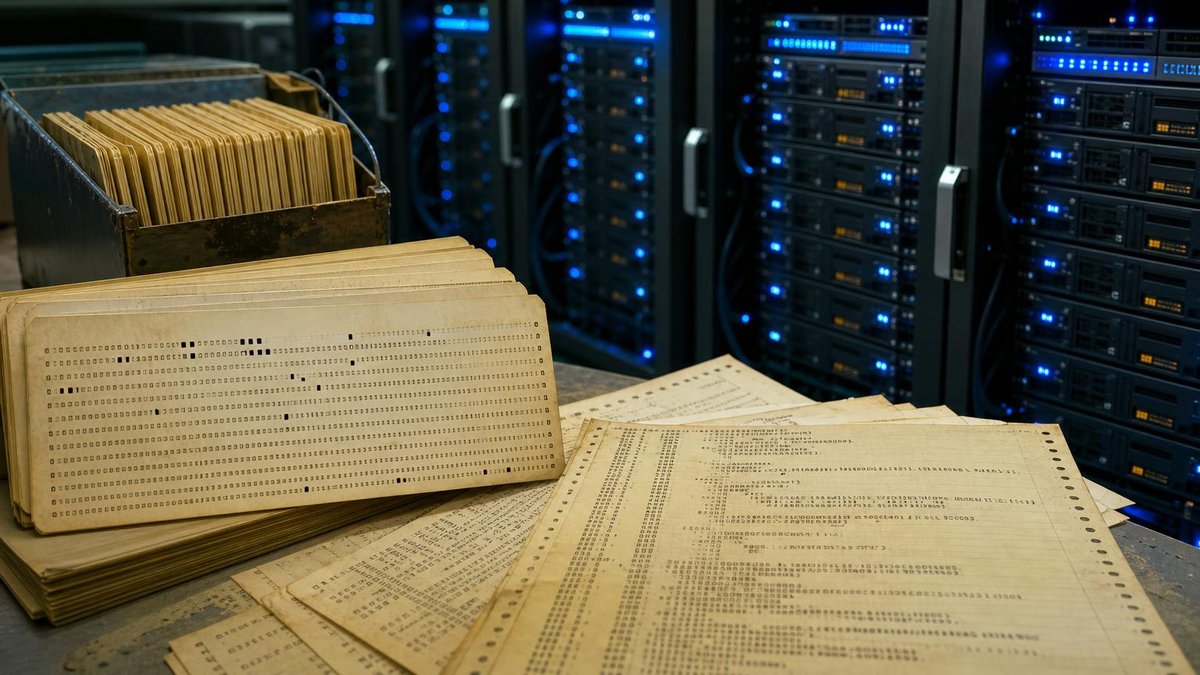
Traditional climate models are monuments to human ingenuity. Millions of lines of Fortran encode thermodynamics, fluid motion, radiative transfer. These models gave us the foundational understanding that human activity is warming the planet. The IPCC’s confidence rests heavily on their output.
But physics-based models hit walls.
The compute demands are staggering. One century-scale run can burn months on a supercomputer. Scale is another killer. Cloud processes that drive rainfall operate at meters; global models run at kilometers. Parameterizations patch this divide, yet they add uncertainty.
Machine learning didn’t barge in to replace physics. It slipped into gaps physics couldn’t close alone. Neural networks spot patterns across satellite archives, weather station records, ocean buoy data; patterns no human could catalogue in a lifetime. Conservation laws stay intact. The algorithms simply work alongside them.
Hybrid approaches are spreading through major research centers now. The transformation of AI across industries has grabbed headlines, but atmospheric science plays by different rules. Botch a weather forecast, someone packs wrong for a hike. Botch a climate projection, cities misallocate billions. Communities face ruin unprepared.
Where Machine Learning Actually Helps
Not every climate problem benefits from AI. The field learned that through expensive trial and error. Several domains have shown genuine, replicated success.
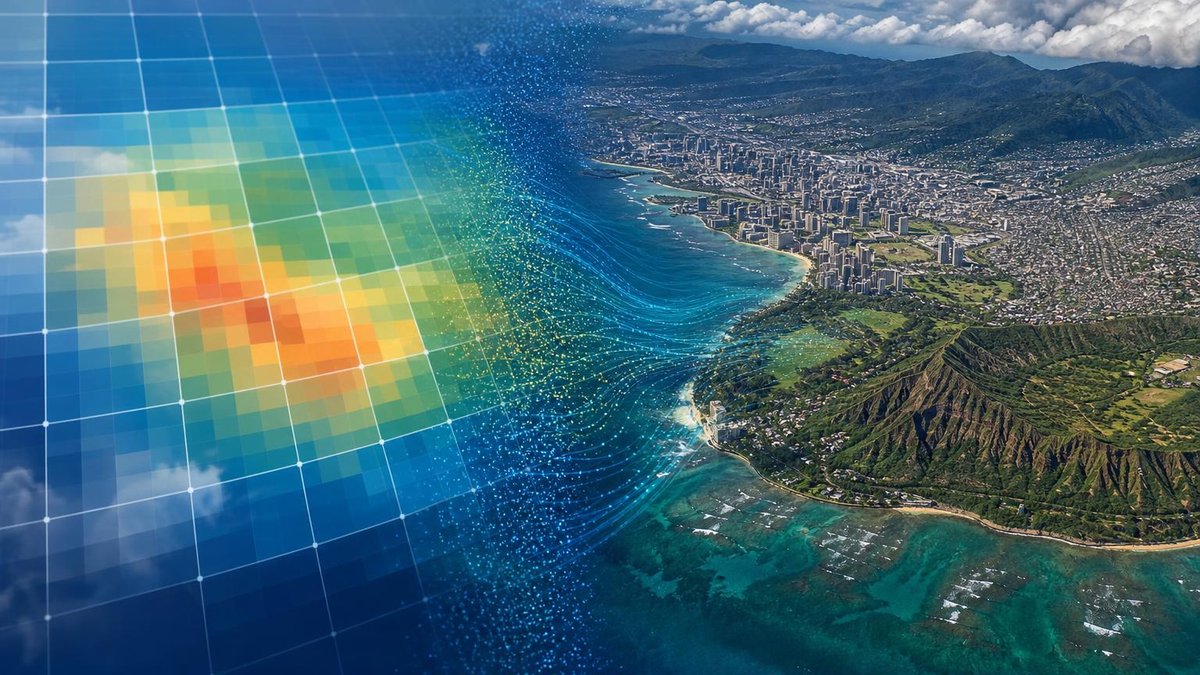
- Downscaling regional projections: Global models output data at roughly 100-kilometer resolution. Cities need kilometer-scale projections for flood planning and heat preparedness. Convolutional neural networks trained on historical high-resolution observations can downscale temperature and precipitation with skill matching traditional statistical methods at a fraction of the computational cost, per a 2022 study in Nature Climate Change.
- Emissions detection and attribution: Methane leaks from oil and gas infrastructure are notoriously hard to pin down. Satellite hyperspectral data generates terabytes that human analysts can’t process. Deep learning models now flag anomalous methane concentrations automatically. Repairs happen fast; before, leaks often went completely unnoticed.
- Extreme event attribution: Pinning a specific heatwave or flood on climate change used to devour weeks of supercomputer time. Machine learning emulators of full physics models now produce probabilistic attribution statements in hours, documented by the World Weather Attribution collaboration.
- Sub-seasonal to seasonal forecasting: The “predictability gap” between weather forecasts (two weeks) and climate projections (decades) has long frustrated agricultural planners. Neural network approaches, particularly those incorporating ocean-atmosphere coupling patterns, are showing skill at the 3-6 week horizon that traditional dynamical models miss.
- Ice sheet dynamics: Antarctic ice loss remains the largest uncertainty in sea level projections. Deep learning trained on synthetic aperture radar interferometry is improving bedrock topography mapping beneath glaciers, a critical input for flow models.
Each of these applications shares something important. The AI doesn’t hallucinate physical laws. It’s constrained by them, trained on observations that embody them, validated against independent measurements that test them.
The Carbon Tracking Revolution
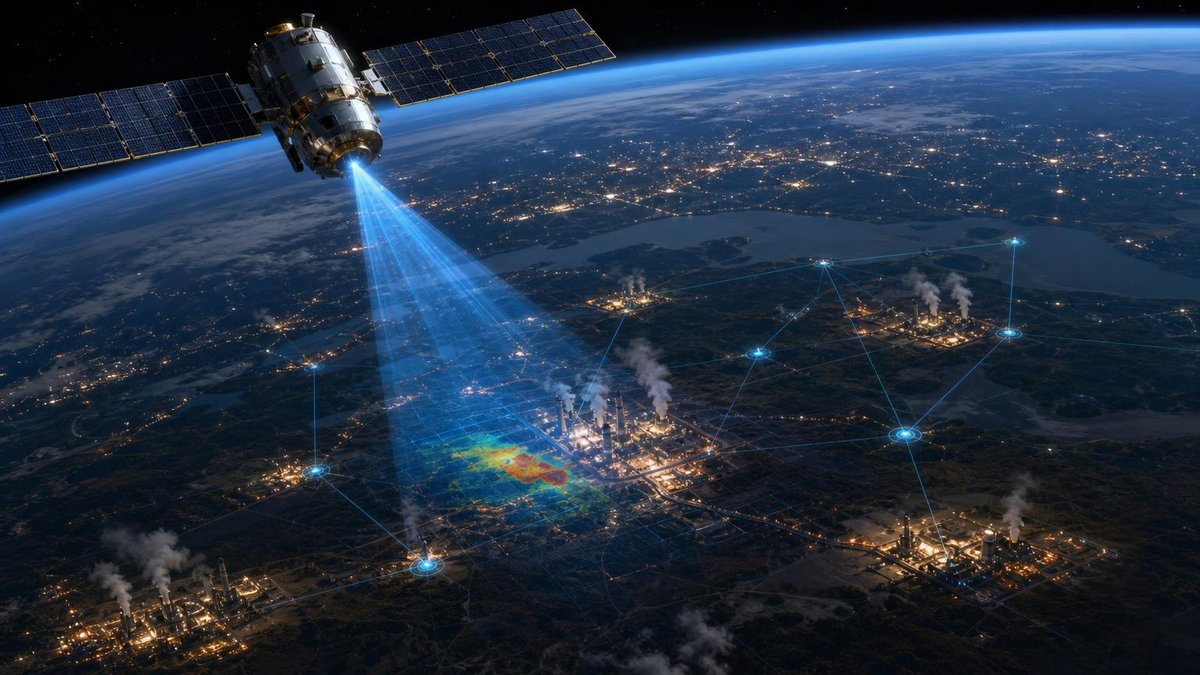
One area where AI has moved from research to operational deployment is emissions monitoring. The old system relied on self-reported inventories, annual updates, spotty verification. It was designed for an era when climate policy moved at the speed of diplomatic conferences.
That era’s ending.
The European Space Agency’s Copernicus program, NASA’s Orbiting Carbon Observatory, and commercial constellations like GHGSat now generate continuous global coverage. The data volume overwhelms traditional analysis methods.
Google’s contribution illustrates the shift. Their global methane emission mapping initiative applies computer vision to satellite imagery, automatically detecting oil and gas facility leaks that operators had left unreported. The system combines hyperspectral satellite data with aerial surveys and ground sensors, using machine learning to fuse these disparate sources into actionable alerts.
The impact is measurable. In 2023, the International Energy Agency estimated that methane emissions from fossil fuel operations could be reduced by 75% using existing technologies, with over half coming from leaks that detection systems like these could identify at net zero cost given the value of captured gas.
| Characteristic | Traditional Inventories | AI-Enhanced Monitoring |
|---|---|---|
| Update frequency | Annual to biennial | Near-real-time (hours to days) |
| Spatial resolution | National or regional aggregates | Facility-level (tens of meters) |
| Detection approach | Self-reported activity data multiplied by emission factors | Direct atmospheric measurement with inverse modeling |
| Methane leak detection rate (oil/gas) | Dependent on operator reporting; systematic undercounting documented | IEA estimates 70% of oil/gas methane emissions now technically recoverable with improved detection |
| Verification mechanism | Limited third-party audit | Continuous satellite and aerial cross-validation |
This matters because methane’s warming impact is front-loaded. Over a 20-year horizon, it’s roughly 80 times more potent than CO2. Finding and fixing leaks this decade has outsized temperature benefits.
What Climate Scientists Worry About

The enthusiasm for AI in climate research isn’t unconditional. Several concerns keep coming up in conversations with working scientists.
Physical plausibility. Neural networks can learn spurious correlations. A model trained to predict summer temperatures might overweight some oscillation that happened to coincide with warming in the training period but lacks causal connection. When extrapolated to future conditions, such relationships break. Rigorous out-of-sample testing, including “hindcasting” against historical periods withheld from training, is essential but not always performed.
Data bias. Weather station coverage is dense in wealthy nations, sparse in Africa and the Pacific. Satellite records have gaps from orbital geometry and cloud cover. AI systems trained on this uneven data reproduce and can amplify these geographic inequities. A storm surge model excellent for Florida may be dangerously wrong for Bangladesh.
Energy costs. Training large neural networks consumes significant electricity. Some foundation models in climate AI have carbon footprints equivalent to hundreds of flights across the Atlantic. For a field dedicated to emissions reduction, this creates genuine tension. Researchers are responding with more efficient architectures, renewable-powered computing, and careful cost-benefit analysis of when AI is actually needed versus traditional methods.
Explainability. Policy makers ask why a model projects specific outcomes. “The neural network said so” isn’t an acceptable answer. Interpretability methods are improving but remain works in progress.
These concerns explain why climate scientists increasingly speak of “physics-informed machine learning,” where neural networks are constrained to respect conservation laws, boundary conditions, and known symmetries. The goal isn’t to replace understanding with black boxes, but to extend understanding where brute-force computation fails.
Who Gets to Build These Tools
A less discussed but crucial issue is concentration of capability. The most sophisticated climate AI models are being developed by a handful of well-resourced institutions: DeepMind, Microsoft Research, NASA JPL, and major European weather centers. This mirrors broader patterns in AI development, where computational resources and curated training data concentrate in wealthy organizations.
The risk? Climate tools optimized for California or the North Atlantic get deployed globally without adequate local validation. Coastal climate experts in Vietnam or Senegal may find that models trained on fundamentally different coastlines mislead more than they help. Capacity building, open training datasets, and regional model customization are necessary correctives.
Some progress exists. The World Meteorological Organization’s Unified Data Policy, adopted in 2021, encourages free exchange of observational data. Initiatives like Climate Change AI provide compute grants to researchers in under-resourced institutions. But the gap between aspiration and reality remains wide.
For readers interested in how AI enables broader climate change technologies, the applications extend well beyond research into deployment and policy implementation.
Looking Ahead: The Next Five Years
Several developments seem likely based on current trajectories.
Foundation models for weather and climate, trained on decades of reanalysis data, will become standard tools. These models, analogous to large language models but for Earth system data, can be fine-tuned for specific regional applications without training from scratch. Early examples from NVIDIA, Huawei, and Google DeepMind already show competitive skill with operational weather models at drastically lower computational cost.
Digital twins of the Earth system, updated continuously with real observations, will move from prototype to limited operational use. The European Commission’s Destination Earth initiative aims for this, with AI handling data assimilation and uncertainty quantification at scales impossible for traditional methods.
Attribution science will become near-real-time. Within days of major extreme events, automated systems will produce probabilistic statements about climate change’s role. This has implications for disaster response, insurance pricing, and legal liability that society has barely begun to process.
Perhaps most importantly, AI will increasingly operate at the interface between climate science and decision-making. Not just producing better projections, but translating them into actionable information for water managers, grid operators, and public health officials. The latest breakthroughs in sustainable living increasingly depend on this translation layer functioning well.
Frequently Asked Questions
Understanding AI’s Role in Climate Research
How is artificial intelligence different from traditional computer modeling in climate science?
Traditional climate models encode known physical laws and solve them numerically on a grid. They’re interpretable and physically consistent but computationally expensive and limited by scale gaps. AI models learn patterns from data statistically. They can capture complex, emergent relationships that are hard to encode explicitly, but require careful validation to ensure physical plausibility. Most promising current work combines both approaches.
Can AI predict specific weather events better than existing methods?
For short-term weather (under two weeks), AI methods are approaching but not consistently exceeding the best physics-based numerical weather prediction. Where AI shows particular promise is in the “predictability gap” of sub-seasonal forecasting (3-6 weeks), where traditional models lose skill, and in rapid intensification of tropical cyclones.
What is “physics-informed machine learning” and why does it matter?
This approach builds physical constraints directly into neural network architecture or loss functions. A model might be required to conserve energy globally, or to satisfy known boundary conditions at the ocean surface. It matters because unconstrained AI can violate basic physical laws when extrapolating beyond training data, producing impossible results.
Practical Applications and Concerns
How reliable are AI systems for tracking corporate carbon emissions?
Reliability varies by emission source and monitoring technology. Methane leaks from fossil fuel infrastructure are now detectable with high confidence using satellite-AI systems, as demonstrated by multiple independent validations. CO2 emissions from power plants are harder to attribute to specific facilities from space. For diffuse sources (agriculture, transport), AI-enhanced modeling still depends heavily on activity data that is often self-reported.
Does training AI for climate research create its own emissions problem?
Yes, though the scale is debated. Training a large foundation model can consume electricity equivalent to dozens of households’ annual use. However, this must be weighed against potential savings. One accurate AI-based weather forecast that prevents unnecessary agricultural spraying, or one methane leak detection that enables rapid repair, can offset training emissions many times over.
How can non-experts evaluate claims about AI in climate solutions?
Look for specificity. Legitimate applications name the data sources, validation procedures, and physical constraints involved. Be skeptical of claims that AI will “solve” climate change generally, or that replace the need for emissions cuts. The most credible work comes from peer-reviewed sources with open code and data. Organizations like Climate Change AI maintain public repositories of vetted research.
Sources
- Intergovernmental Panel on Climate Change (IPCC), 2021. Climate Change 2021: The Physical Science Basis. https://www.ipcc.ch/report/ar6/wg1/
- International Energy Agency (IEA), 2023. Global Methane Tracker 2023. https://www.iea.org/reports/global-methane-tracker-2023
- National Aeronautics and Space Administration (NASA), ongoing. Orbiting Carbon Observatory-2 (OCO-2) Mission Data. https://ocov2.jpl.nasa.gov/
- World Meteorological Organization (WMO), 2021. Resolution 1 (Cg-Ext(2021)) Unified Data Policy. https://library.wmo.int/idurl/4/57345
- European Space Agency (ESA), ongoing. Copernicus Atmosphere Monitoring Service. https://atmosphere.copernicus.eu/
- Pathak, J., et al., 2022. “FourCastNet: A Global Data-driven High-resolution Weather Model using Adaptive Fourier Neural Operators.” arXiv:2202.11214.
- Climate Change AI, ongoing. Publications and Resources Database. https://www.climatechange.ai/
This article is for informational purposes only.
Reference: https://www.carbonbrief.org/experts-how-are-climate-scientists-using-artificial-intelligence

Dr. Alexander Tabibi is an entrepreneur, investor, and advocate for sustainable innovation with a deep commitment to leveraging technology for environmental and social good. As a thought leader at the intersection of business and sustainability, Dr. Tabibi brings a strategic vision to Green.org, helping guide its mission to inspire global climate awareness and actionable change.
With a background in both medicine and business, Dr. Tabibi combines analytical rigor with entrepreneurial insight.