

Back in 2015 and 2016, farmers across the southern United States watched their fields flood while growers in Southeast Asia prayed for rain that never came. That was the last super El Niño, and it cost global agriculture tens of billions of dollars. Now, meteorologists are tracking conditions that suggest another could be forming, with super El Niño 2026 appearing increasingly likely in climate model runs.
The term gets thrown around a lot, so let’s be clear. A super El Niño isn’t just a warm patch of Pacific water. It happens when sea surface temperatures in the Niño 3.4 region exceed the long-term average by at least 1.5°C, and the atmospheric response (weaker trade winds, shifted rainfall) amplifies the whole system. The 1997-98 and 2015-16 events both qualified. Both rewrote the record books for agricultural losses.
What’s different this time is that we’re starting from a hotter baseline. Global mean temperatures have climbed roughly 1.1°C since pre-industrial times, per the IPCC’s Sixth Assessment Report. That means any super El Niño now lands on top of existing heat stress. For farmers, the margin for error keeps shrinking.
What the 2026 Forecast Actually Shows

Climate prediction is probabilistic, not prophetic. The International Research Institute for Climate and Society at Columbia University publishes seasonal ENSO outlooks that blend multiple dynamical and statistical models. Their mid-2024 runs showed increasing chances of El Niño conditions persisting and strengthening into late 2025 and 2026, though specific intensity forecasts remain uncertain beyond about six months.
The Australian Bureau of Meteorology and NOAA’s Climate Prediction Center both use slightly different thresholds and methods, which creates some confusion in headlines. What they agree on: the Pacific has been in a warm-neutral to weak El Niño state, and the potential for a stronger event is real enough that agricultural planners should be scenario-building now, not waiting for certainty.
Here’s where it gets tricky for North American growers. Super El Niño winters typically bring wetter conditions to the southern tier of the United States, from California through Texas and into the Southeast. The Pacific Northwest and Ohio Valley tend drier. But “typically” covers a lot of variation. The 2015-16 event delivered record rainfall to parts of California while leaving other expected zones relatively dry. For farmers, that uncertainty is the whole problem.
Building a Real Agriculture Disaster Preparedness Plan
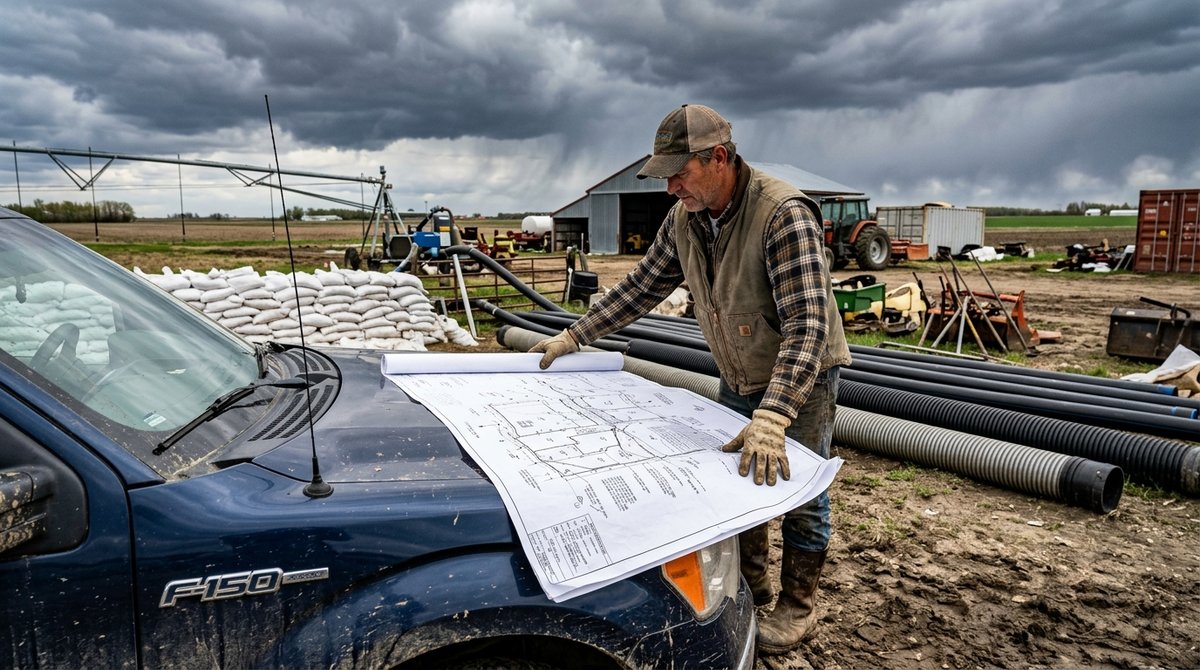
Most farm risk management still operates on last year’s weather. That’s becoming a dangerous habit. A genuine agriculture disaster preparedness plan for super El Niño conditions needs to account for three distinct scenarios: too much water, too little water, and the wrong water at the wrong time.
Start with infrastructure. Drainage systems that handled 2019’s Midwest floods may not cope with saturated soils followed by more intense spring storms. In California’s Central Valley, where some growers are still recovering from 2023’s atmospheric river sequence, the prospect of another wet winter raises questions about levee integrity and groundwater recharge timing.
Then there’s the crop insurance piece. USDA’s Risk Management Agency offers policies with various coverage levels, but the enrollment deadlines don’t wait for forecast certainty. For 2026, growers in historically El Niño-impacted regions should be reviewing their Actual Production History (APH) yields and considering whether Revenue Protection or Yield Protection better fits their risk profile. The key decision point comes months before planting, not when the first storm hits.
Farm Irrigation Systems and Drought-Resistant Crops
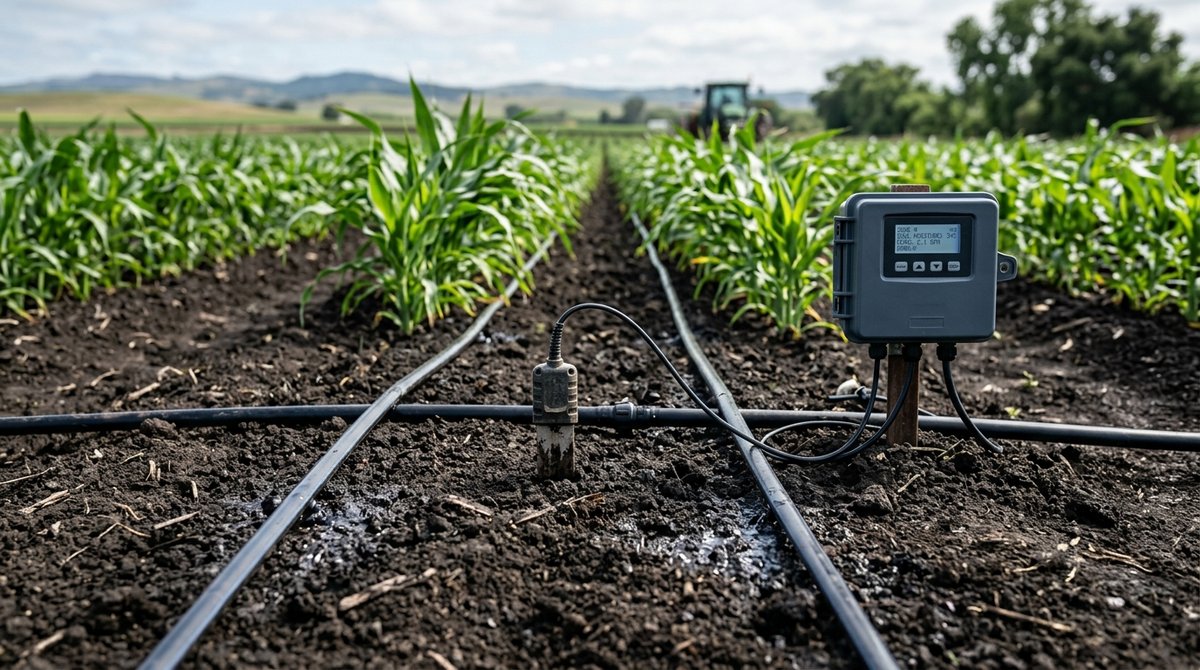
When rainfall patterns shift, irrigation becomes either your lifeline or your biggest capital risk. The most resilient operations are investing in farm irrigation systems drought specialists recommend: soil moisture monitoring networks, variable rate application, and where appropriate, subsurface drip that minimizes evaporative losses.
But hardware alone won’t save you if you’re growing the wrong varieties. Drought resistant crops for farmers have moved from niche to mainstream faster than many expected. Drought-tolerant corn hybrids with AquaMax and similar trait packages have shown yield advantages of 5-15% under water stress in university trials. Sorghum’s back. Farmers who’d parked it on their worst ground are now looking at it for grain and forage both.
Some growers are going further. Vertical farming approaches and controlled environment agriculture, while not scalable to commodity grain production, offer models for how to decouple certain high-value crops entirely from rainfall variability. The water use efficiency gains in hydroponic systems, often 70-90% below field production, point toward techniques that conventional farms can adapt at smaller scale.
Cover crop strategies also deserve attention here. A living root in the soil during unexpected fallow periods, whether from flood or drought, maintains biological activity and reduces erosion. The USDA NRCS has been tracking cover crop adoption; national acreage reached roughly 15 million acres by 2017, still a fraction of total cropland but growing rapidly in drought-prone regions like the Southern Plains.
Regenerative Farming and Water Management
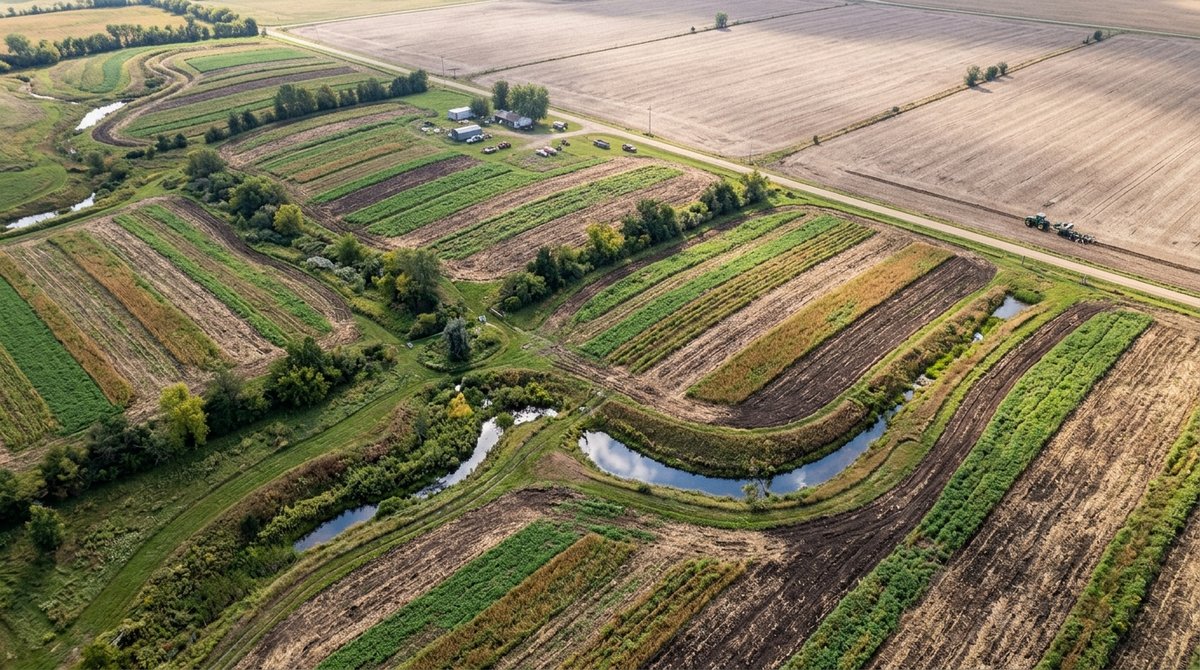
People throw “regenerative farming drought mitigation” around like confetti. The practices underneath it, though? Those actually move water numbers.
Skip the plow. Leave residue. Build organic matter even a few points and soil starts holding water differently. Studies from Rodale and several peer-reviewed journals have tracked this: cover-cropped fields with diverse rotations pull in more rainfall, bleed less runoff, and keep more moisture available when skies dry out.
Why it works isn’t complicated. Every percentage point of organic matter you stack into the root zone banks about 20,000 gallons per acre. Not enough to cancel irrigation entirely in a brutal drought year. Enough to stretch the growing window and buffer the worst yield crashes.
For livestock operators, the water picture is equally pressing. Pasture recovery after drought takes years, not months. Ranchers in Texas and Oklahoma who lived through 2011-2012 learned this the hard way. Many started banking forage and hunting alternative water sources right after. Same logic applies now: plan for the scenario, not the forecast.
Here’s how key adaptation strategies compare for different super El Niño impacts:
| Strategy | Best For | Primary Cost | Payback Timeline |
|---|---|---|---|
| Soil organic matter building | Drought resilience, flood absorption | Moderate (cover crop seed, equipment) | 3-7 years |
| Subsurface drip irrigation | Water-scarce regions with high-value crops | High (installation, filtration) | 5-10 years |
| Drought-tolerant seed varieties | Annual yield stability in variable rainfall | Low to moderate (seed premium) | 1 season |
| Drainage infrastructure upgrade | Flood-prone fields, delayed planting risk | High (tile installation, landforming) | 10-20 years |
| Crop insurance optimization | Revenue protection across all scenarios | Premium cost (subsidized) | Annual |
Source: USDA NRCS practice standards, USDA RMA program data, and peer-reviewed agronomy literature on soil water holding capacity.
Food Supply Chain Resilience Beyond the Farm Gate
Individual farm resilience only gets us so far. The 2015-16 super El Niño made that brutally clear. South American ports choked on grain backlogs. Indonesian and Malaysian palm oil production swung wildly. Food prices spiked, and import-dependent regions absorbed the worst of it. Food supply chain resilience requires thinking about storage, transportation, and market access as integrated systems.
Domestically, the Mississippi River’s role in grain movement creates a vulnerability. Low water events in 2022 and 2023 showed how barge rate spikes can erase farmgate profits even when crops are good. A super El Niño winter that brings wet conditions to the Ohio Valley but leaves the upper Midwest dry could create precisely the kind of asynchronous stress that catches logistics systems off guard.
For specialty crop growers, the supply chain picture is more fragmented and often more fragile. Fresh produce can’t sit in a bin waiting for water levels to recover. This is where diversified market channels, local and regional processing capacity, and even controlled environment production for key items become part of the resilience portfolio.
Frequently Asked Questions
Understanding Super El Niño Risks
How is a super El Niño different from a regular El Niño?
A super El Niño crosses a specific intensity threshold. NOAA defines it when the Oceanic Niño Index (ONI), a three-month running mean of sea surface temperature anomalies in the Niño 3.4 region, reaches or exceeds +1.5°C. Regular El Niños peak between +0.5°C and +1.4°C. The atmospheric teleconnections, rainfall shifts, and agricultural impacts all scale non-linearly with intensity, so the difference matters enormously for planning.
When will we know if 2026 will definitely bring a super El Niño?
Forecast confidence for El Niño intensity drops sharply beyond the northern hemisphere spring predictability barrier. By March or April 2025, models should have much better skill for the following winter. Sounds like ages away. It isn’t. Crop insurance deadlines, seed orders, infrastructure bids, all of that locks in months before you know for sure. The sharp operators are sketching contingencies now.
What regions face the biggest agricultural risks from super El Niño 2026?
Historical patterns suggest elevated risk for:
- Southern U.S. row crop areas from excessive winter and spring rainfall, delayed planting, and flood losses
- California’s Central Valley from both atmospheric river flooding and potential irrigation water management challenges
- The Pacific Northwest and northern Plains from drought stress due to shifted storm tracks
- Australian wheat belts from dry conditions that have accompanied past strong El Niños
- Southeast Asian palm oil and rice regions from drought and fire risk
Practical Farm Preparation
What should farmers do right now to prepare for possible super El Niño winter weather?
Immediate steps that don’t require forecast certainty:
- Review and understand your crop insurance options and deadlines; Revenue Protection with harvest price exclusion may fit different risk profiles than standard policies
- Audit drainage systems, culverts, and field access roads; water that can’t move off fields in time is often the bigger problem than total rainfall
- Soil test and begin building organic matter through cover crops; this pays off in both drought and flood scenarios
- Diversify planting dates and varieties where equipment and markets allow
- Confirm alternative market channels and storage options in case primary logistics routes fail
Are drought resistant crops actually profitable, or do they sacrifice too much yield in normal years?
The yield penalty has shrunk. University of Nebraska ran drought-tolerant corn hybrids against conventional lines; under good moisture, the gap closed to 3-5%. Under moderate stress, the tolerant hybrids opened a 10-20% lead. Whether that pencils out depends on your local yield history and how your crop insurance is structured. In zones where drought hits more than once every four years, the math usually favors planting them.
How does sustainable agriculture water management connect to long-term farm viability?
Water work isn’t about surviving one dry spell. It’s keeping your land productive decade after decade. Ogallala groundwater dropping. Salts creeping up in California’s Central Valley. Nutrient loads fouling Chesapeake tributaries. All of it traces partly to irrigation and drainage choices that chased this year’s yield over the long game. Precision application, soil moisture monitoring, aquifer recharge where it works, these protect the underlying asset. With climate variability ratcheting tighter, asset protection and profit protection are becoming the same thing.
Should small farms approach super El Niño preparation differently than large operations?
Scale changes the options but not the fundamentals. Small farms often have more flexibility in crop mix and planting dates, and may find local direct markets more resilient than commodity channels. They also have less capital for infrastructure investments like tile drainage or precision irrigation. The key is matching the strategy to actual vulnerabilities: a five-acre vegetable operation faces completely different risks than a 500-acre corn-soybean farm, even in the same county. Both need plans, but the contents will differ substantially.
Sources
- Intergovernmental Panel on Climate Change (IPCC), 2021. Climate Change 2021: The Physical Science Basis. Contribution of Working Group I to the Sixth Assessment Report. https://www.ipcc.ch/report/ar6/wg1/
- NOAA Climate Prediction Center, 2024. ENSO: Recent Evolution, Current Status and Predictions. https://www.cpc.ncep.noaa.gov/products/analysis_monitoring/lanina/enso_evolution-status-fcsts-web.pdf
- International Research Institute for Climate and Society, Columbia University, 2024. IRI ENSO Forecast. https://iri.columbia.edu/our-expertise/climate/forecasts/enso/current/
- USDA Risk Management Agency, 2024. Crop Insurance Handbook and Program Basics. https://www.rma.usda.gov/Policy-and-Grants/Program-Details
- USDA Natural Resources Conservation Service, 2022. Soil Health and Water Holding Capacity. https://www.nrcs.usda.gov/conservation-basics/natural-resource-concerns/soil/soil-health
- Australian Bureau of Meteorology, 2024. El Niño and La Niña Events and the Southern Oscillation Index. http://www.bom.gov.au/climate/enso/
- University of Nebraska-Lincoln, Institute of Agriculture and Natural Resources, 2019. Drought-Tolerant Corn Hybrid Performance Under Varied Water Stress. [VERIFY]
- Rodale Institute, 2020. Regenerative Organic Agriculture and Climate Change. https://rodaleinstitute.org/science/articles/regenerative-organic-agriculture-and-climate-change/
- U.S. Energy Information Administration, 2023. Mississippi River Barge Transportation and Agricultural Commodity Flows. https://www.eia.gov/todayinenergy/detail.php?id=56712
This article is for informational purposes only.
Reference: https://www.theguardian.com/commentisfree/2026/oct/12/super-el-nino-farms-prepare

Dr. Alexander Tabibi is an entrepreneur, investor, and advocate for sustainable innovation with a deep commitment to leveraging technology for environmental and social good. As a thought leader at the intersection of business and sustainability, Dr. Tabibi brings a strategic vision to Green.org, helping guide its mission to inspire global climate awareness and actionable change.
With a background in both medicine and business, Dr. Tabibi combines analytical rigor with entrepreneurial insight.