
Every time you type a prompt into ChatGPT (or in my case Claude which is my preferred company for a number of reasons), ask an AI to generate an image, or let a recommendation algorithm decide what you watch next, something invisible is happening in the background.
Servers are spinning up. Electricity is flowing. Cooling systems are kicking in. And somewhere, a power grid is drawing on energy that may or may not come from renewable sources.
The environmental cost of AI is real, it’s growing, and most people have no idea it exists. We’ve spent years debating whether to take shorter showers (which I do to my wife’s annoyance) or bring reusable bags to the grocery store – while quietly feeding one of the most energy-hungry technologies ever built. That’s not a criticism of using AI. It’s a call to understand what’s actually going on.
Because if we’re going to be honest about sustainability in 2026 and beyond, we can’t keep leaving artificial intelligence out of the conversation.
Contents
- 1 What Does It Actually Take to Run an AI Model?
- 2 Data Centers: The Invisible Infrastructure Driving AI Energy Consumption
- 3 The Hidden Environmental Impact of Artificial Intelligence You’re Not Being Told About
- 4 Green AI Solutions: What the Industry Is (and Isn’t) Doing
- 5 How to Reduce Your AI Carbon Footprint – Practically and Realistically
- 6 Frequently Asked Questions About the Environmental Cost of AI
- 6.1 How much energy does a single AI prompt actually use?
- 6.2 Is AI training or AI inference worse for the environment?
- 6.3 Are big tech companies doing enough to reduce AI’s environmental impact?
- 6.4 What are sustainable AI practices I can adopt as an individual?
- 6.5 How does AI affect water use, not just energy?
- 6.6 What is green AI, and does it actually work?
- 6.7 Can WordPress websites using AI tools reduce their environmental impact?
- 6.8 Share this:
- 6.9 Related Post
What Does It Actually Take to Run an AI Model?

Let’s start with the basics. AI models – especially large language models like GPT-5 or image generators like Midjourney – don’t live on a laptop somewhere. They run on massive clusters of specialized chips, mostly GPUs, housed in data centers that consume extraordinary amounts of electricity around the clock.
Training a single large AI model can emit as much carbon as five cars over their entire lifetimes. That figure, which comes from a widely cited 2019 study from the University of Massachusetts Amherst, surprised a lot of people when it first surfaced. And that was before models got dramatically larger and more widely used.
Training is the heavy lift – but inference (the part where the model actually responds to your prompts) adds up too. One estimate suggests that a single ChatGPT query uses roughly 10 times the energy of a standard Google search. Multiply that by billions of queries per day, and you start to get a sense of the scale.
The AI carbon footprint isn’t a hypothetical future problem. It’s already here, and it’s already significant.
Data Centers: The Invisible Infrastructure Driving AI Energy Consumption
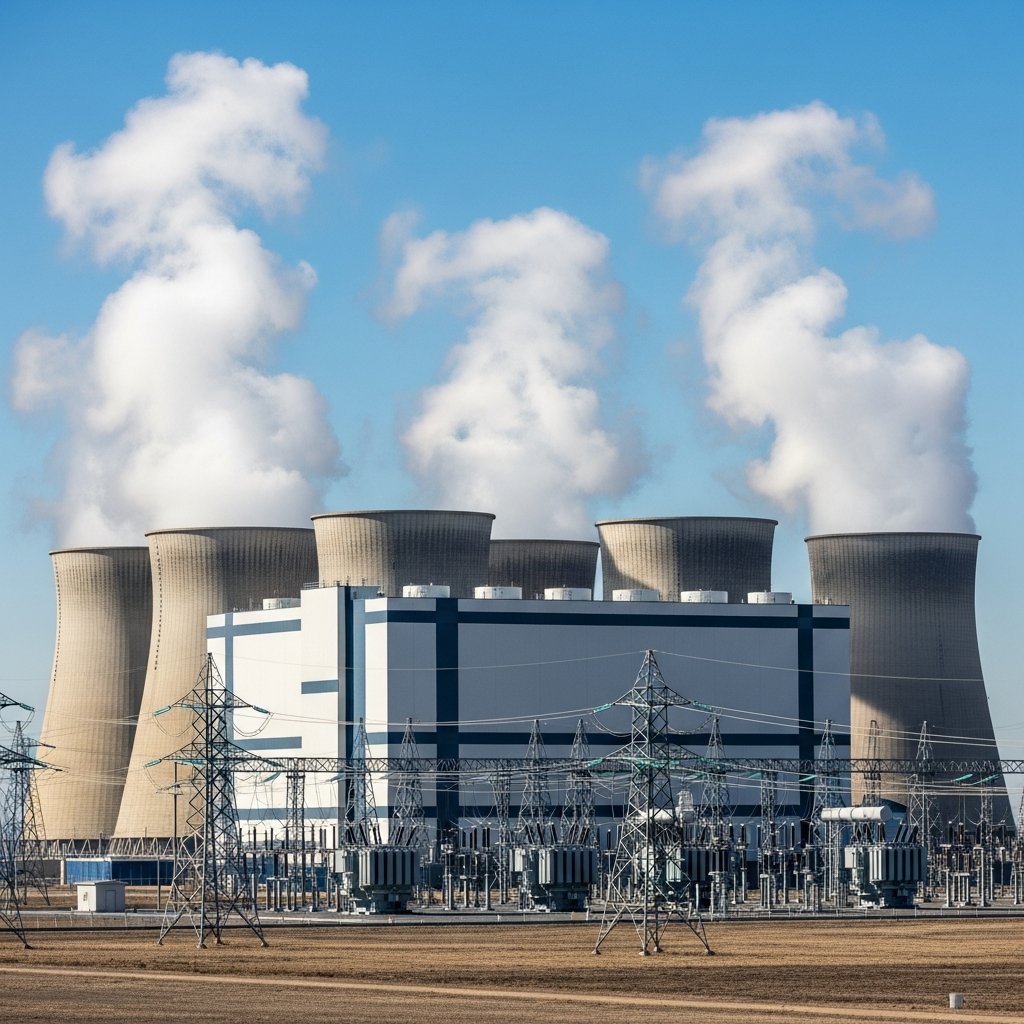
Data centers are the beating heart of the AI economy. They’re also enormous consumers of electricity and water. In 2023, global data centers were estimated to account for around 1-2% of worldwide electricity consumption – a number that’s climbing fast as AI workloads intensify.
Water is the part most people forget about entirely. These facilities use cooling systems that can consume millions of liters of water per day. In regions already under water stress, that’s not a minor footnote. It’s a serious local environmental issue layered on top of the global carbon problem.
AI data center energy use is concentrated in a handful of places – Northern Virginia, parts of Ireland, Singapore, and elsewhere – but its effects ripple outward. When demand spikes, grids draw on whatever power is available, which often means fossil fuels. The cleaner the grid, the cleaner the AI. But not all grids are equal, and not all tech companies are being transparent about where their energy actually comes from.
This kind of systemic, infrastructure-level pressure on natural resources is part of a broader pattern. The same forces driving climate stress – overconsumption, invisible supply chains, energy-intensive growth – show up across every sector. As we’ve covered in stories like the flash floods in Pakistan, climate consequences land hardest on communities that had the least to do with causing them.
The Hidden Environmental Impact of Artificial Intelligence You’re Not Being Told About

Here’s where it gets uncomfortable. The tech industry has done a masterful job of framing AI as clean, digital, and therefore environmentally neutral. It lives in “the cloud.” It doesn’t have a smokestack. It doesn’t cut down forests.
Except, in a roundabout way, it kind of does. When energy demand rises and grids expand to meet it, land is cleared. Infrastructure is built. Resources are extracted. The hidden environmental impact of artificial intelligence runs through supply chains that most users never see.
There’s also the hardware side. Training and running AI at scale requires chips built from rare earth minerals, mined under conditions that carry serious environmental and human rights implications. When those chips become obsolete – which happens fast in a field evolving this quickly – they become e-waste, which is one of the world’s fastest-growing and least-managed waste streams.
It’s worth noting that the downstream effects of environmental disruption compound over time. Deforestation linked to half a million deaths over 20 years is a stark reminder that ecological damage rarely stays contained to a single place or cause. AI’s footprint, however indirect, is part of that interconnected system.
Green AI Solutions: What the Industry Is (and Isn’t) Doing
To be fair, the tech industry is aware of this problem – at least some corners of it. Microsoft, Google, and Amazon have all made commitments to run their data centers on renewable energy. Some have invested heavily in carbon offset programs. Google DeepMind has used AI itself to optimize data center cooling, reportedly reducing energy use for cooling by around 40%.
These are genuinely meaningful steps. But there’s a catch. Renewable energy commitments often mean matching consumption with renewable energy credits, not necessarily running on clean power in real time. And as demand for AI accelerates, even companies with strong sustainability commitments are struggling to keep up. Microsoft’s carbon emissions actually rose 29% between 2020 and 2023, largely due to data center expansion for AI services.
Green AI solutions are emerging in research circles too. Techniques like model pruning (making models smaller and more efficient), federated learning (processing data locally instead of in centralized servers), and hardware improvements are all promising directions. The challenge is getting efficiency gains to outpace the explosive growth in AI usage. Right now, they’re not.
How to Reduce Your AI Carbon Footprint – Practically and Realistically

You don’t have to stop using AI. But you can use it more intentionally. Here are some genuine, practical ways to reduce AI prompt energy usage and make smarter choices.
Be deliberate with your prompts. Vague, exploratory queries that require multiple follow-ups consume more energy than a clear, well-structured request. Think before you type – not just for quality, but for efficiency.
Choose platforms that are transparent about their energy sourcing. Some AI providers publish sustainability reports. Some don’t. That transparency gap is itself telling.
For developers and businesses building on top of AI, the choices you make about infrastructure matter enormously. Opting for green hosting and selecting cloud regions powered by cleaner grids can meaningfully reduce your product’s environmental footprint. If you run a WordPress site that uses AI-powered features, looking into WordPress sustainability plugins for AI websites and pairing them with WordPress green hosting and AI-conscious architecture is a legitimate part of responsible development.
On a policy level, advocating for mandatory emissions disclosures from tech companies is one of the most impactful things individuals and organizations can push for. Voluntary commitments have limits. Accountability structures don’t.
Disparities in who bears the cost of emissions – and who benefits from the technologies driving them – is a recurring theme in environmental justice work. The UK’s wealth disparity in transport emissions illustrates how the burden of carbon rarely falls on those best positioned to reduce it. AI is likely to follow a similar pattern unless structural changes are made.
Frequently Asked Questions About the Environmental Cost of AI
How much energy does a single AI prompt actually use?
It varies by model and task, but estimates suggest a single ChatGPT query uses roughly 10 times the electricity of a standard Google search. Image generation and video AI models use considerably more. While each individual prompt seems trivial, at the scale of millions or billions of daily interactions, the cumulative AI energy consumption becomes very significant.
Is AI training or AI inference worse for the environment?
Training a model is far more energy-intensive as a one-time event – it can emit as much CO2 as several cars over their entire lifetimes. However, inference (running the model to respond to prompts) happens billions of times and accumulates over time. Both contribute meaningfully to the machine learning environmental impact, and neither should be dismissed.
Are big tech companies doing enough to reduce AI’s environmental impact?
- Some companies have made real renewable energy commitments, but many rely on carbon credits rather than direct clean power.
- Several major AI companies have seen their emissions rise despite sustainability pledges, largely due to rapid scaling.
- Research into more efficient models and hardware is promising but not yet outpacing the growth in AI demand.
- Independent auditing and mandatory disclosure remain limited, making it hard to verify claims.
What are sustainable AI practices I can adopt as an individual?
- Write clear, specific prompts to reduce back-and-forth interactions.
- Choose AI platforms that publish transparent sustainability data.
- Avoid using AI for tasks where a simpler tool would do the job.
- If you build with AI, prioritize green hosting providers and energy-efficient architectures.
How does AI affect water use, not just energy?
Data centers use enormous quantities of water for cooling. A single large data center can consume millions of liters per day. In water-stressed regions, this creates real competition with local communities and ecosystems for a critical resource – one that rarely gets mentioned in discussions about AI’s environmental footprint.
What is green AI, and does it actually work?
Green AI refers to approaches that prioritize efficiency and lower environmental impact in AI development and deployment. Techniques include model compression, more efficient hardware, renewable-powered data centers, and smarter deployment strategies. These approaches do work – the challenge is that they need to scale faster than overall AI adoption for the net effect to be positive. Right now, that race is still very much in progress.
Can WordPress websites using AI tools reduce their environmental impact?
- Yes – hosting with providers that use renewable energy is a meaningful first step.
- WordPress sustainability plugins for AI websites can help monitor and manage energy-related performance.
- Caching, optimized code, and minimal server calls all reduce the energy load of any web property, including AI-integrated ones.
- Choosing lightweight AI integrations over bloated, always-on tools makes a real difference at scale.
None of this is about guilt. It’s about awareness. The environmental cost of AI is one of those issues that’s easy to ignore because it’s invisible – the servers are hidden, the emissions are diffuse, and the harm feels abstract. But it’s real, and it’s scaling fast. The good news is that the tools, knowledge, and choices to do better already exist. Using them is the next step.
This article is for informational purposes only.
Reference: https://www.earthday.org/the-true-price-of-every-chatgpt-prompt/

Dr. Alexander Tabibi is an entrepreneur, investor, and advocate for sustainable innovation with a deep commitment to leveraging technology for environmental and social good. As a thought leader at the intersection of business and sustainability, Dr. Tabibi brings a strategic vision to Green.org, helping guide its mission to inspire global climate awareness and actionable change.
With a background in both medicine and business, Dr. Tabibi combines analytical rigor with entrepreneurial insight.