
Contents
- 1 The Great Barrier Reef and Its Struggle for Survival
- 2 How Global Heating Shapes the Fate of Reefs
- 3 What the New Study Reveals About Recovery
- 4 The Hidden Strength of Coral Resilience
- 5 Conservation Efforts Paving the Way
- 6 Why Achieving the 2°C Target Is So Tough
- 7 The Power of Public Awareness
- 8 A Hopeful Horizon for the Reef
- 9 Great Barrier Reef Recovery: FAQs
The Great Barrier Reef and Its Struggle for Survival
Stretching more than 1,400 miles along Australia’s northeast coast, the Great Barrier Reef is the largest living structure on Earth — so vast it’s visible from space. It’s not just a tourist magnet or a marine marvel; it’s a crucial ecosystem that supports thousands of species, from tiny plankton to giant sea turtles.
But over the past decade, this natural wonder has faced an escalating crisis. Repeated mass bleaching events, fueled by rising ocean temperatures, have left large sections of the reef drained of color and life.
Scientists have watched with alarm as coral cover has declined faster than expected. Indeed just a few days ago I wrote an article regarding the fact that we may have reached the tipping point where coral reefs demise is inevitable.
Warmer seas stress the corals, causing them to expel the symbiotic algae that give them both color and nourishment. When that happens, the corals turn ghostly white — and if the heat persists, they die. It’s a delicate balance, and one that climate change threatens to tip beyond repair. Yet amid the sobering data, there’s a glimmer of hope: new research suggests that if global heating can be limited to 2 degrees Celsius, the reef might still recover. This aligns with broader initiatives promoting the circular economy as a solution for global waste issues.
How Global Heating Shapes the Fate of Reefs
Global heating — the long-term rise in Earth’s average temperature caused primarily by greenhouse gas emissions — is transforming marine environments worldwide. Oceans absorb roughly 90% of this excess heat, which is both a blessing and a curse. While it buffers land temperatures, it also pushes marine ecosystems to their limits. For coral reefs, even a small increase in sea temperature can spell disaster.
Across the globe, reefs are bleaching more frequently and recovering less completely. In the Great Barrier Reef, temperature spikes of just one or two degrees above normal can trigger bleaching events that cover hundreds of miles. Warmer water also fuels stronger cyclones and encourages outbreaks of coral-eating crown-of-thorns starfish — a one-two punch that has devastated already weakened reefs. The connection is clear: the hotter the planet gets, the harder it becomes for coral ecosystems to survive.
What the New Study Reveals About Recovery
The recent study — led by Australian researchers and published in a peer-reviewed journal — brings cautious optimism. Using decades of reef monitoring data and advanced climate models, they found that the Great Barrier Reef could still regain much of its coral cover if global heating is capped at or below 2°C above pre-industrial levels. That target aligns with the Paris Agreement, which aims to prevent the worst impacts of climate change.
Coral recovery, the study suggests, is possible when bleaching events are spaced far enough apart for corals to regrow. If temperature extremes occur only once every decade or so, rather than every few years, resilient species have a fighting chance. This means global efforts to reduce emissions aren’t just abstract targets — they’re lifelines for ecosystems like the reef. Meeting the 2°C goal, in practical terms, could buy the reef crucial time. This concept mirrors efforts in sectors aiming to reduce food waste through recycling.
The Hidden Strength of Coral Resilience
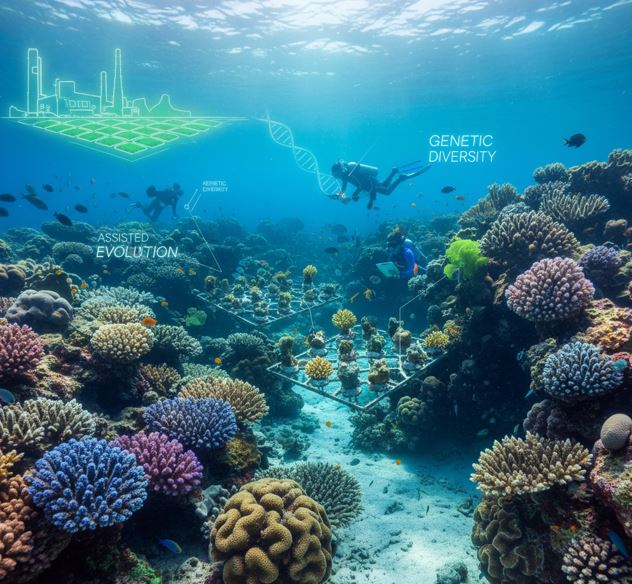
Corals may look fragile, but they possess remarkable resilience. Some species have evolved to tolerate warmer waters, while others can adapt their symbiotic algae partnerships to better survive heat stress. Scientists studying coral genetics have discovered that certain populations can “shuffle” their internal communities of algae to cope with rising temperatures — a survival mechanism akin to changing one’s diet in hard times.
Genetic diversity plays a huge role here. Reefs with varied coral species are more likely to bounce back after stress events. In some experimental nurseries, researchers are selectively breeding heat-tolerant corals and replanting them on damaged reefs — a practice sometimes called “assisted evolution.” These biological tactics, while not silver bullets, hint at nature’s capacity for adaptation when given breathing room. This is comparable to sustainable practices in biofuel production.
Conservation Efforts Paving the Way
Australia has invested heavily in reef protection, from regulating water quality to funding coral restoration projects. Marine protected areas have proven effective in limiting local stressors such as overfishing and pollution, allowing coral communities a better shot at recovery. Around the world, innovative technologies are being tested: underwater robots that plant coral larvae, genetic mapping to identify resilient strains, and even solar shading films designed to reduce ocean heat above sensitive reefs.
Beyond science, communities play a vital role. Indigenous groups have long practiced reef stewardship, and their traditional ecological knowledge is increasingly being integrated into modern management. Tour operators, fisheries, and local governments are also collaborating to reduce coastal runoff and anchor damage. Each action, small or large, contributes to the reef’s collective resilience. This holistic approach to conservation is akin to the way community engagement in waste management planning is being handled.
Why Achieving the 2°C Target Is So Tough
For all the optimism, the 2°C target remains a monumental challenge. Current global policies still put the planet on track for around 2.5 to 3°C of warming by the end of the century. International agreements like the Paris Accord depend on national commitments, yet implementation often lags due to political and economic pressures. Fossil fuel dependence, slow transitions to clean energy, and uneven climate financing continue to stall progress.
Still, there’s momentum. The rapid growth of renewable energy, corporate decarbonization pledges, and citizen-led climate movements signal change. Meeting the 2°C threshold will demand not just technology, but political will — the resolve to prioritize planetary health over short-term gains.
The Power of Public Awareness
Public understanding of coral health has never been more vital. When people realize that reef decline isn’t a distant issue but a global warning sign, attitudes shift. Education programs, documentaries, and social media campaigns are inspiring new generations to care — and act. From choosing sustainable seafood to supporting climate policies, individuals do have influence.
Media outlets and influencers are helping translate complex science into relatable narratives. The more visible and personal the story of the reef becomes, the greater the public appetite for solutions. Awareness, after all, often precedes action.
A Hopeful Horizon for the Reef
The Great Barrier Reef’s future is not yet written. The new research doesn’t promise an easy recovery, but it offers a path forward — one grounded in science, cooperation, and cautious hope. If global heating can be held to 2°C, corals stand a real chance to regenerate, ecosystems can stabilize, and future generations might still witness the reef’s full splendor. The clock is ticking, but there’s still time to rewrite the narrative — from loss to recovery, from despair to resilience.
Preserving the Great Barrier Reef is not just about saving coral; it’s about proving that global collaboration can still work in the face of climate adversity. And perhaps that, more than anything, is the lesson worth holding onto.
Great Barrier Reef Recovery: FAQs
Q1: What is the main finding of the new study about the Great Barrier Reef?
The study suggests that the Great Barrier Reef has the potential to recover from its recent rapid coral decline if global heating is limited to 2°C above pre-industrial levels. This offers a more optimistic outlook than previous assessments which often indicated irreversible damage above 1.5°C.
Q2: Will the reef decline stop immediately if we limit warming to 2°C?
No, the study predicts a “rapid coral decline” will continue until at least 2050, regardless of emissions scenarios. The recovery potential comes into play after this initial decline, relying on corals’ ability to adapt and repopulate.
Q3: What factors did the study’s model consider for potential recovery?
The sophisticated model accounted for coral adaptation to warmer waters, the dispersal of coral larvae between reefs (larval connectivity), and the presence of naturally cooler areas that can act as “climate refugia” for corals.
Q4: What is the primary threat to the Great Barrier Reef mentioned in the article?
Climate change, specifically rising ocean temperatures leading to mass coral bleaching events, is cited as the most significant threat to the reef.
Q5: What happens if global heating exceeds 2°C?
If global heating continues on its current trajectory and exceeds the 2°C target, the study warns that the average coral cover across the Great Barrier Reef could plummet to as low as 4% by the end of the century, indicating near-total loss.
Q6: What actions are needed to help the Great Barrier Reef recover?
The study emphasizes the urgent need for global action to significantly reduce greenhouse gas emissions. While natural recovery mechanisms are important, curbing emissions is highlighted as the “best thing that can happen” for the reef’s future.
This article is for informational purposes only.
Reference: https://www.theguardian.com/environment/2025/nov/05/great-barrier-reef-coral-bleaching-decline-global-heating-recovery

Dr. Alexander Tabibi is an entrepreneur, investor, and advocate for sustainable innovation with a deep commitment to leveraging technology for environmental and social good. As a thought leader at the intersection of business and sustainability, Dr. Tabibi brings a strategic vision to Green.org, helping guide its mission to inspire global climate awareness and actionable change.
With a background in both medicine and business, Dr. Tabibi combines analytical rigor with entrepreneurial insight.