
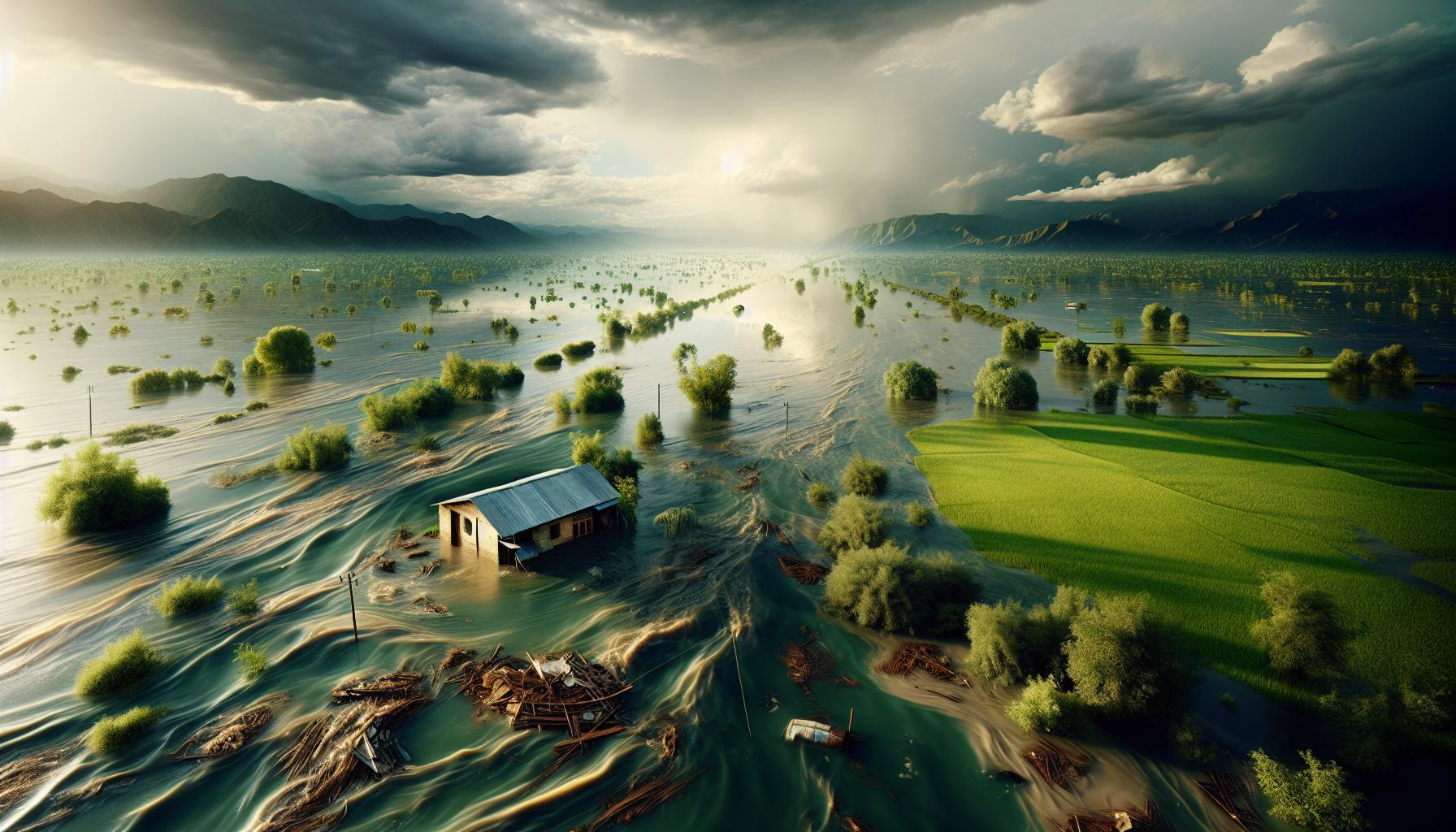
In a tragic turn of events, Pakistan recently grappled with the devastating consequences of flash floods triggered by relentless heavy rains. At least 49 lives have been lost in the northwestern regions of the country, painting a grim picture of the havoc such environmental phenomena can wreak. This incident once again brings to the forefront the pressing issue of climate change and its unpredictable impact on weather patterns around the world.
Contents
Connecting Weather Extremes to Climate Change
Flash floods, though not new to regions susceptible to heavy rainfall, have become more frequent and severe in recent years. This trend aligns with the predictions made by climate scientists, who have warned that a warming planet would lead to more intense and unpredictable weather events. As global temperatures rise due to the accumulation of greenhouse gases, the atmosphere can hold more moisture. This increased moisture can lead to more severe rainfall events, subsequently causing flash floods. The detailed report on this incident offers further insights into this complex relationship.
Pakistan’s Vulnerability to Natural Disasters
Pakistan, with its diverse topography and climate, is particularly vulnerable to natural disasters. The country sits at the crossroads of several major weather systems, making it susceptible to both monsoons and cyclones. The recent floods have highlighted the need for robust infrastructure and comprehensive disaster management strategies. Deforestation and poor urban planning have exacerbated the problem by removing natural barriers that could help mitigate the impact of flooding.
The Role of Urbanization
Unplanned urbanization in Pakistan’s many growing cities has amplified the effects of natural disasters like floods. As more people move to urban areas, the demand for housing and infrastructure grows rapidly, often outpacing the development of resilient, sustainable systems. Natural drainage systems get overwhelmed, while construction in flood-prone areas leaves communities vulnerable. Floodwaters can rise quickly, with insufficient drainage channels struggling to cope.
Scientific and Technological Solutions
Innovative solutions are crucial to addressing climate change impacts and improving resilience. Scientists and engineers are exploring ways to predict and manage extreme weather. Early warning systems are essential tools that use weather data and predictive models to provide timely alerts. These systems can save lives by giving people enough time to evacuate or take protective measures before disaster strikes.
Moreover, researchers are investigating the potential of green infrastructure. This approach involves creating urban spaces that work harmoniously with nature, using tools like permeable pavements, green roofs, and restored wetlands to reduce flood risk. These systems can absorb and filter rainwater, reducing the speed and volume of run-off.
Policy Shifts and Global Responsibility
While technological solutions are important, policy shifts at both national and international levels are critical to tackling climate change effectively. Governments need to prioritize climate resilience in their development plans and make substantial investments in sustainable infrastructure. This is particularly crucial for countries like Pakistan, which are disproportionately affected by climate change despite contributing relatively little to global greenhouse gas emissions.
International cooperation is also essential. Developed nations, responsible for the majority of historical emissions, have a moral obligation to assist vulnerable countries. This assistance can take the form of financial aid, technology transfer, and capacity-building initiatives designed to enhance climate resilience.
Community Engagement and Local Efforts
Local communities play a vital role in managing and mitigating the effects of climate change. Community-based initiatives, such as tree planting and community-driven disaster preparedness programs, can significantly enhance local resilience. Engaging community members in these efforts ensures that solutions are not only effective but also culturally and contextually appropriate.
Conclusion
The tragic loss of life in Pakistan due to flash floods serves as a stark reminder of the urgent need for global action on climate change. As the planet continues to warm, extreme weather events will become more common, putting countless lives and livelihoods at risk. By investing in innovative solutions and encouraging international cooperation, we can build a more resilient future for all. This emphasizes the importance of understanding and addressing the complex interplay between human activities and natural phenomena.
For more information on the specifics of this incident and further details on how climate change is impacting weather patterns globally, you can read this detailed Bloomberg article.

Dr. Alexander Tabibi is an entrepreneur, investor, and advocate for sustainable innovation with a deep commitment to leveraging technology for environmental and social good. As a thought leader at the intersection of business and sustainability, Dr. Tabibi brings a strategic vision to Green.org, helping guide its mission to inspire global climate awareness and actionable change.
With a background in both medicine and business, Dr. Tabibi combines analytical rigor with entrepreneurial insight.