
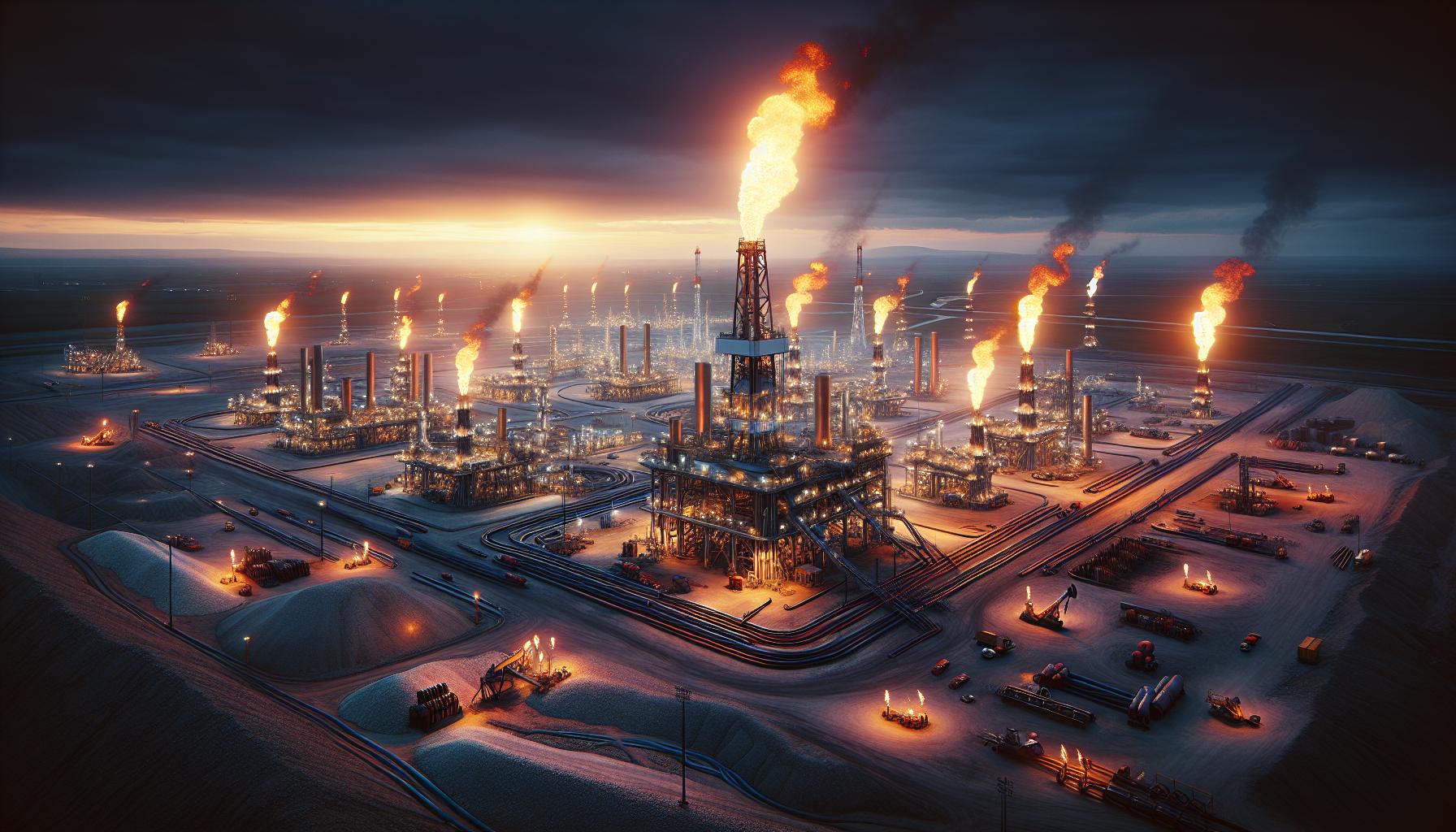
Gas flaring, a somewhat hidden yet impactful environmental issue, has come under scrutiny with the release of a new report. It reveals that gas flaring led to the creation of 389 million tonnes of carbon pollution last year alone. For those who are not familiar, gas flaring is the process of burning off excess natural gas during oil production. This might sound harmless, but it results in a significant release of greenhouse gases into the atmosphere, contributing to global warming and impacting climate change. To grasp the scale, 389 million tonnes of carbon is roughly equivalent to the emissions from 77 million cars driven for a year. The report brings attention to the urgent need to address this issue, which is exacerbating the environmental challenges we face today.
Contents
The Process of Gas Flaring
Understanding gas flaring begins with understanding oil production. When oil is extracted, it often comes with natural gas as a byproduct. In many cases, the infrastructure to capture and utilize this gas is not in place, so companies burn it off instead. This is done for safety reasons, to prevent pressure build-up, and because of economic factors. Unfortunately, while it might seem like a straightforward solution, the environmental cost is significant. Burning natural gas releases carbon dioxide (CO2), a potent greenhouse gas, into the atmosphere, contributing to the warming of our planet.
Environmental Impacts
Gas flaring is a major contributor to the accumulation of greenhouse gases in the atmosphere. The process releases CO2 along with methane — another harmful gas. Methane is particularly concerning because it has a much higher heat-trapping capability than CO2, making it incredibly efficient at warming the planet. The fulcrum of the problem lies in the fact that these emissions are largely avoidable. By investing in infrastructure to capture and utilize natural gas rather than burning it, we could significantly reduce these emissions. This shift could help reduce the impact of climate change, which is driving extreme weather events and affecting biodiversity and ecosystems around the world. You can learn more about the specific impacts of climate change on natural environments and human societies through the IPCC’s reports.
Global Efforts and Challenges
The issue of gas flaring is not confined to a single region; it’s a global challenge. Countries like Russia, the United States, and several in the Middle East are among the largest contributors to gas flaring emissions. Efforts to curb flaring have been made, including the World Bank’s initiative called “Zero Routine Flaring by 2030,” which aims to bring down flaring to near zero. While some nations have made significant progress, others are still grappling with the economic and technical hurdles that prevent them from effectively reducing flaring. Economic factors, such as the cost of infrastructure to capture and process the gas, often deter companies from making the necessary investments. Moreover, in regions with less regulatory oversight, the lack of stringent policies makes it difficult to enforce flaring reductions.
Technological Solutions
There are technological solutions available that can mitigate the impact of gas flaring. One promising approach is the use of “gas-to-liquids” technology, which converts natural gas into liquid fuels. This not only reduces the need for flaring but also creates valuable byproducts. Additionally, advancements in carbon capture technologies offer another avenue for reducing emissions. Carbon capture involves capturing CO2 emissions from flaring sites and storing them underground or utilizing them in industrial processes. The challenge, however, lies in the widespread adoption and economic feasibility of these technologies. The potential to significantly decrease emissions hinges on the global commitment to invest in and deploy these solutions comprehensively.
Policy Perspectives
The role of policy cannot be understated in tackling the issue of gas flaring. Governments have the power to influence practices through regulations and incentives. Policies that mandate the reduction of flaring, enforce penalties for non-compliance, and provide subsidies or tax incentives for companies that invest in flaring reduction technologies are crucial. For instance, some countries have set caps on the amount of gas that can be flared, effectively encouraging companies to find alternative uses for the gas. Policymakers can also play a significant role in fostering international cooperation to ensure that efforts are aligned and share technological advancements. However, the success of these policies relies on stringent enforcement and cooperation from the private sector. Comprehensive legal structures and monitoring systems are essential to ensuring transparency and accountability.
Public Awareness and Future Directions
Raising public awareness about the environmental impact of gas flaring is vital. Many people are unaware of the existence and implications of flaring, given its technical nature and the fact that it often occurs in remote locations. Educational campaigns and increased media coverage can help highlight this issue, driving demand for change and holding companies accountable. Additionally, consumer preferences are shifting towards sustainability, prompting companies to adopt more environmentally friendly practices. The future of gas flaring mitigation hinges on a combination of technological advancements, strong policy frameworks, and public awareness. By addressing these areas, we can make significant strides towards reducing our carbon footprint and mitigating climate change.
While the challenge of gas flaring is significant, the solutions are within reach. By understanding the issue and taking concerted action through technological innovation, policy, and public engagement, we can make meaningful progress in creating a more sustainable future. For a deeper dive into the issue of gas flaring and its impacts, you can read this article that expertly covers the nuances of this environmental problem.
Link to the detailed reference article: A detailed report on the environmental impact of gas flaring.

Dr. Alexander Tabibi is an entrepreneur, investor, and advocate for sustainable innovation with a deep commitment to leveraging technology for environmental and social good. As a thought leader at the intersection of business and sustainability, Dr. Tabibi brings a strategic vision to Green.org, helping guide its mission to inspire global climate awareness and actionable change.
With a background in both medicine and business, Dr. Tabibi combines analytical rigor with entrepreneurial insight.