
The Hidden Cost of Cheap Clothes: Chile’s Battle With Fast Fashion Waste
As fast fashion tightens its grip on global consumers—encouraging the purchase of ever more garments for ever less money—the consequences are piling up, quite literally. On average, the world now produces over 100 billion garments annually, and according to the Ellen MacArthur Foundation, a truckload of textiles is landfilled or incinerated every second.
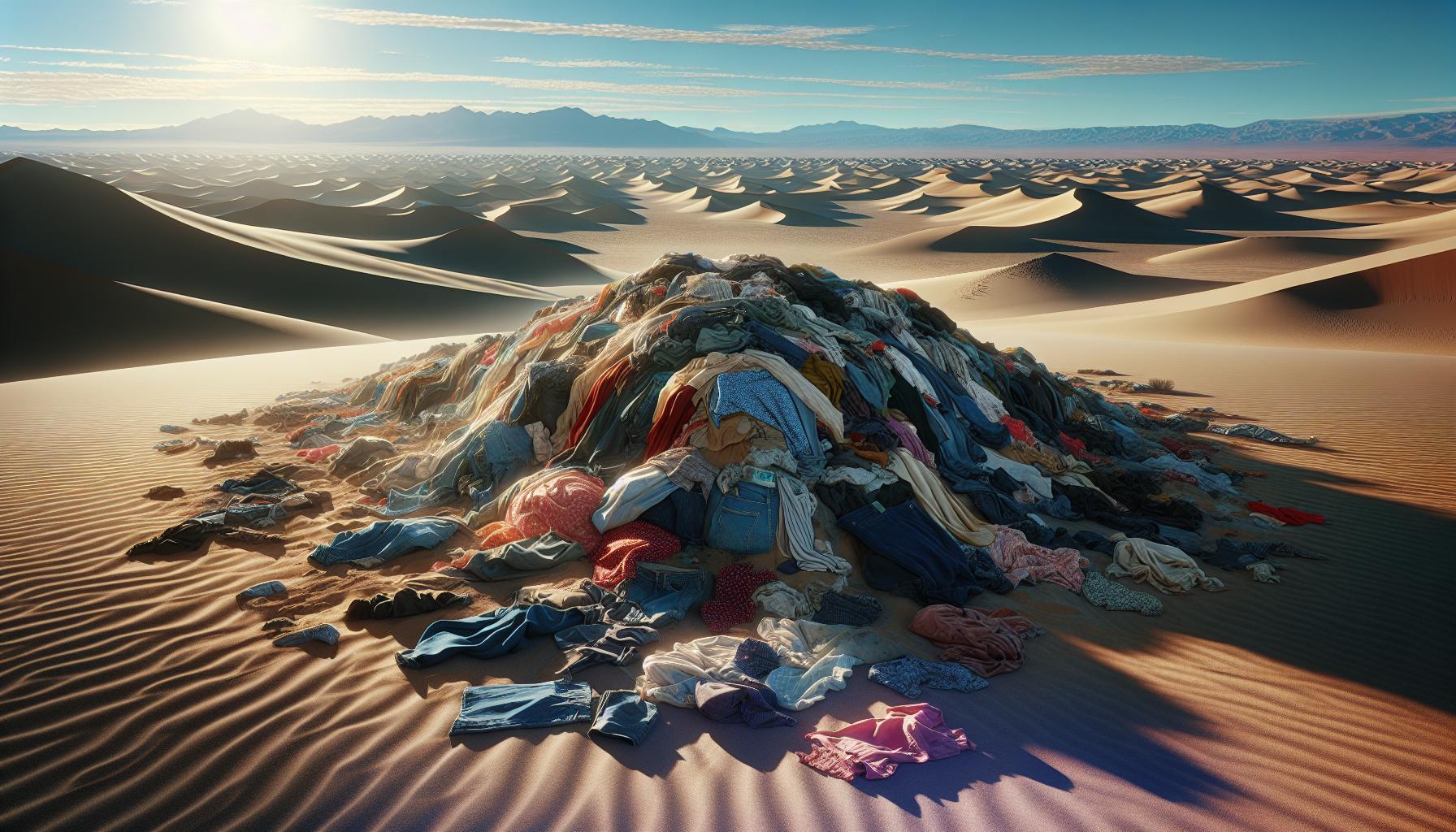
This system of overproduction and overconsumption has fueled a massive global waste crisis. And one of the most jarring illustrations of this crisis can be found in the Atacama Desert of Chile, where entire hills of discarded clothing lie under the sun. Imagine heaps of blouses, fast-fading t-shirts, and jeans already past their prime, left to slowly degrade—or worse not degrade at all.
Contents
The Problem With Fast Fashion
Fast fashion is like the fast food of the apparel world—cheap, quick, and designed for obsolescence. Brands capitalize on short trend cycles, producing garments in as little as two weeks from concept to shelf. Consumers, especially in wealthier economies, buy 60% more clothing than they did 15 years ago, yet keep each item half as long.
Most of these clothes are made from synthetic fibers like polyester, nylon, and spandex, which are derived from fossil fuels. Polyester alone accounts for about 60% of all clothing globally. These materials do not biodegrade and can take up to 200 years to break down, if at all.
Why Chile?
Chile has become an unexpected epicenter of this fashion fallout. The country imports second-hand and unsold clothing from Europe, Asia, and North America—over 60,000 tons per year—much of which is intended for resale in Latin America. But up to 39,000 tons of that clothing ends up in illegal dumps in the Atacama Desert due to low resale value or textile degradation. Basically whereas in years past the poor could reuse the clothes now there is simply too much.
As such the desert is now a textile graveyard, where heat and UV exposure exacerbate pollution. Synthetic fibers exposed to high temperatures can release volatile organic compounds (VOCs) and toxic dyes, leaching into soil and contaminating groundwater. This is no longer just an aesthetic problem—it’s a public health and ecological one.
The Science of Textile Waste
The environmental footprint of textiles is enormous. Producing a single cotton shirt can require 2,700 liters of water, while dyeing and finishing textiles contribute to 20% of global industrial water pollution. Once discarded, textiles shed microplastics—tiny plastic particles that seep into the air, water, and soil. A single load of laundry can release up to 700,000 microfibers, many of which bypass filtration systems and end up in oceans, entering the food chain.
Recent studies have found microfibers in 98% of tap water samples worldwide, and even in placentas and lung tissue. As clothes decay under harsh desert sun, these fibers break down further, potentially releasing phthalates, heavy metals, and endocrine disruptors.
Desert Cleanup: The Big Plan
Faced with this mounting crisis, the Chilean government has launched a national cleanup and regulation effort. The goal: recover, recycle, and repurpose the dumped textiles.
New initiatives aim to:
-
Sort usable textiles for resale or donation.
-
Mechanically recycle synthetic fibers into insulation, carpeting, or industrial textiles.
-
Chemically recycle blended materials into raw fibers using solvent-based methods.
-
Encourage circular design, incentivizing fashion brands to create clothes that can be more easily reused or disassembled.
The long-term strategy includes updating Extended Producer Responsibility (EPR) laws—requiring companies to manage the end-of-life of their products—to include textiles. Chile hopes to become a regional model for textile circularity.
Sociopolitical Aspects
This issue isn’t confined to landfills—it touches policy, trade, and international cooperation. Chile’s crackdown on fast fashion waste is part of a broader eco-regulatory wave. A proposed law would mandate importers and manufacturers to track the final destination of every garment and face penalties for waste mismanagement.
International pressure is building too. Organizations like the UN Environment Programme and the World Resources Institute are calling for sustainable fashion treaties, urging transparency and circularity across the supply chain.
Cultural Shifts in Consumption
But tackling this crisis isn’t just about policy—it’s about perception. Fast fashion thrives on social media-driven novelty. A 2021 study found that 1 in 3 young women in the UK considered an item worn once or twice to be “old.”
Yet that mindset is changing. The rise of slow fashion—a movement that promotes quality over quantity, durability, and ethical sourcing—is taking hold. Second-hand shopping is booming, with platforms like Depop, Vinted, and Poshmarkgrowing rapidly. In the U.S. alone, the second-hand apparel market is projected to double to $77 billion by 2025.
Generation Z, in particular, is driving this shift. A majority say sustainability influences their fashion purchases. They’re favoring upcycled fashion, rental models, and clothing swaps, recognizing that style doesn’t have to come at the planet’s expense.
The Global Message
Chile’s cleanup effort is not just about cleaning up a desert—it’s a warning shot to the rest of the world. Fast fashion’s invisible costs are now painfully visible. The Atacama Desert is a cautionary tale, but also a symbol of resistance.
This is a moment of global reckoning. A shift in fashion isn’t just possible—it’s necessary. When you pick out your next outfit, maybe ask: not just does it look good? but does it do good?
For more insights, check out this detailed article on Chile’s fast fashion desert cleanup.

Dr. Alexander Tabibi is an entrepreneur, investor, and advocate for sustainable innovation with a deep commitment to leveraging technology for environmental and social good. As a thought leader at the intersection of business and sustainability, Dr. Tabibi brings a strategic vision to Green.org, helping guide its mission to inspire global climate awareness and actionable change.
With a background in both medicine and business, Dr. Tabibi combines analytical rigor with entrepreneurial insight.