
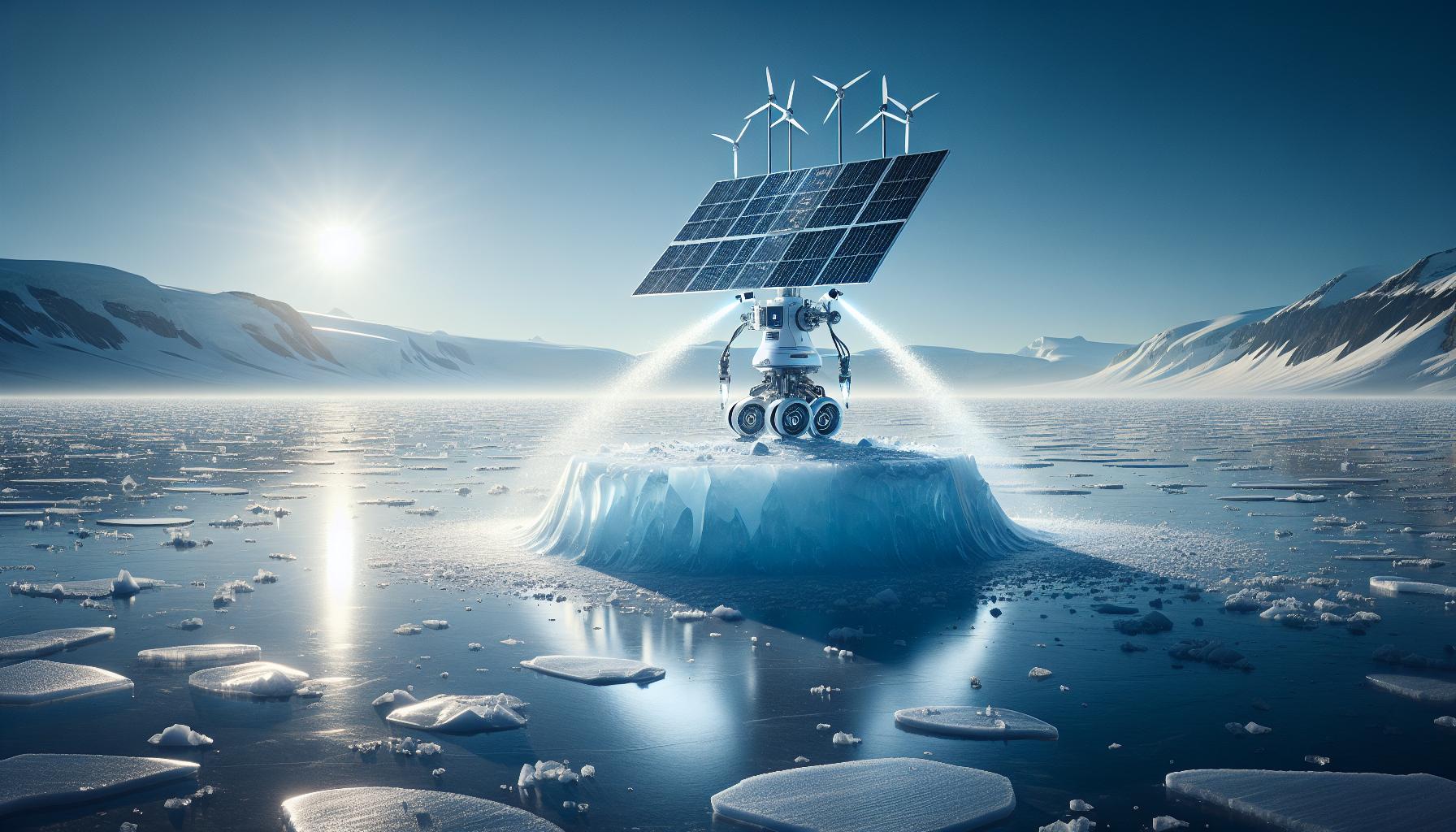
At first glance, “ice robots” might sound like something lifted from the pages of science fiction. But this innovative technology could soon become a reality — and potentially play a crucial role in addressing one of the most urgent challenges of our time: climate change.
As global temperatures continue to rise, the window to prevent the most catastrophic outcomes is rapidly closing. One of the most visible consequences is the accelerating retreat of polar ice sheets, with glaciers melting faster in summer and replenishing less during winter. This ongoing loss contributes not only to rising sea levels and disappearing coastlines but also to a dangerous feedback loop: darker, polluted ice absorbs more solar energy, exacerbating warming, while the ocean water that replaces it absorbs 90% of solar radiation compared to ice’s 90% reflectivity.
Moreover, melting ice disrupts complex systems, from altering ocean currents to threatening local wildlife that depends on stable polar environments.
-
Contents
The Vision: How Ice Robots Work
Ice robots are designed to intervene in this vicious cycle. Functioning like automated “ice farmers,” these robots spray layers of ocean water over pre-constructed domes, enabling the water to freeze into stable ice formations. This process not only builds thicker ice but also increases the surface’s albedo — the scientific term for reflectivity — helping to deflect sunlight and reduce further melting.
Because they must operate in remote, extreme environments, the robots are engineered to be self-sufficient, drawing power from renewable energy sources such as wind and solar. By automating the ice formation process, they aim to reinforce polar ice, potentially slowing the feedback loops that drive climate change.
Promise and Challenges
While promising, ice robots are still in the experimental phase. Early studies suggest potential, but there is cautious optimism among scientists. Some experts view the technology as an innovative tool for climate intervention, while others raise concerns about unforeseen ecological impacts and the immense logistical hurdles of deploying and maintaining fleets of autonomous robots in the polar regions.
Concerns also extend to the broader marine environment — how might artificial ice formation affect local ecosystems? Could the introduction of new structures create more problems than solutions? These are critical questions that researchers must address before scaling up the technology.
-
A Potential Ally in the Climate Fight
-
If proven successful, ice robots could enhance the resilience of polar ice against rising temperatures, aid in conserving vital ecosystems, and support wildlife that relies on stable frozen habitats. While not a silver bullet, they represent a creative addition to the broader arsenal needed to combat climate change — alongside emission reductions, renewable energy adoption, and conservation efforts.
Technology like this showcases how innovative thinking can open new pathways in our fight against global warming. Ice robots may not be the standalone heroes, but they could become important allies in a collective effort to steer the planet toward a more sustainable future.

Dr. Alexander Tabibi is an entrepreneur, investor, and advocate for sustainable innovation with a deep commitment to leveraging technology for environmental and social good. As a thought leader at the intersection of business and sustainability, Dr. Tabibi brings a strategic vision to Green.org, helping guide its mission to inspire global climate awareness and actionable change.
With a background in both medicine and business, Dr. Tabibi combines analytical rigor with entrepreneurial insight.