
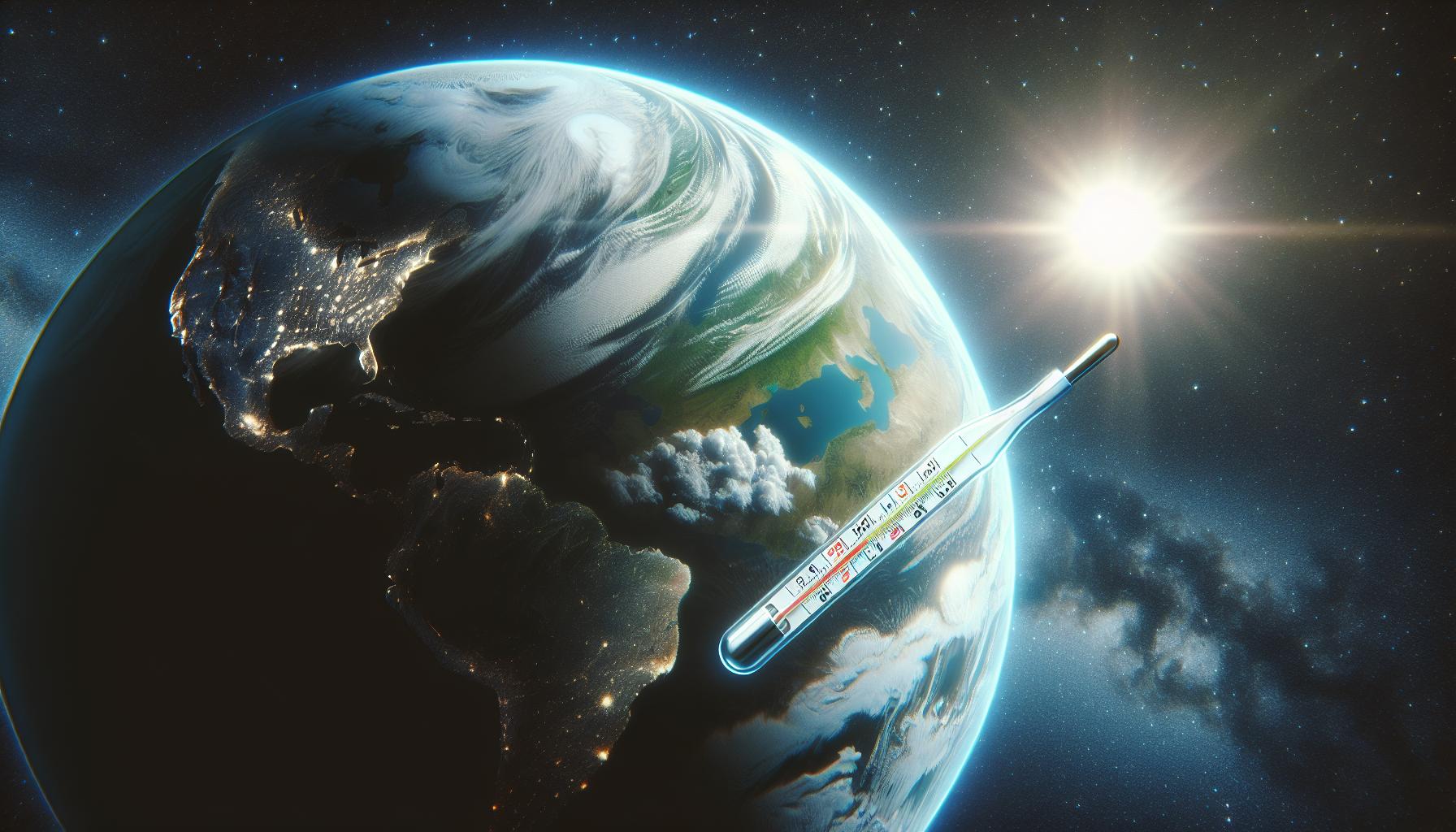
A living, breathing planet teeming with energy and life walks into the doctor’s office and says, “You know doctor, I’m not feeling well—in fact, I feel like I’m getting worse every day.”
Earth isn’t just a rock floating in space. It’s more like a living being, and right now, it has a fever.
When a human being develops a fever of 1.5°C (∼2.7°F) above baseline, it may not sound dramatic—but in medicine, that temperature shift signals systemic distress. At 38.5°C (101.3°F), the body isn’t just uncomfortable, it’s reacting to something serious.
Contents
🧠 Importance of Thermoregulation
The human body relies on thermoregulation to maintain its internal environment. A core temperature of 37.0°C (98.6°F) is essential for enzyme activity, cellular function, and brain health. Even a slight increase can:
- Disrupt neurotransmitter balance
- Accelerate metabolic processes to unsustainable levels
- Impair immune coordination and increase fluid loss
When thermoregulation fails, cascading physiological systems begin to break down—leading to multi-organ stress, delirium, or worse. The same is true for Earth.
🌍 Earth’s Rising Fever
Now picture Earth as a living organism. For millennia, it remained within a narrow thermal range, enabling stable ecosystems and reliable climate patterns. But since industrialization, fossil fuel combustion, and deforestation, we’ve been heating the planet’s core.
In 2024, the global average temperature officially surpassed the critical 1.5°C mark above pre-industrial levels, reaching approximately 1.55°C according to the World Meteorological Organization (WMO).
🌡️ When 1.5°C is the Tipping Point
This is not just a statistic. It’s the point where:
- Coral reefs die en masse (like neurons starved of oxygen)
- Ice sheets melt rapidly (akin to organ failure)
- Weather becomes chaotic and destructive (immune system overdrive)
- Agricultural zones collapse (like a failing digestive system)
Tipping points are thresholds beyond which changes become self-perpetuating:
- Greenland Ice Sheet: May be committed to long-term melt, raising sea levels by up to 7 meters over centuries.
- Amazon Rainforest Dieback: Reduced rainfall and deforestation could turn the Amazon into a savannah, releasing massive amounts of CO2.
- Atlantic Meridional Overturning Circulation (AMOC): A key ocean current system could weaken or collapse, disrupting global weather and rainfall patterns.
- Permafrost Thawing: Unlocks methane and CO2 in quantities that could rapidly intensify global warming.
Scientists warn that passing 1.5°C increases the risk of triggering multiple tipping points in concert—a “domino effect” that could push Earth into a permanently altered state.
🧬 Pathophysiology of a Heating Planet
Just as fever raises metabolic stress in humans, global warming fuels dangerous feedback loops:
- Melting permafrost releases methane (toxic cellular byproducts)
- Ocean warming disrupts currents and oxygen (circulatory collapse)
- Wildfires and droughts mirror runaway inflammation
Earth doesn’t have IV fluids or antipyretics. The only viable treatment? Emissions cuts, decarbonization, and ecological repair.
💉 1.5°C: Not a Target, a Triage Line
In triage, we determine who can be saved. 1.5°C is Earth’s triage line. Cross it, and we enter a realm of feedback loops and tipping points. The IPCC says we still have time—but the window is closing.
💊 Treatment Plan for a Fevered Planet
If a patient hits 101.3°F, we intervene. We don’t wait for 104°F. For Earth, we must:
- Halve global emissions by 2030
- Transition from fossil fuels to renewables
- Restore forests, oceans, and wetlands
- Invest in equitable climate resilience
🚑 Final Diagnosis
As an ex-physician, I was trained to recognize systemic failure before it’s irreversible. Earth’s 1.5°C fever is not safe. It’s the first symptom of a breakdown in a system too complex to predict—and too valuable to ignore.
This is about health, survival, and our collective oath: Do no harm.
Let’s treat Earth with the same urgency we would a patient in our care.

Dr. Alexander Tabibi is an entrepreneur, investor, and advocate for sustainable innovation with a deep commitment to leveraging technology for environmental and social good. As a thought leader at the intersection of business and sustainability, Dr. Tabibi brings a strategic vision to Green.org, helping guide its mission to inspire global climate awareness and actionable change.
With a background in both medicine and business, Dr. Tabibi combines analytical rigor with entrepreneurial insight.