
The gaming industry is on the cusp of a revolution driven by artificial intelligence (AI). AI has already started transforming game development and design, but its future implications promise to be even more profound. As AI capabilities advance, it will shape the next generation of video games with more realistic graphics, interactive storytelling, adaptive gameplay, and customized experiences.
For game developers and designers from an AI software development company, artificial intelligence unlocks new creative possibilities. For gamers, it enables more immersive and social gaming experiences. As AI integrates deeper into the gaming ecosystem, it will transform gameplay mechanics, narrative structures, and development workflows. In the coming years, AI will spearhead innovation in the gaming space.
Contents
Current AI Applications in Game Development

AI is already integral to modern game development pipelines. Developers employ AI for game development in a wide range of applications:
AI in Game Design
AI algorithms can effectively design core gameplay elements like levels, quests, and items and simulate playtesting. Procedural content generation using AI automates repetitive design tasks, helping developers focus on high-level creative direction. For instance, AI can automatically generate landscapes based on certain rules and parameters. It can also balance gameplay difficulty progression and maximize engagement.
Game Testing and Balancing
Testing games to isolate bugs and glitches and balance gameplay requires significant QA resources. Artificial intelligence in game development automated testing tools can playtest builds much faster by systematically exploring all gameplay paths. Machine learning algorithms can model player behavior to find the most impactful bugs. AI data analysis provides actionable insights to balance gameplay and progression.
Computer Vision in Development
Computer vision techniques like image recognition and processing can automate asset creation pipelines. AI for game developers can identify reusable assets saving developers effort of creating new ones. It can also modify assets by identifying objects in scenes and applying transformations. This allows rapid iteration of environments. AI voice recognition and natural language processing are also gaining traction for development assistance.
The Future: How AI Will Transform Games
While current AI applications focus more on assisting development, future implications of AI on gaming itself are significant. Advanced AI will shape gameplay experiences, narratives, graphics as well as development practices.
Revolutionizing Game Graphics and Environments
Graphics render photorealistic environments to immerse players, and AI will lead the charge here. AI algorithms can intelligently generate detailed 3D models for objects and scenes using vast datasets. NVIDIA’s Omniverse platform demonstrates such capabilities. Its AI models can create building interiors mimicking real-world architectural designs. Materials, lighting, and physics effects integrate realistically without much manual effort.
AI will also enable next-gen concepts like infinite or on-demand worlds. Game engines from companies like Eliftech can construct open worlds on the fly using AI, eliminating storage limitations. It unlocks the possibility of massive online worlds by procedurally generating content centered around players. Dual Universe is spearheading tech for online metaverses with AI-assisted procedural planets.
Refining Gameplay with Adaptive AI
Current games feature basic AI bots with predictable behaviors. With adaptive AI and game development, enemy bots can demonstrate complex behaviors, plan strategies, and respond uniquely to players. Instead of following predictable patterns, adaptive AI can create emergent experiences by analyzing player psychology and choices.
AI bots can also replicate human playing styles by learning from crowdsourced gameplay data. This trains bots to mimic players in applications like racing games. In the future, advanced AI can create almost human-like opponents to challenge hardcore gamers.
Some experiments have demonstrated such capabilities already. Google’s AlphaStar AI learned Starcraft gameplay from human replays and could defeat even top players with novel strategies. Similarly, AI models have achieved superior performance in multiplayer DOTA 2 by orchestrating team strategies.
Shaping Interactive Storytelling
Games that have narrative components that can change based on what the player does are a very large design problem. For its part, artificial intelligence in game design can potentially achieve a second level of narrative and respond to players individually. An AI director can track the development of a story along with the psychological state of the player so as to provide them with content and a conclusion of their choice.
For instance, narrative generation systems can create a story universe based on the AI to analyze an infinite number of scenarios. They can then eliminate choices according to the player’s decisions while still having a coherent structure. This reactive narrative experience is unshapable by hand, and thus can be seen as a form of non-teleological emergence. Of course, there are games like AI Dungeon that already show such original narrative ideas.
Revolutionizing Workflows with AI Assistance
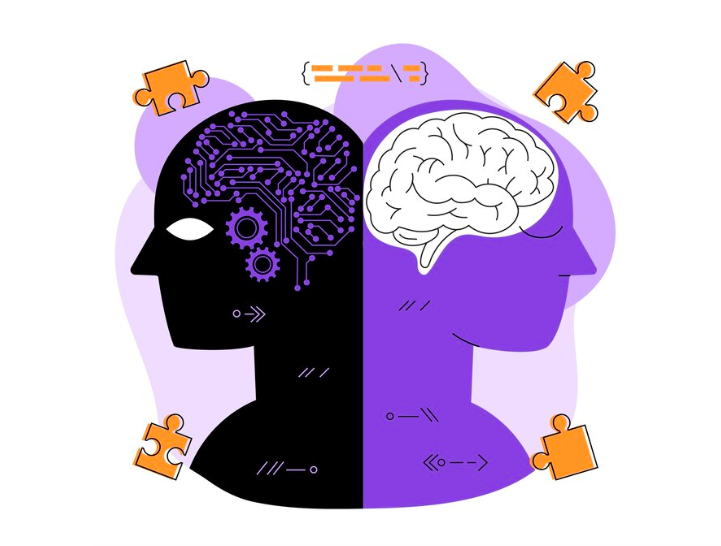
Video game development is a highly integrated process that involves several designers, artists, and programmers. The enhancement of the people’s work streams with AI support can boost their efficiency greatly.
Coding and testing can be done with the help of intelligent tools, and designers can use generative AI for assets and prototyping as well as ideas as fast as possible. For example, natural language AI can interpret high-level instructions into low-level code and do engine tuning. Many such AI aids free up creators to worry less about quantitative factors, such as new gameplay mechanics and players.
Democratizing AI Game Development
Sophisticated game engines lower the barriers to designing games that require less technical skills. AI generative capabilities significantly augment such tools, enabling anyone to create game content. Powerful consumer applications like Unity and Unreal Engine already offer user-friendly AI features for animation, content creation, etc.
Empowering hobbyists and indie developers with such intuitive AI game design tools can democratize development further. In the future, easy-to-use intelligent game builders can allow anyone to turn game ideas into fully functional prototypes without intensive programming. This may spawn a new generation of user game creators.
The Societal Impact
While AI drives innovation opportunities in gaming, its societal ramifications warrant consideration and governance. Interactive mediums like games carry higher mindshare for consumers compared to passive entertainment. Hence governments need to regulate aspects like information accuracy, data privacy as well as mitigating biases and toxicity risks from AI systems.
Responsible AI development standards tailored to the gaming industry context may help guide technological progress in a prudent direction. Additionally, consumers should scrutinize creators to encourage the ethical evolution of the AI gaming ecosystem. Transparency from companies regarding their AI technology, as well as its purpose and limitations, is crucial.
Conclusion
AI integration in video games means a new era, which is considered to be even more revolutionary in terms of changing the way games are made and played. AI can bring into existence ideas such as vast metaverse spaces, indefinite generative content and the subsequent photorealism that algorithms can learn from data. It opens opportunities for the creation of individualized, interactive stories that go beyond the potential of manual work.
For the gamers as well as the game developers, it opens up a world of possibilities. As we have seen, current applications are just scratching the surface of what is possible, and fast advances in underlying AI research suggest that this change will be transformational, as gaming brings in an AI revolution; more important, is to ensure that the social, economic, and political impact of this revolution is ethical and responsible.

Dr. Alexander Tabibi is an entrepreneur, investor, and advocate for sustainable innovation with a deep commitment to leveraging technology for environmental and social good. As a thought leader at the intersection of business and sustainability, Dr. Tabibi brings a strategic vision to Green.org, helping guide its mission to inspire global climate awareness and actionable change.
With a background in both medicine and business, Dr. Tabibi combines analytical rigor with entrepreneurial insight.