


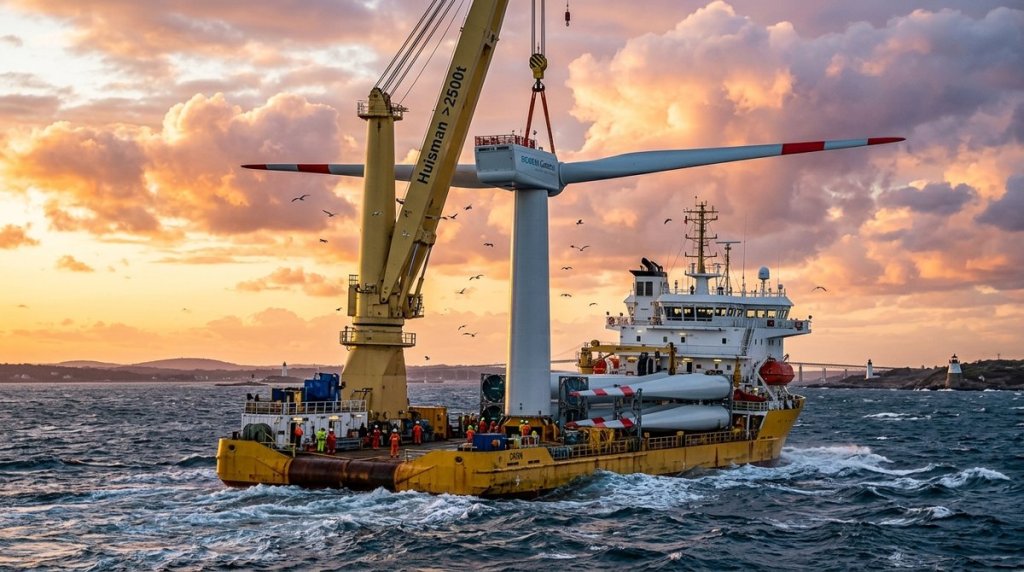
America bet big on offshore wind. Towering turbines over the Atlantic, spinning out power for millions of homes, zero carbon in the mix. That was the pitch.
Today? More like a political football.
The Trump administration has Orsted’s massive offshore wind project back in its crosshairs. Another gut punch for an industry already reeling from supply chain chaos, spiking costs, and federal policy that shifts with the headlines. If you’ve been tracking how this White House handles environmental and energy projects, the pattern isn’t subtle.
What Orsted Built, and What’s Now at Risk

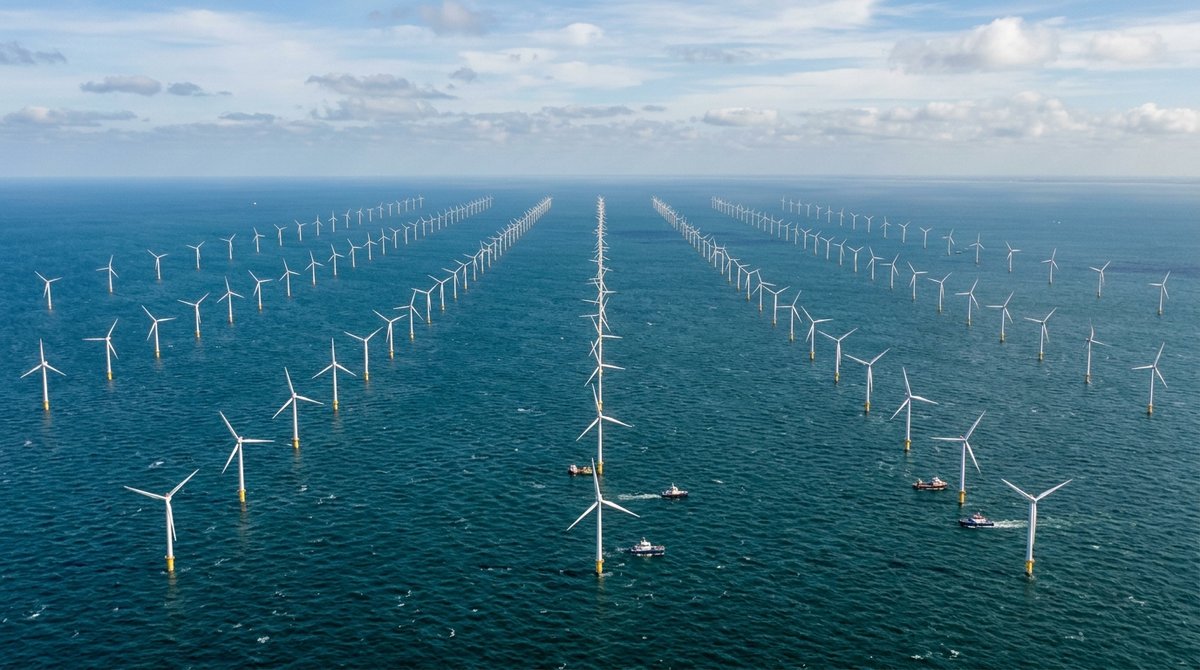
Orsted, the Danish energy giant, has poured billions into U.S. offshore wind. Revolution Wind, their flagship project, sits in federal waters off Rhode Island and Connecticut.
704 megawatts. Roughly 350,000 homes. Orsted holds other East Coast leases too.
These aren’t speculative ventures. Orsted has already sunk concrete, laid cable routes, signed offtake agreements with utilities, and committed to port upgrades in multiple states. The sunk costs are real. So is the employment. Thousands of union jobs hang in the balance, many in coastal communities that have watched fishing and manufacturing erode for decades.
Now the administration is moving. A Department of Interior review of Orsted’s federal approvals. Public statements from officials openly questioning whether the project survives. Boardrooms are nervous. Union halls too. The message: even permits already granted may not be permits kept.
The Pattern of Reversals
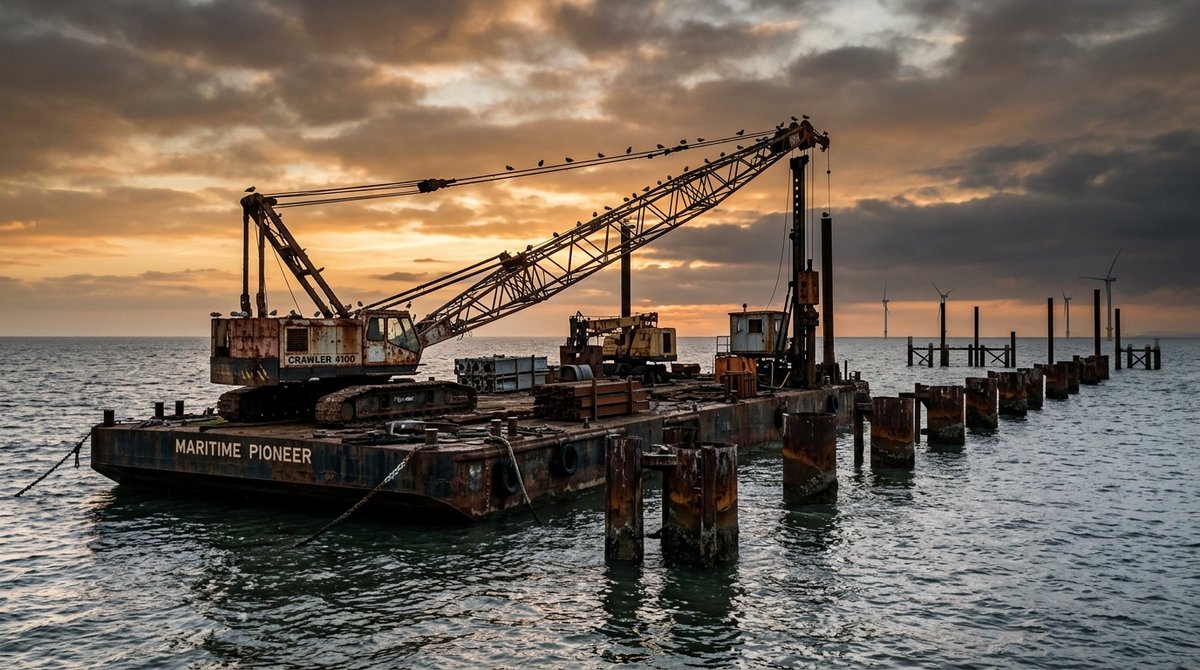
This isn’t Orsted’s first rodeo with political headwinds. In 2023, the company walked away from two major projects off New Jersey. Billions in losses. The write-downs were staggering. Inflation, interest rate spikes, and supply chain snarls all played their part. Regulatory uncertainty didn’t help.
What’s different now is the overt hostility from the top. The current administration has made no secret of its skepticism toward wind energy. The President keeps claiming turbines kill whales and ruin property values. No evidence. NOAA and the Bureau of Ocean Energy Management have found no causal link between offshore wind surveys and whale strandings.
The Orsted situation fits a broader template. Earlier this year, the administration moved to decommission critical climate monitoring satellites, a decision that drew sharp criticism from scientists and national security professionals. The through-line is consistent: climate infrastructure, whether observational or generational, faces dismantling.
What the Numbers Actually Say
Strip away the rhetoric, and the economic case for offshore wind remains substantial. The U.S. currently has minimal operational capacity compared to Europe, where offshore wind has been mainstream for over two decades. The gap isn’t technical. It’s political and permitting.
The International Energy Agency and Department of Energy have both identified the U.S. Atlantic coast as among the world’s most promising wind resources. Steady breezes, shallow continental shelves, and proximity to major population centers create ideal conditions. The jobs potential is equally significant. The National Renewable Energy Laboratory estimates that a mature U.S. offshore wind industry could support tens of thousands of manufacturing, installation, and maintenance positions.
Here’s how the U.S. stacks up against established markets on key metrics, based on 2023-2024 data from the IEA and DOE:
| Metric | United States | United Kingdom | China |
|---|---|---|---|
| Installed offshore wind capacity (GW) | 0.04 | 14.7 | 37.7 |
| Projects under construction (GW) | 2.4 | 1.3 | 27.0 |
| Average capacity factor | 42-47% | 45-50% | 35-40% |
| Levelized cost of energy (USD/MWh) | 75-120 | 45-60 | 55-75 |
The cost disparity for the U.S. reflects immaturity, not inherent unsuitability. First-of-a-kind projects always carry premiums. The question is whether political interference will prevent the learning curve from ever flattening.
State-Level Pushback and Legal Maneuvering
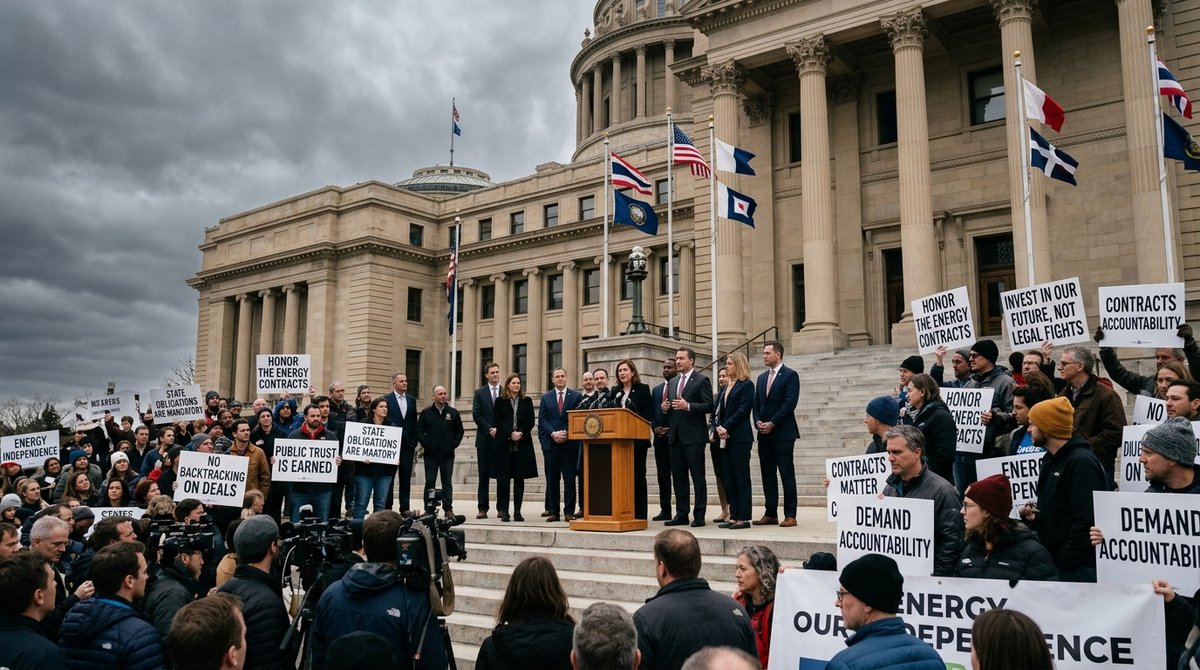
Not everyone is taking the federal pressure lying down. Several East Coast governors, including Republicans, have defended their states’ wind investments. Massachusetts, Rhode Island, and Connecticut have contractual obligations with Orsted that would trigger penalties if the projects fail. Their attorneys general are exploring legal options.
The tension creates a federalism collision that could land in courts for years. States hold authority over electricity markets and procurement. The federal government controls the outer continental shelf where turbines sit. When the two diverge sharply, developers get squeezed in the middle.
Orsted itself has been careful in its public statements, emphasizing its commitment to existing projects while quietly exploring options. The company has already taken substantial impairment charges on its U.S. portfolio. Further write-downs would strain its balance sheet and potentially its credit rating.
For coastal communities that have been promised jobs and tax revenue, the uncertainty is excruciating. Port authorities in New Bedford, Massachusetts and Providence, Rhode Island have invested millions in specialized infrastructure. Training programs have launched. Supply chain partnerships formed. All of it now sits under a cloud.
The Global Context Nobody Talks About
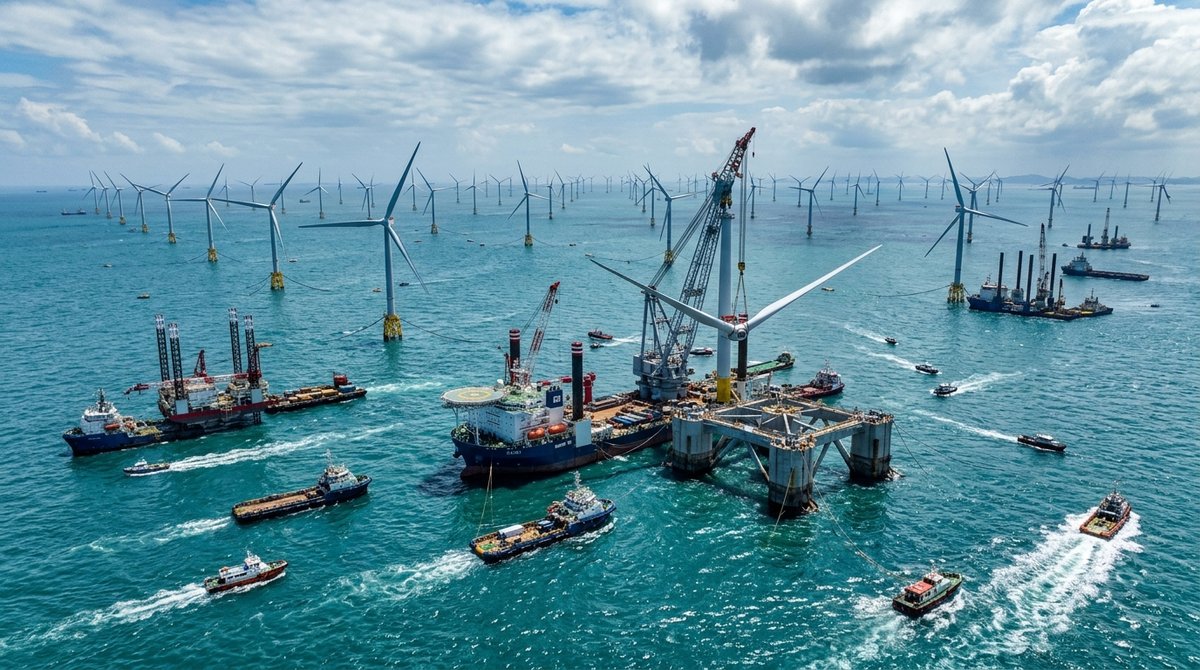
While Washington toggles between hostility and indifference, other nations are accelerating. The IEA projects that China will add more offshore wind capacity in the next five years than the entire current global total. The UK and EU are pushing deeper waters with floating turbine technology. Even Vietnam and South Korea are moving faster than the U.S.
This matters beyond energy statistics. Offshore wind manufacturing is establishing geographic concentration. The factories building turbine nacelles, blades, and installation vessels are going where demand is certain. Every year of American hesitation makes it harder to reshore that supply chain later.
The irony is acute. The same administration that talks incessantly about energy dominance and manufacturing revival is actively undermining one of the few sectors where the U.S. could genuinely lead. Not through lack of resources or technology, but through political choice.
Some observers have noted the strange convergence of political spectacle and policy disruption. When major cultural events dominate headlines, substantive regulatory changes can slip through with less scrutiny. The recent ufc white house gathering was mostly ceremonial. Yet it showed something about this administration: entertainment and governance get blended in ways that can obscure consequential decisions happening elsewhere in the federal apparatus. The white house ufc card wasn’t policy, but it was indicative of priorities.
Meanwhile, the Orsted projects don’t have the luxury of waiting out news cycles. Financing windows close. Construction seasons pass. Supply contracts expire. The ufc fight white house spectacle may have entertained, but the regulatory fight over offshore wind will determine whether thousands of Americans have work.
What Happens If Orsted Pulls Out
The worst-case scenario isn’t abstract. If federal obstruction forces Orsted to abandon Revolution Wind and its sister projects, the consequences cascade:
- Immediate job losses in construction, maritime services, and manufacturing
- Contractual penalties for utilities that must replace the power elsewhere
- Stranded port infrastructure with no alternative users
- Loss of federal lease payments that fund coastal conservation
- Signal to international investors that U.S. clean energy commitments are unreliable
- Increased reliance on natural gas, with attendant methane emissions and price volatility
Here’s the hard truth about that last point. Every megawatt of offshore wind that doesn’t get built will likely be replaced by gas-fired generation in the near term. The grid needs reliable capacity. Without wind, fossil fuels fill the gap. The climate math is brutal.
Some environmental advocates have pressed for faster deployment of alternatives like vertical farming and distributed generation to reduce overall energy demand. Vertical farming has its place. So does distributed generation. Neither substitutes for utility-scale clean power. The scale mismatch is real.
Frequently Asked Questions
Policy and Regulatory Questions
Can the administration legally revoke Orsted’s existing permits?
Existing permits carry legal weight, but they’re not invulnerable. The administration can initiate new environmental reviews, demand additional studies, or slow-walk approvals for project modifications. Each delay increases costs and financing risk. Whether outright revocation would survive judicial review is uncertain, but the threat itself may be sufficient to deter investment.
How does this compare to previous administration treatment of fossil fuel projects?
The Obama and Biden administrations both took heat from environmental groups for approving oil and gas leases and pipelines. Those approvals moved through predictable timelines with established procedures. The current approach toward Orsted looks different. More adversarial. Less procedural. Specific companies get targeted with public criticism instead of consistent regulatory standards being applied across the board.
Industry and Economic Questions
What would it cost ratepayers if these projects fail?
Utilities in Rhode Island and Connecticut have contracted for Revolution Wind power at fixed prices. If Orsted defaults, those utilities must seek replacement power, likely at higher prevailing market rates. The exact cost depends on future natural gas prices and alternative renewable availability. Ratepayer protections in the contracts may limit some exposure, but legal disputes over force majeure and regulatory change clauses could prolong resolution.
Is offshore wind actually economically viable without subsidies?
Early projects leaned heavily on federal tax credits and state mandates. As the industry matures, costs decline. European offshore wind now competes without subsidy in several markets. U.S. projects remain higher-cost due to limited domestic supply chain, Jones Act vessel requirements, and permitting complexity. Whether they reach cost parity depends partly on whether federal policy provides stable, predictable support rather than whipsawing signals.
Could other developers step in if Orsted exits?
Possibly, but unlikely quickly. Offshore wind leases are non-transferable without federal approval. New entrants would need to negotiate with Orsted or wait for lease relinquishment and re-bidding. The specialized expertise and equipment are concentrated among a handful of global players. Any transition would add years of delay.
How does the ufc white house 250 event relate to energy policy?
It doesn’t directly. The ufc at the white house was a cultural/political event that generated significant media attention. Its relevance here is atmospheric: this administration consistently prioritizes spectacle and base mobilization over technocratic policy development. When ufc white house where to watch trends higher than offshore wind permitting, the signal about governing priorities is received, whether intended or not.
What’s the timeline for resolution?
Orsted has indicated it needs clarity by mid-2025 to maintain construction schedules for 2026-2027 operation. The federal review process could extend months or longer. State attorneys general lawsuits, if filed, would add years. The most likely near-term outcome is continued uncertainty, which itself functions as project delay.
Sources
- International Energy Agency, 2024, “Offshore Wind Outlook 2024,” https://www.iea.org/reports/offshore-wind-outlook-2024
- U.S. Department of Energy, National Renewable Energy Laboratory, 2023, “Offshore Wind Market Report: 2023 Edition,” https://www.energy.gov/eere/wind/articles/offshore-wind-market-report-2023-edition
- National Oceanic and Atmospheric Administration, 2024, “Unusual Mortality Event: Atlantic Coast Large Whales (2016-Present),” https://www.fisheries.noaa.gov/national/marine-life-distress/2016-2024-north-atlantic-right-whale-unusual-mortality-event
- U.S. Bureau of Ocean Energy Management, 2024, “Renewable Energy: Revolution Wind,” https://www.boem.gov/renewable-energy/revolution-wind
- Orsted, 2024, “Annual Report 2024,” https://orsted.com/en/investors/financial-reports
- Intergovernmental Panel on Climate Change, 2023, “Climate Change 2023: Synthesis Report,” https://www.ipcc.ch/report/ar6/syr/
- U.S. Energy Information Administration, 2024, “Electric Power Monthly,” https://www.eia.gov/electricity/monthly/
This article is for informational purposes only.


Dr. Alexander Tabibi is an entrepreneur, investor, and advocate for sustainable innovation with a deep commitment to leveraging technology for environmental and social good. As a thought leader at the intersection of business and sustainability, Dr. Tabibi brings a strategic vision to Green.org, helping guide its mission to inspire global climate awareness and actionable change.
With a background in both medicine and business, Dr. Tabibi combines analytical rigor with entrepreneurial insight.