


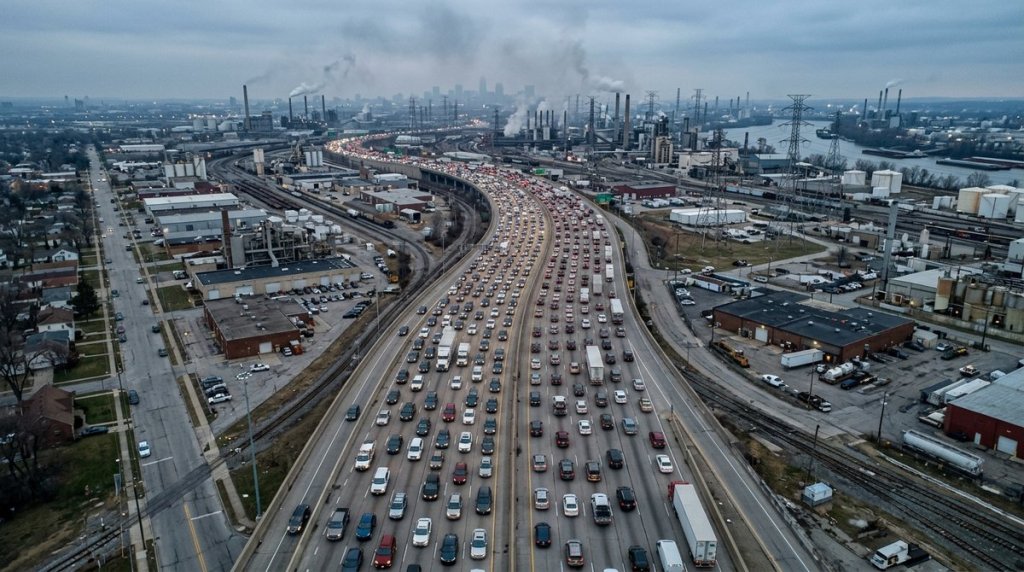
The roads Americans drive on are about to get a whole lot dirtier, at least in terms of what comes out of the tailpipe. The Trump administration has moved aggressively to roll back the clean car rules designed to cut climate-warming emissions from the transportation sector, which remains the single largest source of greenhouse gas pollution in the United States. These rollbacks are not a minor tweak to the margins. They represent a fundamental shift in how the federal government treats vehicle emissions, fuel economy, and the role the auto industry plays in the country’s climate future.
Transportation accounted for 28 percent of total U.S. greenhouse gas emissions in 2022, according to the U.S. Environmental Protection Agency. Cars and light-duty trucks alone make up the majority of that share. The rules now being dismantled were carefully constructed, over years of rulemaking, to chip away at that number. Stripping them out does not just affect climate math; it affects air quality in cities, fuel costs for working families, and the long-term competitiveness of U.S. automakers who had already started retooling their factories around cleaner vehicles.
What rules are actually being rolled back

The EPA, under the Biden administration, finalized two major sets of rules in 2024. One tightened tailpipe emissions standards for light-duty and medium-duty vehicles through model year 2032. The other set greenhouse gas limits for heavy-duty trucks and buses. Together, those rules were projected to cut billions of tons of CO2 from the U.S. vehicle fleet over the coming decade.
The Trump administration’s EPA has begun the process of weakening or rescinding both. The light-duty rule had been framed by the previous administration as a de facto electric vehicle mandate because meeting the targets would require automakers to shift a significant portion of sales toward zero-emission vehicles. The current EPA appears to agree, or at least is using that argument as political cover to pull back.
Separately, California’s longstanding authority to set its own, stricter vehicle emissions standards has come under direct attack. Seventeen other states follow California’s standards. If the federal government succeeds in stripping that waiver, it eliminates one of the most powerful state-level levers for clean vehicle adoption in the country. The Trump EPA’s broader decision to stop emissions tracking fits the same pattern: reduce the accountability infrastructure so rollbacks are harder to measure and challenge.
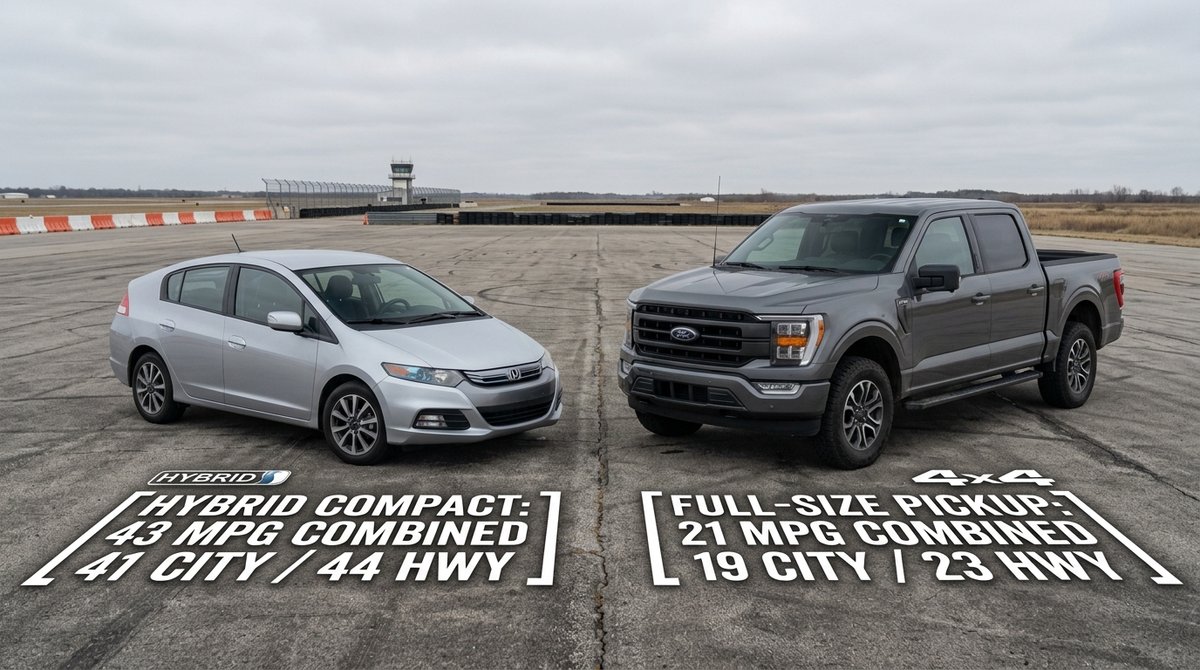
Fuel economy standards, administered by the National Highway Traffic Safety Administration, are also on the chopping block. The Corporate Average Fuel Economy program, known as CAFE, requires automakers to hit fleet-wide mileage targets. Rolling those back means automakers face less pressure to phase out gas-guzzling models, which translates directly into higher lifetime fuel costs for car buyers and more carbon in the atmosphere.
The numbers behind the emissions at stake

The EPA’s own regulatory impact analysis for the 2024 light-duty vehicle rule projected it would avoid approximately 7.3 billion metric tons of CO2-equivalent emissions through 2055. That is roughly comparable to eliminating a year and a half of total U.S. greenhouse gas output. Key figures from EPA and IEA sources put the U.S. vehicle sector in context:
- Transportation was the largest single sector for U.S. greenhouse gas emissions in 2022, at 28 percent of total national emissions (U.S. EPA, Inventory of U.S. Greenhouse Gas Emissions and Sinks, 2024).
- Light-duty vehicles accounted for approximately 57 percent of transportation sector emissions in 2022 (U.S. EPA, 2024).
- The IEA estimated in 2023 that road transport globally accounted for about 16 percent of total energy-related CO2 emissions (IEA, CO2 Emissions in 2023).
- The U.S. was the second largest national source of transport-related CO2 globally as of 2022, behind China (IEA, 2023).
The administration’s counterargument leans heavily on economic costs. The auto industry and some unions have argued that the pace of transition toward electric vehicles creates real risks for manufacturing jobs and supply chains. Those concerns are not invented. But economists and climate researchers have consistently found that the long-term costs of delayed climate action far outweigh the short-term adjustment costs of cleaner vehicle standards. As the scientific community has warned loudly, systematic dismantling of the regulatory infrastructure that supports climate policy creates compounding damage that is very hard to undo.
How this compares to previous federal vehicle standards
The table below compares key phases of federal vehicle emissions and fuel economy policy, using figures from U.S. EPA and NHTSA rulemaking records.
| Policy Era | Key Standard / Action | Source |
|---|---|---|
| Obama administration (2012) | Finalized CAFE standards targeting 54.5 mpg fleet average by 2025 | NHTSA / EPA joint rulemaking |
| First Trump administration (2020) | SAFE Vehicles Rule reduced 2025 target to approximately 40 mpg; revoked California waiver | EPA / NHTSA SAFE Vehicles Rule, 2020 |
| Biden administration (2024) | Finalized GHG standards through MY 2032; reinstated California waiver; projected 7.3 billion metric tons CO2 avoided | EPA final rule, March 2024 |
| Second Trump administration (2025) | Initiated rollback of 2024 GHG standards; moved to revoke California waiver again; weakened CAFE trajectory | EPA and NHTSA regulatory filings, 2025 |
The back-and-forth visible in that table reflects a deeper problem with how the U.S. has handled vehicle emissions policy. Every time standards are set, challenged, and reset, automakers face uncertainty that makes long-term investment planning harder. The administration frames its rollback as relief for industry, but many major automakers had already committed billions to EV platforms and would prefer regulatory stability over this kind of whiplash. For more on how energy policy reversals play out in practice, it is worth reading about the downstream effects of abandoning joint climate action.
Roger Rogoff and the broader pattern of dismissals
The clean car rollback does not exist in isolation. It is part of a pattern the current administration has followed across multiple agencies. The Roger Rogoff trump administration dismissal, which drew attention in early 2025, was one of several high-profile removals of career officials seen as standing in the way of deregulatory goals. When experienced regulators are pushed out, the technical knowledge base that underlies rigorous rulemaking goes with them. That matters enormously for rules as technically complex as vehicle emissions standards, which depend on deep expertise in engineering modeling, air quality science, and economic analysis.
Similar patterns have emerged at the EPA itself, where staff scientists and policy analysts have departed in significant numbers. This echoes the broader warning that more than 1,900 scientists have raised about the damage to U.S. scientific capacity under the current administration. The Rogoff dismissal became a symbol, for many observers, of how personnel decisions are being used to shape policy outcomes without going through formal rulemaking at all.
What this means for climate goals and everyday drivers
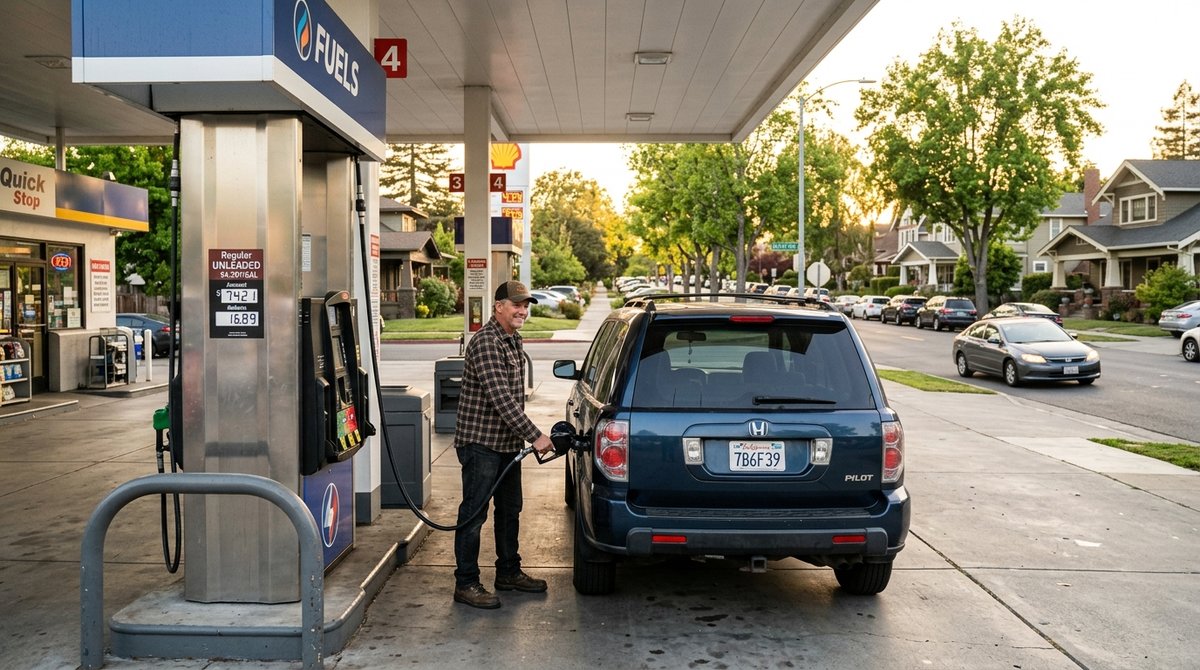
For people who drive, the immediate effects are somewhat counterintuitive. Weaker fuel economy standards mean automakers are less required to offer fuel-efficient vehicles, which generally costs drivers more at the pump over time. The EPA has estimated that strong fuel economy standards save the average new vehicle buyer thousands of dollars in lifetime fuel costs. Rolling them back shifts money from consumers’ pockets to oil companies’ revenues.
For U.S. climate commitments, the picture is even bleaker. The country’s nationally determined contribution under the Paris Agreement called for cutting greenhouse gas emissions 50 to 52 percent below 2005 levels by 2030. Transportation emissions reductions were central to hitting that target. Gutting vehicle standards makes that goal mathematically unreachable without compensating action somewhere else, and there is no credible plan for that compensation in the current policy environment.
The global context matters too. While the U.S. retreats from clean vehicle standards, the European Union, China, and others are tightening theirs. That has long-term consequences for where the auto industry’s center of gravity lands, where battery supply chains develop, and which countries end up owning the manufacturing base for the vehicles that will dominate roads in 2040 and beyond.
Frequently asked questions about clean car rules and the 2025 rollback
What are clean car rules and why do they matter?
Clean car rules are federal regulations that set limits on greenhouse gas emissions and fuel economy for new vehicles sold in the U.S. They matter because transportation is the largest single source of U.S. greenhouse gas emissions. Stronger standards reduce carbon pollution, improve air quality, and lower fuel costs for drivers over the life of a vehicle.
Which specific rules is the Trump administration targeting in 2025?
- The EPA’s 2024 greenhouse gas emissions standards for light-duty and medium-duty vehicles through model year 2032.
- The EPA’s 2024 greenhouse gas rule for heavy-duty trucks and buses.
- California’s Clean Air Act waiver, which allows the state and 17 others to set stricter standards than federal minimums.
- The CAFE fuel economy trajectory set under the Biden administration by NHTSA.
How much CO2 could be lost by rolling back these standards?
The EPA’s regulatory impact analysis for the 2024 light-duty vehicle rule projected avoidance of approximately 7.3 billion metric tons of CO2-equivalent emissions through 2055. Rolling back that rule eliminates the regulatory mechanism driving those reductions, though actual outcomes will depend on how far the rollback goes and whether state-level rules survive legal challenges.
What does the California waiver rollback mean for other states?
Under the Clean Air Act, California has authority to set vehicle emissions standards stricter than the federal baseline, and other states can adopt California’s standards. If that waiver is revoked and survives legal challenge, roughly 17 states plus the District of Columbia would lose the ability to require cleaner vehicles, significantly reducing market pressure on automakers.
Does rolling back emissions standards save money for car buyers?
Some vehicle models might carry lower upfront prices if manufacturers face less pressure to invest in efficiency technology. But the EPA has consistently found that fuel economy standards save consumers significantly more in lifetime fuel costs than any short-term vehicle price effect. Weaker standards generally benefit oil producers more than car buyers.
How does this affect U.S. climate commitments?
The U.S. committed under the Paris Agreement to cut greenhouse gas emissions 50 to 52 percent below 2005 levels by 2030. Transportation reductions were a core part of achieving that target. Eliminating vehicle emissions standards without replacement policies makes that goal unreachable on the current trajectory.
Sources
- U.S. Environmental Protection Agency. (2024). Inventory of U.S. Greenhouse Gas Emissions and Sinks: 1990-2022. https://www.epa.gov/ghgemissions/inventory-us-greenhouse-gas-emissions-and-sinks-1990-2022
- U.S. Environmental Protection Agency. (2024). Multi-Pollutant Emissions Standards for Model Years 2027 and Later Light-Duty and Medium-Duty Vehicles: Final Rule Regulatory Impact Analysis. https://www.epa.gov/system/files/documents/2024-03/420r24004.pdf
- International Energy Agency. (2024). CO2 Emissions in 2023. https://www.iea.org/reports/co2-emissions-in-2023
- U.S. EPA and NHTSA. (2020). The Safer Affordable Fuel-Efficient (SAFE) Vehicles Rule for Model Years 2021-2026 Passenger Cars and Light Trucks. [Federal Register Vol. 85, No. 84]
- U.S. Department of State. (2021). The United States of America Nationally Determined Contribution. https://www4.unfccc.int/sites/NDCStaging/Pages/Party.aspx?party=USA
- U.S. EPA. (2024). Greenhouse Gas Standards and Water Vapor Emissions for Heavy-Duty Vehicles: Phase 3 Final Rule. https://www.epa.gov/regulations-emissions-vehicles-and-engines/final-rule-greenhouse-gas-standards-and-water-vapor
This article is for informational purposes only.
Reference: https://www.theguardian.com/us-news/2026/sep/28/trump-administration-slashes-clean-car-rules


Dr. Alexander Tabibi is an entrepreneur, investor, and advocate for sustainable innovation with a deep commitment to leveraging technology for environmental and social good. As a thought leader at the intersection of business and sustainability, Dr. Tabibi brings a strategic vision to Green.org, helping guide its mission to inspire global climate awareness and actionable change.
With a background in both medicine and business, Dr. Tabibi combines analytical rigor with entrepreneurial insight.