


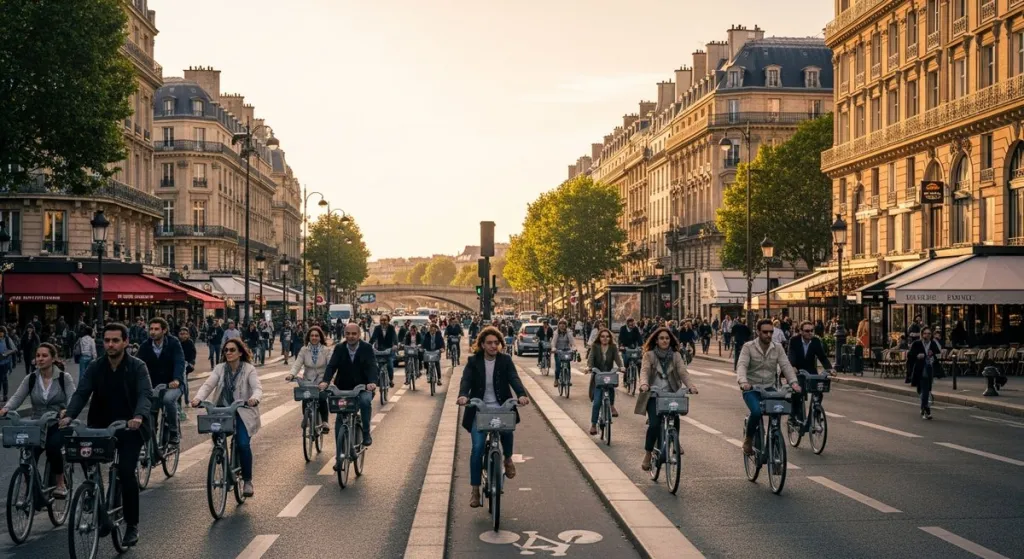


Paris (my second favorite city) used to be a city where cars ruled and the beautiful boulevards were choked with traffic, the air was thick with exhaust, and finding a parking space felt like a competitive sport.
But walk through the French capital today and something feels fundamentally different. Bike lanes have appeared on streets that once belonged entirely to vehicles. The Seine riverbanks, which were motorways just a decade ago, are now parks and promenades. Children cycle to school. Tourists explore by Vélib’ rather than taxi.
The Paris cycling transformation is one of the most dramatic urban reinventions of the 21st century – and the rest of the world is paying close attention. Most importantly this didn’t all happen by accident – but because of political will, sustained investment, and a clear vision for what a liveable city should look like. It’s worth understanding how they did it, and what other cities can learn from the experience.
Contents
- 1 The turning point: when Paris decided enough was enough
- 2 Building the infrastructure: Paris bike lanes and the hard work behind them
- 3 Car-free streets in Paris: from symbolic gestures to structural change
- 4 The Vélib’ effect: how public bike sharing changed daily behaviour
- 5 What the rest of Europe can learn from Paris
- 6 The challenges that remain
- 7 Frequently asked questions about Paris cycling transformation
- 7.1 How much has cycling increased in Paris?
- 7.2 How many kilometres of bike lanes does Paris have?
- 7.3 What is the Paris Plan Vélo?
- 7.4 What happened to the Voie Georges Pompidou?
- 7.5 How does Vélib’ work and how much does it cost?
- 7.6 Has Paris actually reduced car traffic?
- 7.7 Which other European cities are leading in cycling infrastructure?
- 7.8 Is cycling in Paris safe?
- 7.9 Share this:
The turning point: when Paris decided enough was enough
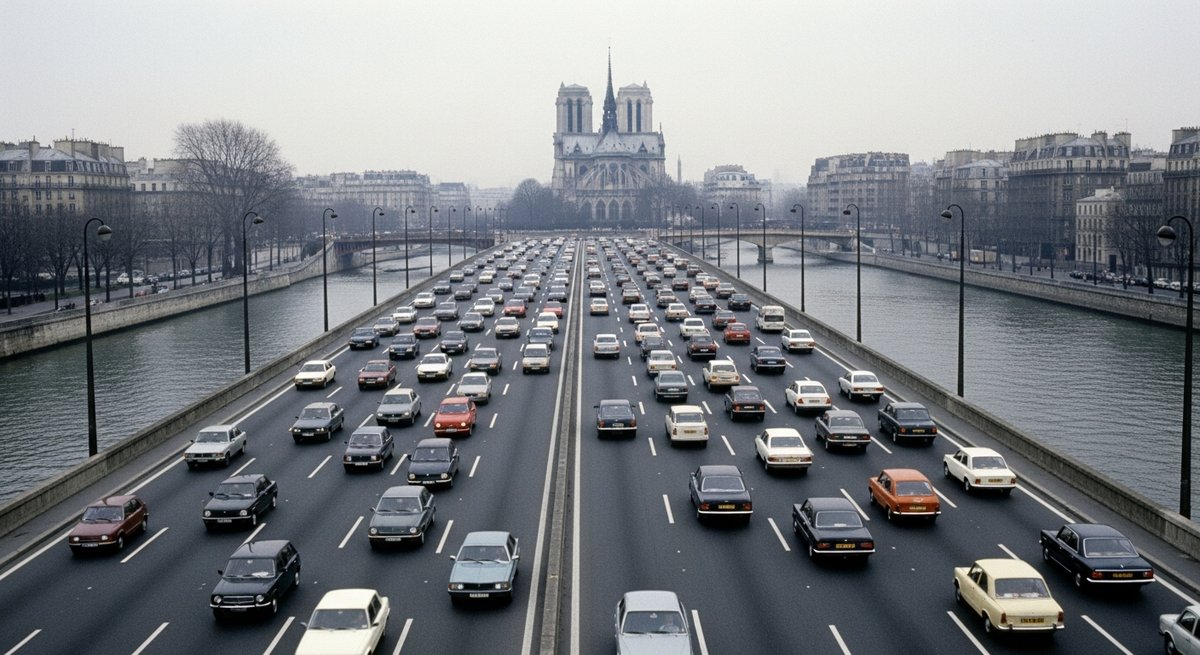
For most of the 20th century, Paris followed the same trajectory as every other major Western city. Post-war urban planning prioritised cars. Motorways cut through neighbourhoods. The famous Voie Georges Pompidou – a dual carriageway running along the Left Bank of the Seine – was opened in 1967 and eventually carried over 43,000 vehicles a day. The city was designed around movement by car, and it showed.
The shift began slowly in the early 2000s, but it accelerated sharply after Anne Hidalgo became mayor in 2014. Her administration didn’t just tweak the margins; it pursued a wholesale rethinking of how Parisians move through their city. Under her leadership, the city committed to a “Paris en Selle” (Paris in the Saddle) cycling plan and later the Plan Vélo, promising 1,000 kilometres of cycling infrastructure by 2026.
The political framing mattered. Rather than positioning cycling as a niche green issue, the city sold it as a quality-of-life upgrade for everyone. Less noise, cleaner air, more space for people to actually enjoy the city they live in. Anne Hidalgo’s approach to sustainable urban leadership became a model for mayors across Europe, proving that ambitious climate policy and genuine public popularity are not mutually exclusive.
Building the infrastructure: Paris bike lanes and the hard work behind them

Creating cycling infrastructure at scale is not just a question of painting lines on roads. It requires removing car lanes, reducing parking, redesigning junctions, and sometimes triggering serious political pushback from residents and businesses who rely on their cars. Paris did all of this, and kept going even when the complaints were loud.
The city’s network of Réseau Express Vélo (REV) – the cycling equivalent of express metro lines – became the backbone of the new system. These are wide, protected, physically separated bike lanes running along major arterial routes. Not the narrow, door-zone paths that cyclists in other cities know too well. Actual infrastructure where a parent with a cargo bike feels safe.
Key corridors were transformed. The Rue de Rivoli, which runs past the Louvre and along the north side of the city centre, lost its car lanes and became a cycling thoroughfare. The Pont de Sully, crossing the Seine in the east of the city, was redesigned to prioritise bikes and pedestrians. Junction redesigns across the city reduced the notorious danger points where cyclists were most at risk.
By 2023, Paris had over 1,000 kilometres of cycling infrastructure. Cycling levels in the city had more than doubled compared to pre-pandemic figures, with some major routes seeing four to five times as many cyclists as a decade earlier.
Car-free streets in Paris: from symbolic gestures to structural change

The reclamation of street space from cars didn’t stop at bike lanes. Paris has gone further than almost any comparable European capital in restricting car access to central areas and converting former roads into public space.
The most striking example is the Voie Georges Pompidou. In 2016, after years of debate, the city permanently closed it to traffic and converted it into a riverside park. What had been a motorway is now a place where people picnic, jog, and watch the Seine. It sounds simple. It took a decade of political fighting to make it happen.
The city has also expanded its “Paris en Commun” neighbourhood zones, calming traffic across residential areas, reducing through-routes, and making it practically easier to get around by bike or on foot than by car. The 2024 Paris Olympics accelerated some of these changes further – the city used the event as an opportunity to deliver infrastructure upgrades that might otherwise have taken years. The green transportation technology showcased at the Paris Olympics demonstrated what can happen when a city treats a major event as a catalyst for lasting sustainable change rather than a temporary show.
Paris has also introduced significantly higher parking charges for SUVs in the city centre, following a public referendum in 2024 where residents voted to triple the hourly rate for large vehicles. It’s the kind of policy that would be politically explosive in most places. In Paris, it passed. That tells you something about how far public attitudes have shifted.
The Vélib’ effect: how public bike sharing changed daily behaviour
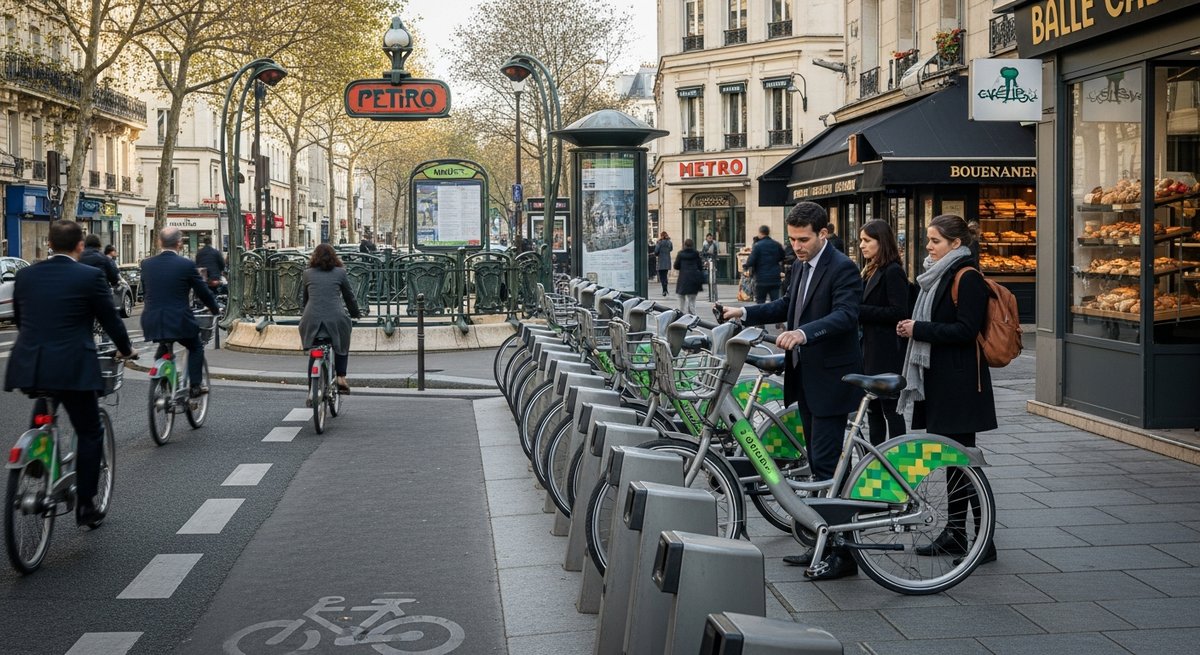
Infrastructure alone doesn’t change behaviour. People also need a low-friction way to actually get on a bike, especially in a city where not everyone has space to store one at home or wants to worry about theft. That’s where Vélib’ – Paris’s public bike share scheme – has been quietly transformative.
Launched in 2007, Vélib’ started as a docked, pedal-only system and has evolved into a hybrid network of standard bikes and e-bikes distributed across thousands of stations throughout the city and its inner suburbs. Today there are around 20,000 bikes in the network. The e-bikes in particular have been a game changer – they’ve brought cycling within reach of people who live further out, who are older, or who simply don’t fancy arriving at work in a sweat.
Subscription costs are deliberately kept low. An annual pass costs less than a monthly metro pass. The system is imperfect – broken bikes, full docking stations, uneven coverage in outer arrondissements – but the scale and accessibility of Vélib’ has made cycling a genuine everyday transport option rather than a hobbyist pursuit.
Usage data tells the story. Vélib’ now records over 400,000 journeys on a typical weekday. Many of those journeys would previously have been made by car, metro, or on foot. The modal shift is real and measurable.
What the rest of Europe can learn from Paris
Paris is not alone in making this kind of investment. Amsterdam and Copenhagen have had world-class cycling infrastructure for decades. Seville transformed itself from a virtually car-dominant city to one with a comprehensive cycling network in under three years during the late 2000s. Ghent, Bordeaux, and Zurich have all made serious commitments to sustainable city transport.
But Paris matters in a particular way because of its scale, its political visibility, and the fact that it did this as a retrofit rather than building from scratch. Paris is a dense, complex, historically layered city with strong car culture and real political resistance to change. If Paris can do it, the argument that “our city is different” gets harder to sustain.
The lessons are fairly consistent across all these examples. Protected infrastructure, not just paint. Integration with public transport. Affordable and accessible bike share. Consistent political leadership over multiple terms. And treating cycling not as a concession to a green fringe, but as a core component of how the city works.
The broader sustainability push in Paris has been visible across multiple domains. From the way the city approached the Olympics to long-term planning around air quality and urban heat, the cycling transformation sits within a wider commitment to reshaping what living in a major city looks and feels like. The improvements to air quality across Paris are directly linked to reduced car traffic – and cycling infrastructure is one of the most cost-effective levers the city has pulled to get there.
The challenges that remain
It would be dishonest to present the Paris cycling transformation as a finished success story. There are real tensions and ongoing problems.
Cycling infrastructure is still unevenly distributed. The inner arrondissements have been transformed; the outer suburbs and peripheral communes are much patchier. Commuters travelling in from the banlieue often face long, uncomfortable final legs on roads that haven’t been touched. Equity matters here – if cycling is only easy for people who live close to the centre, it reinforces rather than challenges existing urban inequality.
Conflict between road users remains a live issue. The speed and density of cycling has increased sharply on many routes, and interactions between cyclists, delivery drivers, and pedestrians are not always smooth. The culture of cycling – norms around signalling, speed, pedestrian priority – is still developing.
And political continuity is never guaranteed. The progress made under Hidalgo reflects a particular political moment. Future administrations could slow investment, retreat on car restrictions, or simply deprioritise cycling in favour of other concerns. The infrastructure itself is harder to reverse, but policy direction matters.
None of that should diminish what Paris has achieved. It’s a genuine transformation, built on real political courage and sustained investment over more than a decade. The streets look different. The air is cleaner. The sound of the city has changed. That’s not nothing – it’s actually everything.
Frequently asked questions about Paris cycling transformation
How much has cycling increased in Paris?
Cycling levels in Paris have more than doubled since 2019, with some major routes recording four to five times as many daily cyclists as a decade ago. Vélib’ alone records over 400,000 journeys on a typical weekday.
How many kilometres of bike lanes does Paris have?
By 2023, Paris had surpassed 1,000 kilometres of cycling infrastructure, including the dedicated Réseau Express Vélo (REV) corridors that provide physically separated, high-capacity routes across the city.
What is the Paris Plan Vélo?
The Plan Vélo is the city’s long-term cycling investment plan, originally targeting 1,000 kilometres of infrastructure by 2026. It covers new lanes, junction redesigns, additional bike parking, and integration with the broader public transport network.
What happened to the Voie Georges Pompidou?
The Voie Georges Pompidou was a major dual carriageway running along the Left Bank of the Seine. In 2016, after years of political debate, the city permanently closed it to motor traffic and converted it into a riverside park and pedestrian promenade.
How does Vélib’ work and how much does it cost?
- Vélib’ is Paris’s public bike share scheme, with around 20,000 bikes (standard and electric) at thousands of docking stations across the city.
- An annual subscription costs less than a monthly metro pass, making it accessible to regular commuters.
- E-bikes are available at a slightly higher per-minute rate but have significantly expanded the scheme’s reach for longer journeys and less experienced cyclists.
Has Paris actually reduced car traffic?
Yes. Motor traffic in central Paris has fallen significantly over the past decade, driven by a combination of restricted access, reduced parking, higher charges for large vehicles, and improved alternatives including cycling and public transport upgrades.
Which other European cities are leading in cycling infrastructure?
- Amsterdam and Copenhagen have long been considered global leaders in cycling culture and infrastructure.
- Seville built a comprehensive network rapidly in the late 2000s.
- Ghent, Bordeaux, and Zurich have all invested heavily in bike-friendly urban design in recent years.
- Paris is notable for achieving rapid change in a large, historically car-dependent city.
Is cycling in Paris safe?
Safety has improved substantially as infrastructure has expanded. Protected, physically separated lanes reduce the most serious risks. However, cycling safety varies across the city – central routes with dedicated infrastructure are significantly safer than outer areas with less provision. Conflict at junctions and between cyclists and pedestrians remains an area for ongoing improvement.
Sources: City of Paris Plan Vélo documentation; Vélib’ Metropole usage data; European Cyclists’ Federation infrastructure reports; Observatory of Mobility in Paris (OMNIL); Institut Paris Region transport studies.
This article is for informational purposes only.


Dr. Alexander Tabibi is an entrepreneur, investor, and advocate for sustainable innovation with a deep commitment to leveraging technology for environmental and social good. As a thought leader at the intersection of business and sustainability, Dr. Tabibi brings a strategic vision to Green.org, helping guide its mission to inspire global climate awareness and actionable change.
With a background in both medicine and business, Dr. Tabibi combines analytical rigor with entrepreneurial insight.