


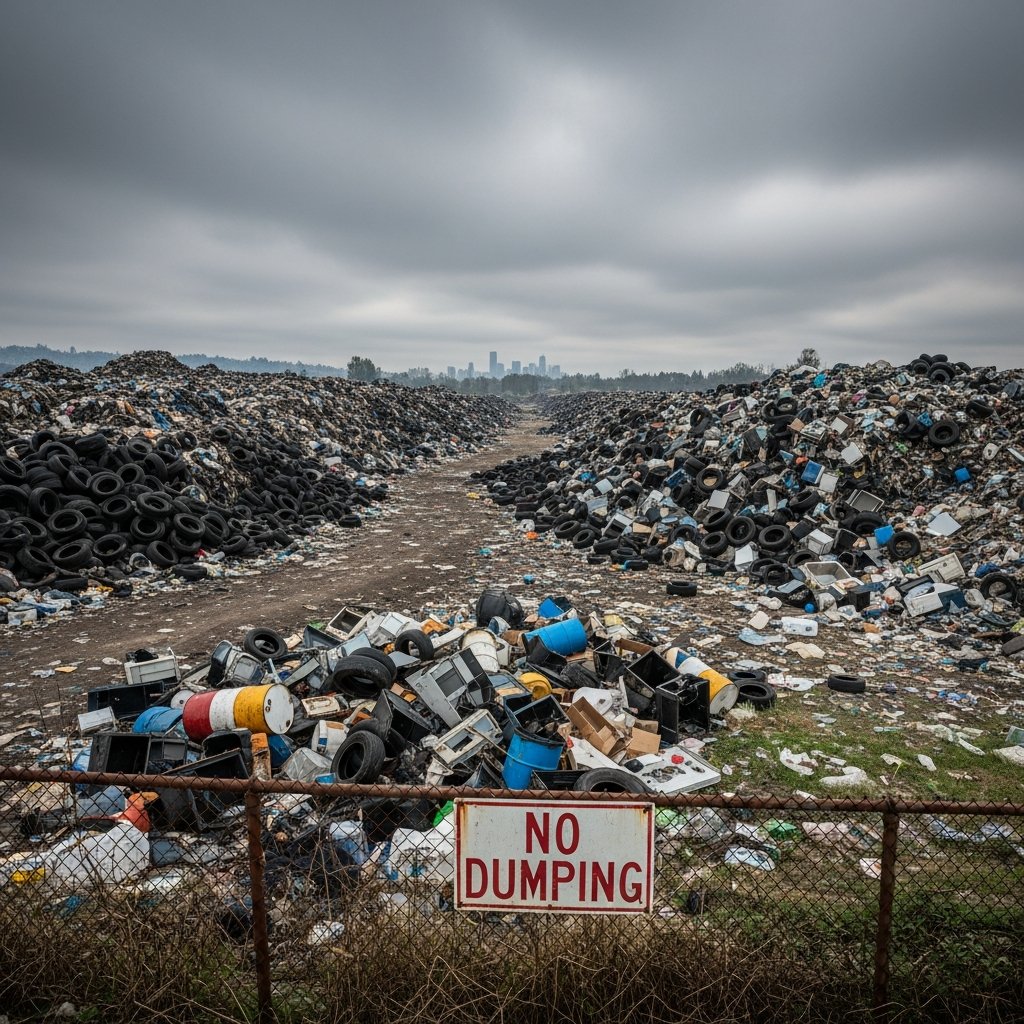
There’s a stretch of road outside almost every major city where the guardrails are lined with old mattresses, broken televisions, and bags of construction debris. You’ve probably driven past something like it. Maybe you’ve even wondered who does this – and why nobody seems to stop it. The answer is uncomfortable: in many places, illegal dumping is winning. Not because people don’t care, but because the systems designed to stop it are underfunded, understaffed, and increasingly outpaced by the scale of the problem.
Illegal dumping isn’t just an eyesore. It’s a genuine environmental crisis that poisons groundwater, destroys ecosystems, and disproportionately harms low-income communities. And yet, enforcement remains frustratingly weak in most parts of the world. Fines go uncollected. Cases go uninvestigated. Repeat offenders walk away clean. Understanding why this keeps happening – and what it actually costs us – is the first step toward demanding something better.
Contents
- 1 The Scale of the Problem Is Bigger Than Most People Realize
- 2 Why Enforcement Keeps Failing
- 3 What Illegal Dumping Actually Does to the Environment
- 4 Can Technology and Community Action Fill the Gap?
- 5 What Stronger Enforcement Actually Looks Like
- 6 Frequently Asked Questions About Illegal Dumping and Enforcement
The Scale of the Problem Is Bigger Than Most People Realize

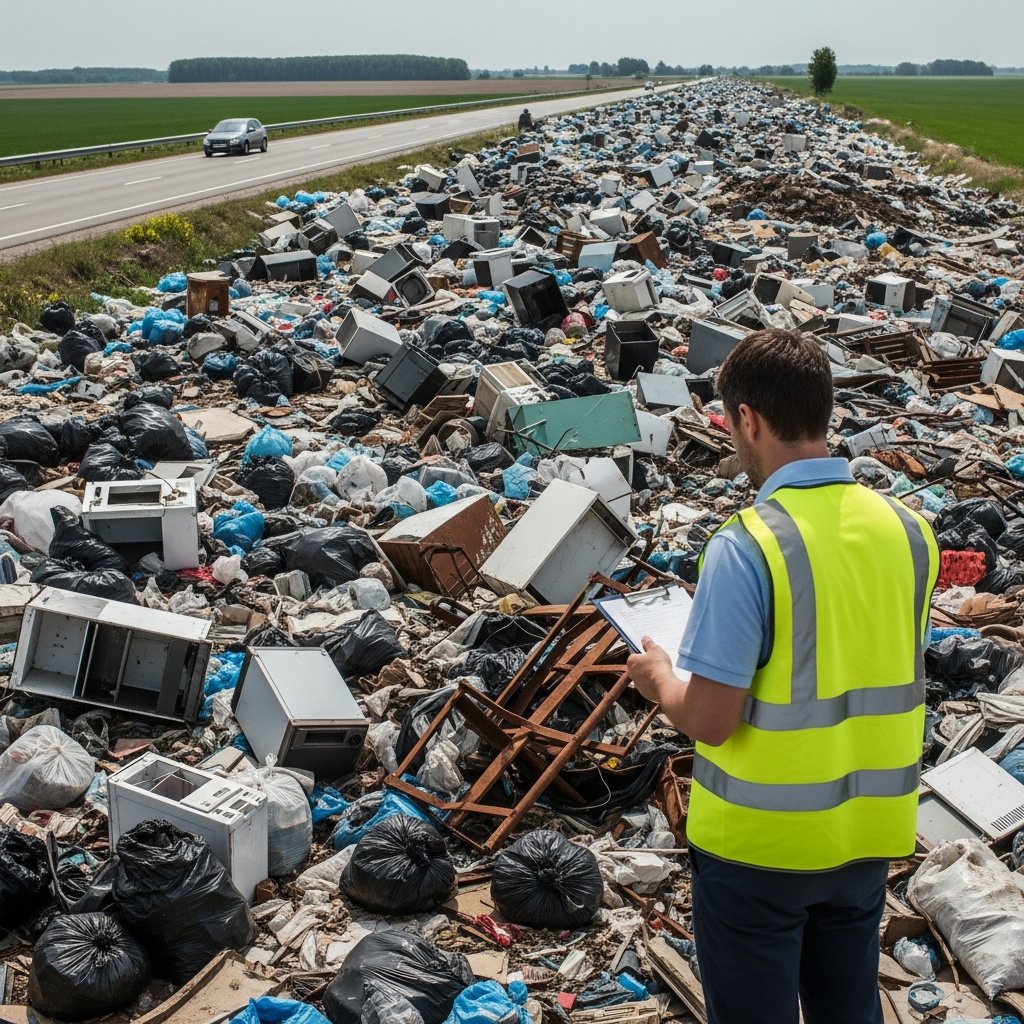
Let’s start with some numbers that tend to shock people. In the United States alone, the Environmental Protection Agency estimates that illegal dumping costs municipalities hundreds of millions of dollars annually in cleanup costs. Some studies put the figure closer to $1.1 billion per year when you factor in everything from labor to legal fees to environmental remediation.
Globally, the picture is even grimmer. The United Nations estimates that roughly 40% of the world’s waste is disposed of illegally or unsustainably. That’s not a rounding error. That’s nearly half of all waste generated on the planet going somewhere it shouldn’t – rivers, forests, roadsides, abandoned lots, and sometimes directly into communities.
Illegal waste disposal isn’t limited to fly-tippers tossing a couch on a back road. Large-scale illegal dumping operations run by organized criminal networks have been documented across Europe, Asia, and Latin America. Toxic industrial waste, medical refuse, electronic waste loaded with heavy metals – all of it finding its way into the environment because someone calculated that the risk of getting caught was lower than the cost of proper disposal.
Why Enforcement Keeps Failing

Weak environmental enforcement isn’t an accident. It’s a product of political choices, budget priorities, and institutional indifference. Environmental agencies in most countries are chronically underfunded relative to the scope of their mandate. A small regional office might be responsible for monitoring hundreds of square miles of land with a staff of a dozen people and vehicles that need new tires.
Waste dumping penalty laws also vary wildly, and many of them simply don’t hurt enough. In some U.S. states, a first offense for illegal dumping carries a fine of a few hundred dollars. When disposal fees at licensed facilities can run into thousands of dollars for large loads, the math isn’t complicated. People and companies make a rational – if deeply irresponsible – calculation that dumping illegally is cheaper than doing the right thing.
Prosecution is another weak link. Even when violators are caught, cases often stall in overloaded court systems where environmental crimes aren’t prioritized. Local prosecutors may lack the expertise or motivation to pursue complex cases involving corporate waste disposal. And the evidentiary standards for proving who dumped what, where, and when can be surprisingly difficult to meet without dedicated investigative resources.
There’s also a political dimension. Enforcement tends to be weakest in communities with the least political power. Environmental crime enforcement failure is not randomly distributed. It clusters in rural areas, low-income neighborhoods, and communities of color – places where residents may not have the connections or resources to demand accountability. This is environmental injustice playing out in real time, on real streets.
What Illegal Dumping Actually Does to the Environment
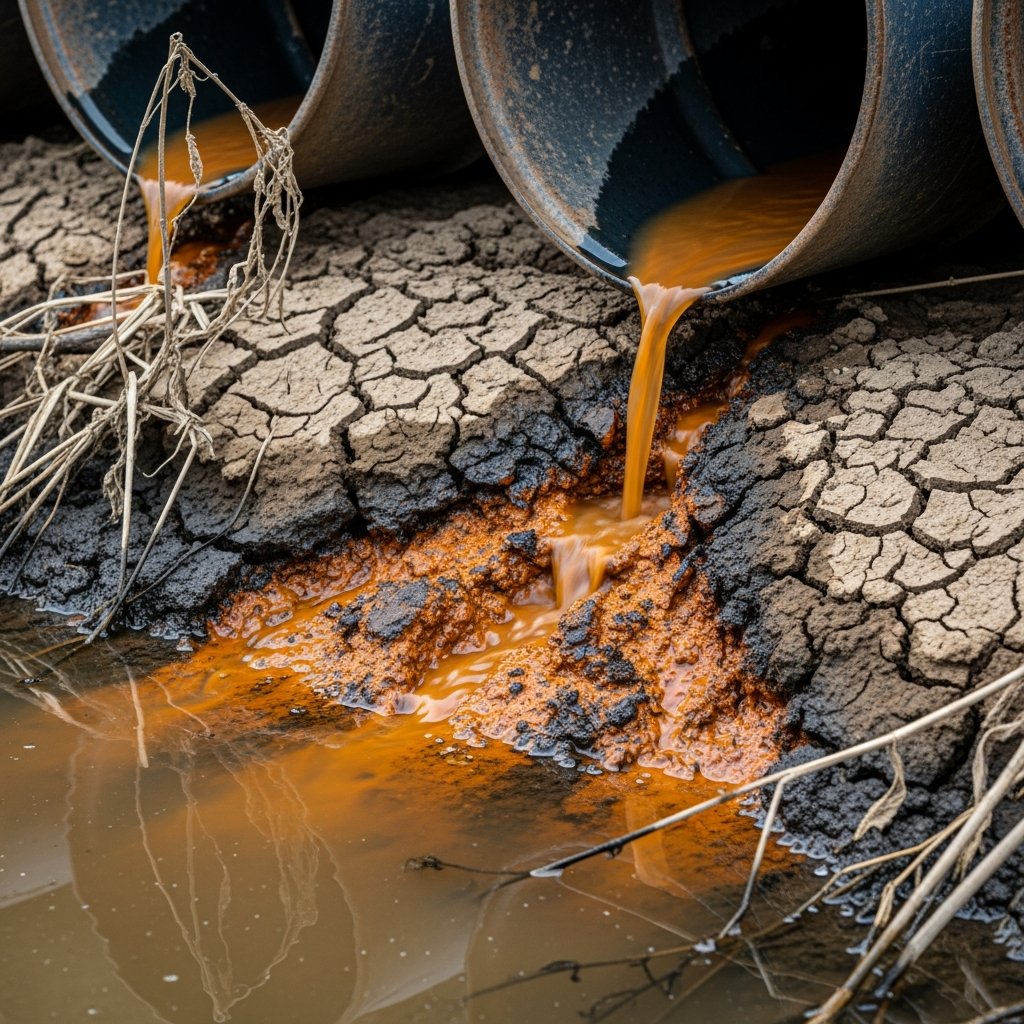
The illegal dumping environmental impact is severe and often long-lasting. Dumped waste can leach chemicals into soil and groundwater for decades. A single illegally dumped barrel of industrial solvent can contaminate a water supply serving thousands of people. Heavy metals from electronics and batteries accumulate in ecosystems, moving up the food chain and eventually into human bodies.
It also contributes to broader environmental instability in ways that aren’t always obvious. Illegal dumping in and around waterways can block natural drainage, worsening flood risk. Waste dumped in forests destroys habitat and can introduce invasive species. The cumulative effect of millions of small illegal disposal events adds up to something very large and very damaging.
This connects directly to other environmental crises we’re already tracking. The destruction caused by flash floods in Pakistan illustrates how environmental neglect compounds natural disasters – when landscapes are already degraded by pollution and improper waste management, they become far less resilient to extreme weather events. Similarly, deforestation linked to half a million deaths over two decades shows that environmental crimes don’t just damage ecosystems; they kill people. Illegal dumping belongs in the same conversation.
Can Technology and Community Action Fill the Gap?

Given that government enforcement is struggling, some communities have turned to technology and grassroots organizing to fight back. Surveillance cameras, drone monitoring, and AI-powered analysis of satellite imagery are all being tested in various cities and regions to detect illegal dumping sites faster and identify repeat offenders.
Community reporting platforms have also shown real promise. Apps that let residents photograph and report illegal dumping directly to local authorities have increased report rates dramatically in cities that have adopted them. When residents feel like their reports will actually lead to action, they use these tools. The challenge is closing the loop so that action actually follows.
Some municipalities have experimented with extended producer responsibility programs, which shift cleanup costs onto manufacturers of products frequently found in illegal dumps. If a company makes electronics or appliances, making them financially responsible for end-of-life disposal creates an incentive to build better collection systems. It’s not a silver bullet, but it addresses the root economic logic that makes illegal dumping attractive in the first place.
Advocacy and public awareness campaigns also matter more than people tend to credit. Public shaming of corporate violators, transparent publication of penalty records, and sustained media attention have all pushed enforcement agencies to take illegal dumping solutions more seriously in specific cases. The inequity embedded in environmental policy is a thread worth pulling – because the communities most harmed by weak enforcement are often the same ones bearing disproportionate shares of other environmental burdens too.
What Stronger Enforcement Actually Looks Like
Fixing illegal dumping enforcement isn’t mysterious. It requires political will and adequate resources, which are harder to generate than they sound, but the policy toolkit is reasonably well understood.
Higher and consistently enforced penalties change behavior. Several European countries have moved toward fines that scale with the severity of the dump and the financial capacity of the violator – meaning a large corporation faces consequences that actually sting rather than a token fine that gets written off as a cost of doing business.
Dedicated environmental crime units within law enforcement, staffed with officers who have the training and tools to investigate complex cases, have proven effective where they exist. Coordination between local, regional, and national authorities matters too, especially for large-scale operations that cross jurisdictions. And transparent public reporting of enforcement actions – who got caught, what they did, what happened to them – creates accountability and deters future violations.
Reporting illegal dumping needs to be easier and more clearly effective. If residents don’t believe their reports lead anywhere, they stop making them. Building that trust requires agencies to close the feedback loop consistently.
Frequently Asked Questions About Illegal Dumping and Enforcement
Understanding Illegal Dumping and Its Impacts
What counts as illegal dumping?
Illegal dumping refers to disposing of waste outside of permitted facilities or areas. It includes:
- Leaving household waste on roadsides, in parks, or on private land without permission
- Disposing of industrial or commercial waste without proper permits
- Abandoning vehicles, appliances, or construction debris in unauthorized locations
- Dumping toxic or hazardous materials in uncontrolled environments
How serious are the environmental consequences of illegal waste disposal?
The consequences can be severe and long-lasting. Illegal dumping contaminates soil and groundwater, destroys wildlife habitat, contributes to flooding, and introduces toxic substances into ecosystems and food chains. Cleanup can take years and cost enormous sums, with some contaminated sites remaining hazardous for decades.
Who is most affected by illegal dumping?
Research consistently shows that illegal dumping and weak enforcement are concentrated in low-income communities and communities of color. These areas often lack the political influence to demand rapid cleanup and strong enforcement, making environmental injustice a central dimension of this issue.
Taking Action and Improving Enforcement
How can I report illegal dumping?
- Contact your local municipal waste authority or environmental agency
- Use city or regional reporting apps if available in your area
- Document the site with photos and location data before reporting
- Report large-scale or hazardous dumps to state or national environmental agencies
- Contact local law enforcement if the dump appears to involve criminal activity
Why don’t existing waste dumping penalty laws stop illegal dumping?
In many jurisdictions, penalties are simply too low to deter dumping, especially when compared to legitimate disposal costs. Inconsistent enforcement, overburdened courts, and limited investigative resources mean that many violators are never prosecuted even when caught. Raising penalties and ensuring consistent enforcement are both necessary changes.
What are the most effective illegal dumping solutions?
- Scaled financial penalties that reflect the severity of the offense
- Dedicated environmental crime enforcement units
- Community reporting systems with visible follow-through
- Extended producer responsibility programs
- Surveillance technology in high-risk areas
- Public transparency around enforcement actions and outcomes
Can communities make a difference even without strong government enforcement?
Yes, though it requires sustained effort. Community organizing, media pressure, and legal advocacy have successfully pushed agencies to act in specific cases. Resident-led monitoring and reporting programs have also led to real improvements in some cities. Community action works best when paired with advocacy for structural policy change rather than as a replacement for it.
The honest answer to the question at the top is yes – in many places, right now, illegal dumping is winning. But that’s not a permanent condition. It’s a choice being made every budget cycle, every election, every time an enforcement agency is told to make do with less. Changing it starts with taking the problem as seriously as the damage it causes – and refusing to accept that poisoned land and contaminated water are just the price of doing business somewhere else.
This article is for informational purposes only.


Dr. Alexander Tabibi is an entrepreneur, investor, and advocate for sustainable innovation with a deep commitment to leveraging technology for environmental and social good. As a thought leader at the intersection of business and sustainability, Dr. Tabibi brings a strategic vision to Green.org, helping guide its mission to inspire global climate awareness and actionable change.
With a background in both medicine and business, Dr. Tabibi combines analytical rigor with entrepreneurial insight.