


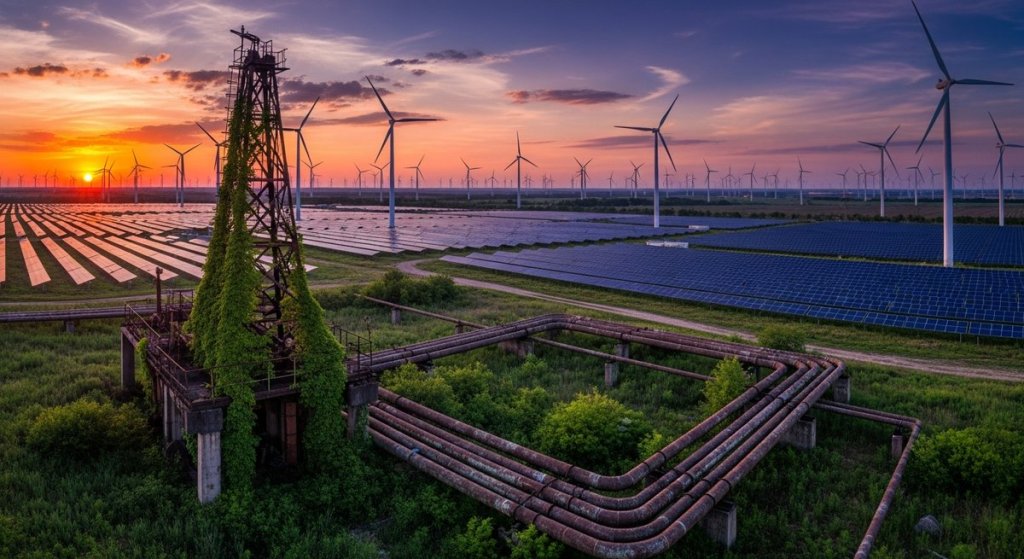
Tony Seba doesn’t do subtle predictions and frankly for well over a decade the founder of RethinkX has been telling the world exactly what was going to happen with clean energy and electric vehicles.
Now, heading into the second half of 2026, his think tank has released updates that go far beyond solar panels and EV adoption curves – and the message is stark, urgent, and backed by a track record most analysts would kill for: get out of fossil fuels now, because the window is closing faster than almost anyone realizes.
This isn’t fringe commentary. More than ten governments worldwide have quietly based their future energy planning on Seba’s frameworks. That alone should tell you something.
The S-curve Nobody Believed (Until It Happened)


A decade ago, Seba was pointing to S-curve adoption patterns in solar, wind, and electric vehicles while most of the energy establishment was laughing. He predicted that cost curves would collapse faster than any mainstream model projected, and that once adoption crossed certain thresholds, the disruption would become self-reinforcing and unstoppable.
He was right. Solar and wind are now the cheapest sources of new electricity generation in history. EV adoption is accelerating past the early-majority phase in multiple major markets. Battery costs have fallen more than 97% over the past fifteen years. Solar has now outpaced fossil fuels in new American energy generation for the first time since World War II, a milestone that once seemed generations away.
So when Seba and RethinkX release new forecasts, serious investors, governments, and energy planners pay attention. And what they’re saying in 2026 makes the original S-curve story look modest by comparison.
SWB Superpower: The Physics of Nearly Free Energy
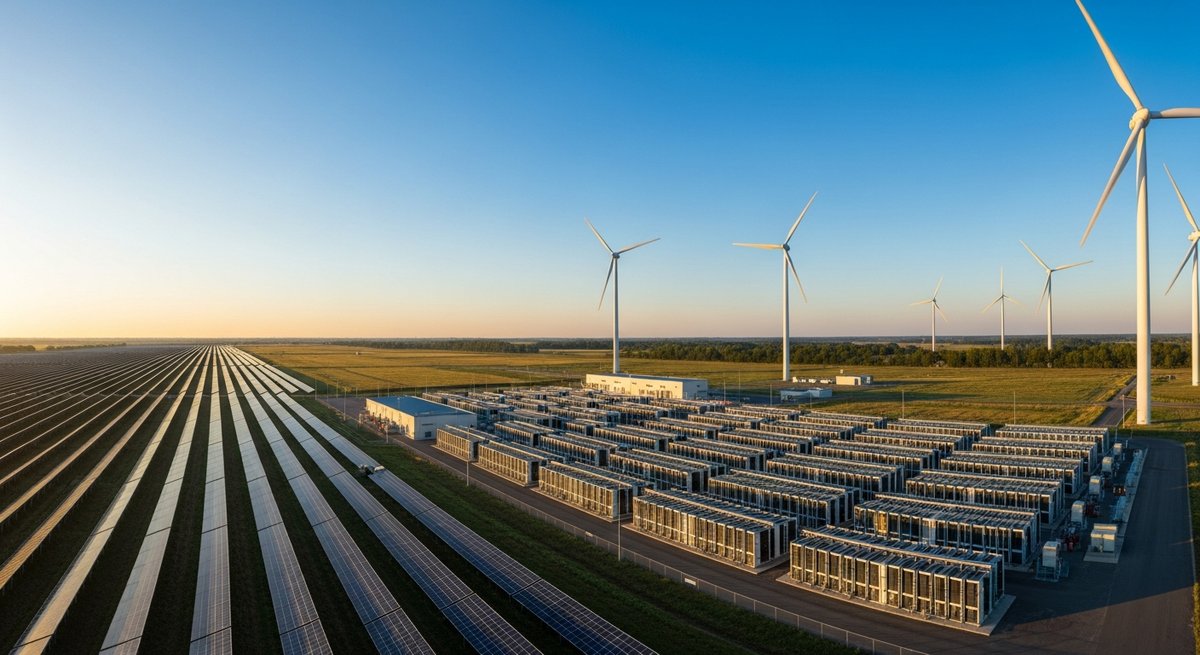
The core concept driving Seba’s latest framework is something RethinkX calls “stellar energy,” built on what they describe as the SWB model – solar, wind, and batteries. The underlying math is surprisingly simple once you see it.
To build a reliable 100% renewable grid, you have two basic options. You can install enormous, expensive battery storage to cover you through the darkest, least windy weeks of winter. Or you can deliberately overbuild your generation capacity – by three or four times what you technically need on an average day.
That sounds wasteful at first. But because solar panels have become so extraordinarily cheap, overbuilding turns out to be vastly more economical than building storage for worst-case scenarios. The catch is obvious: if you overbuild by that much to handle winter, then on a bright, windy spring day you generate a staggering surplus. Seba calls this “SW superpower,” and the key insight is that the marginal cost of that surplus electricity is effectively zero. There is no fuel to burn. Sunlight doesn’t send an invoice.
We’re talking about potentially free electricity for large portions of the year. Not subsidized, not discounted – genuinely near-zero marginal cost. For anyone who still thinks fossil fuel infrastructure represents a sound long-term investment, that is a direct threat to the entire business model. You can read more about why Seba has earned his reputation as the Nostradamus of clean energy technology and why his forecasting methodology has repeatedly outperformed conventional models.
What Nearly Free Energy Does to the Global Economy
Here’s where the story shifts from an energy transition narrative into something genuinely civilization-scale. Energy is the base input cost of everything. Manufacturing, agriculture, transportation, water treatment – all of it runs on energy. When that input cost approaches zero, the downstream effects are extraordinary.
Take desalination as one example. The reason we face fresh water scarcity in large parts of the world isn’t that the planet is running out of water. The problem has always been the massive energy cost of converting salt water into something drinkable. When electricity becomes effectively free, desalination becomes effectively free. The same logic applies to heavy industry – metal smelting, refining, materials processing. When the marginal cost of energy collapses, the cost of manufactured goods collapses alongside it.
Several governments, particularly in regions with exceptional solar and wind resources, have already started planning around this reality. They’re positioning themselves as hydrogen production superpowers, which only makes sense if you assume they’ll have so much surplus electricity they’ll need somewhere to put it. Green hydrogen is already tracking toward a $30.6 billion market by 2030, and the math gets even more compelling as energy costs fall further.
Sodium Batteries and the Final Nail in the ICE Coffin

Years ago, Seba predicted that electric vehicles would cross price parity with internal combustion engine cars – not just cheaper to run, but cheaper to purchase outright. That crossover is happening right now in multiple markets. And a new battery chemistry is about to accelerate it beyond anything the legacy auto industry can respond to in time.
Sodium-ion batteries are arriving faster than most analysts expected. Companies like CATL are already deploying sodium batteries in production EVs in 2026. BYD is ramping sodium production. The chemistry is built around sodium – essentially salt – abundant everywhere, requiring none of the scarce minerals that create supply chain vulnerabilities in lithium systems.
Sodium batteries handle cold weather well, offer exceptional cycle life, and are inherently safer than many lithium chemistries. Most importantly, at scale they’re estimated to cost roughly half what lithium iron phosphate cells cost today. For grid storage, home batteries, and especially the lower-end vehicle market, that changes every calculation.
Seba predicted new battery chemistries would begin disrupting lithium dominance by 2027. That’s essentially what’s happening, right on schedule. A traditional combustion car simply cannot compete on purchase price with an EV running on a half-price battery. Legacy automakers are not facing a tough competitive challenge. They’re facing a physics problem.
Labor, Healthcare, and the Broader Disruption Picture
RethinkX’s 2026 forecasts don’t stop at energy and transportation. Seba argues that the convergence of artificial intelligence with humanoid robotics will do to human labor costs what solar and wind did to energy costs: drive them toward zero over the next fifteen to twenty years. Agriculture, construction, manufacturing, and logistics are all facing structural transformation.
The healthcare prediction is equally significant. In a major April 2026 report, RethinkX argued that GLP-1 drugs represent not just a weight management breakthrough but the first serious crack in the biological code of addiction and metabolic disease. Seba sees this as the opening move in a shift from reactive sick care to proactive biological optimization, with average lifespans potentially exceeding 100 years by 2050.
Whether you find those healthcare predictions fully convincing or not, the energy and transportation forecasts are tracking precisely. And cheap renewable energy is already measurably flattening global emissions in ways that even recent optimistic projections didn’t fully anticipate.
Why Fossil Fuel Investment Is Fool’s Gold Right Now
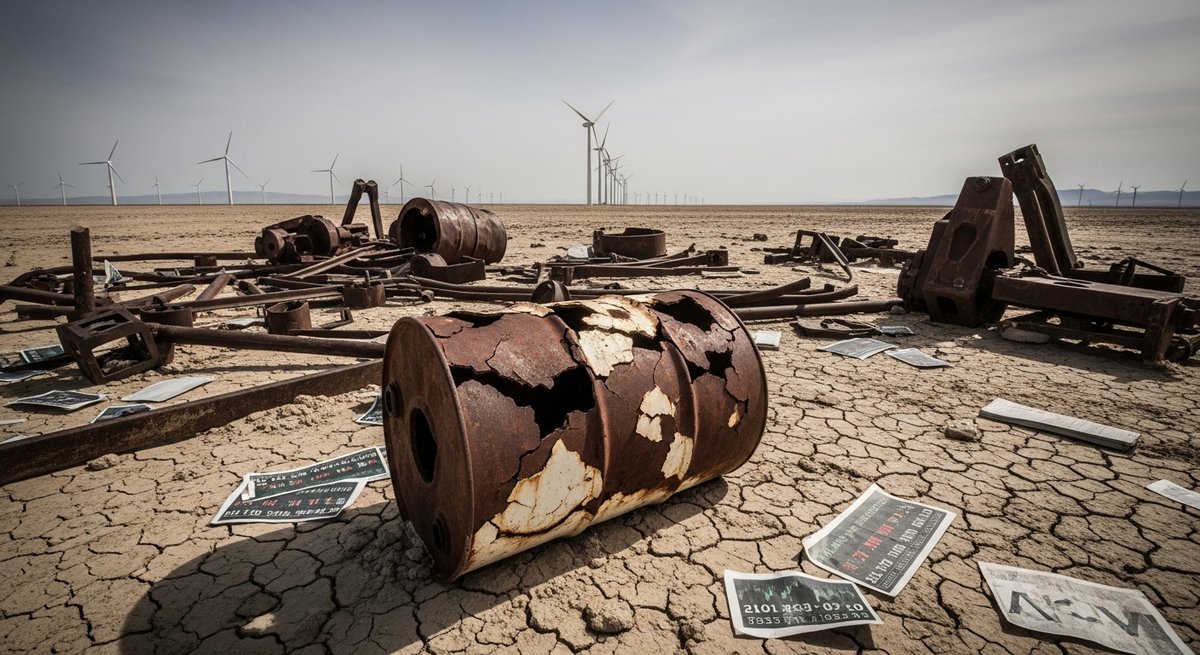
Fossil fuel assets may look attractive right now. Prices are stable, dividends exist, and some balance sheets look healthy. But Seba’s framework, backed by governments that have already made their planning decisions accordingly, suggests that stranded asset risk is no longer a distant theoretical concern. It is arriving on a visible timeline.
When the marginal cost of energy from solar and wind approaches zero, any fuel-based generation becomes uncompetitive by definition. No amount of operational efficiency can compete with free. The S-curves are accelerating, not plateauing. Every year of delay in divesting from fossil fuel exposure means greater risk, not less. The transition isn’t just a story about environmental responsibility – it’s about basic economic survival in a rapidly restructuring global energy market.
Frequently Asked Questions About Tony Seba’s 2026 Fossil Fuel Warning
What is Tony Seba’s core 2026 prediction about fossil fuels?
Seba and RethinkX argue that the fossil fuel era is entering terminal decline, driven by near-zero marginal cost renewable energy. The combination of overbuilt solar and wind capacity, cheap battery storage, and new chemistries like sodium-ion makes fuel-based energy economically unviable on a shortening timeline. His core advice is to exit fossil fuel investments before stranded asset losses become unavoidable.
What is “SWB Superpower” and why does it matter?
SWB stands for solar, wind, and batteries. Seba’s model shows that overbuilding renewable generation capacity by three to four times average need is actually cheaper than building equivalent battery storage. The result is massive surplus electricity with a marginal cost near zero. This surplus is what makes green hydrogen economically viable and could eliminate water scarcity through cheap desalination.
How accurate have Tony Seba’s past predictions been?
- He correctly predicted the S-curve trajectory of EV adoption years before mainstream analysts accepted it.
- He forecast solar cost collapse ahead of consensus timelines, and it happened faster than most projections.
- He predicted battery cost declines that the industry initially dismissed as unrealistic.
- More than ten governments have based official future energy planning on his frameworks.
What role do sodium-ion batteries play in accelerating fossil fuel disruption?
Sodium-ion batteries use abundant, low-cost materials and are projected to cost roughly half the price of lithium iron phosphate cells at scale. They are entering commercial production in 2026, with multiple manufacturers ramping output. This makes EVs cheaper to produce upfront than combustion vehicles, eliminating the last major competitive argument for internal combustion engines.
Which regions does Seba see as best positioned for the clean energy transition?
Seba specifically highlights developing regions with strong solar and wind resources, including parts of Africa and the Caribbean, as candidates to become what he calls “stellar cities.” These regions can leapfrog legacy fossil fuel infrastructure entirely, similar to how developing nations skipped landline phones and went straight to mobile networks.
Is fossil fuel divestment a financially sound strategy right now?
Based on Seba’s framework and current market trajectory, yes. Fossil fuel assets carry growing stranded asset risk as renewable energy costs continue to fall. Short-term yield may appear attractive, but the structural economics are deteriorating rapidly. The transition timeline is shortening, not extending, and waiting for clearer signals may mean waiting until significant losses are already locked in.
Sources
- RethinkX 2026 Energy and Transportation Reports – rethinkx.com
- CATL Sodium Battery Deployment Announcements, 2026
- IEA Clean Energy Progress Report, 2024-2025
- BYD Sodium-Ion Production Updates, Q1-Q2 2026
- Green.org Editorial Research and Analysis


Dr. Alexander Tabibi is an entrepreneur, investor, and advocate for sustainable innovation with a deep commitment to leveraging technology for environmental and social good. As a thought leader at the intersection of business and sustainability, Dr. Tabibi brings a strategic vision to Green.org, helping guide its mission to inspire global climate awareness and actionable change.
With a background in both medicine and business, Dr. Tabibi combines analytical rigor with entrepreneurial insight.