


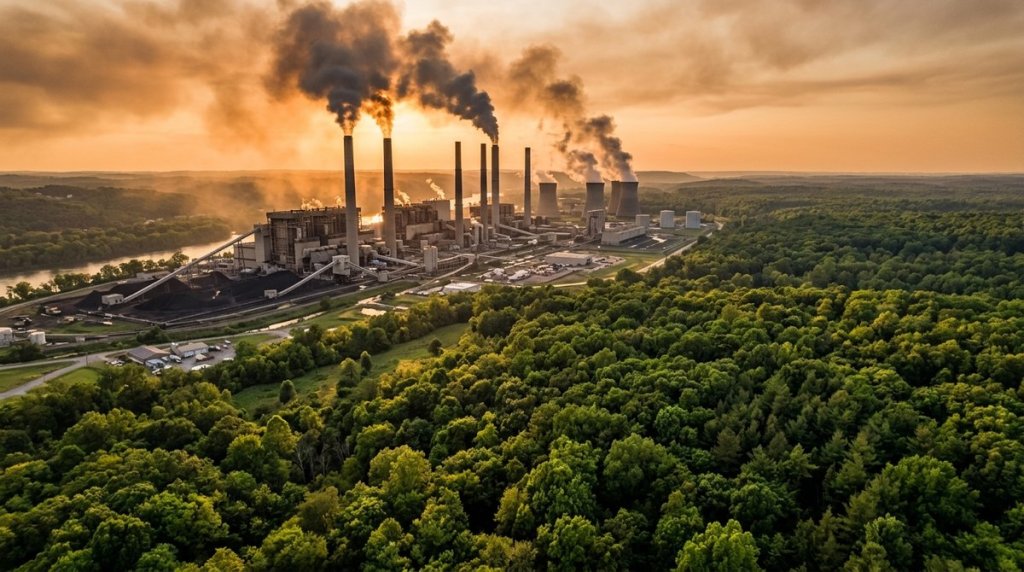
Global CO2 emissions have barely moved in over a decade. Yet atmospheric carbon dioxide just hit record highs. Those two facts sit in the same headline, and they seem to cancel each other out.
They don’t. The confusion is understandable, though, and it’s not harmless. Misread this story and you end up in one of two bad places: falsely optimistic (“we’ve solved it!”) or completely checked out (“nothing works, why bother?”). Neither reaction is accurate. The real picture is messier, more urgent, and honestly more interesting than either extreme.
The bathtub problem: why flatlining emissions still means rising CO2


Picture the atmosphere as a bathtub. Emissions are the tap.
For decades we kept cranking it open, pushing out more CO2 every year. Then around 2013, the growth rate started slowing. By 2024, total emissions had essentially plateaued.
That matters. Genuinely. But a tap left running at full blast still fills the tub, even if you’ve stopped turning it further. The water keeps rising regardless.
CO2 concentrations climb because we’re still releasing massive amounts every single year. Flat emissions are not zero emissions. The tub is still filling, just not accelerating quite as fast as before.
This distinction gets lost constantly in climate coverage. Some headlines trumpet progress on renewables. Others scream about record CO2 levels. Both are accurate. Both, without context, are misleading in different directions.
What “record CO2 levels” actually means in 2024
The concentration of CO2 in our atmosphere is now higher than at any point in several million years. The 2024 annual rise was one of the steepest jumps on record.
Some of that spike traces back to El Niño, the Pacific climate cycle that hammers tropical rainfall, ignites more wildfires, and starves land ecosystems of the conditions they need to absorb carbon. The 2023 to 2024 event was a strong one, and it pushed the numbers up hard.
Climate scientist Zeke Hausfather has modeled what CO2 concentrations would look like if emissions had continued rising at pre-2013 rates. The gap between that projection and where we actually are shows that human action has genuinely made a difference. Progress is real. It’s just nowhere near enough.
For a closer look at how CO2 levels connect to physical systems like river flow and regional water cycles, this piece on record high CO2 emissions linked to river flow disruptions adds useful context to the downstream effects of atmospheric carbon accumulation.
Carbon sinks are weakening, and that’s accelerating the problem
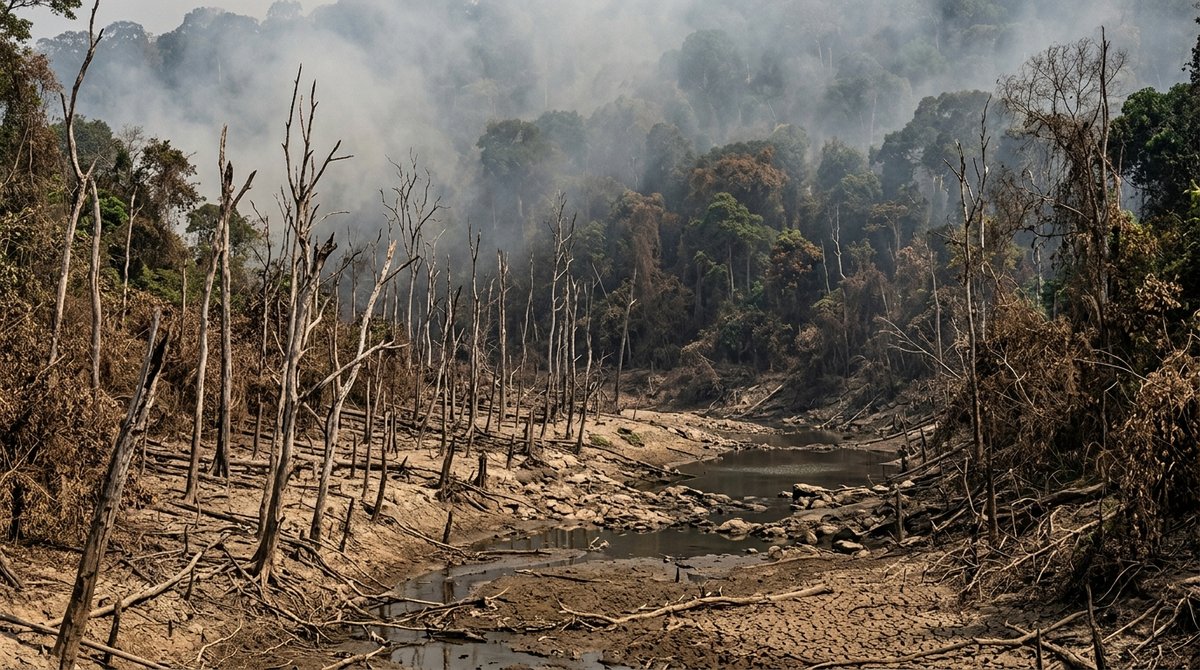
Not all the CO2 we emit stays in the atmosphere. Oceans and land ecosystems soak up roughly half of what we release each year, and that natural buffer has been extraordinary. Without it, we’d be in far worse shape right now.
But those sinks are under serious stress. As the planet warms, their capacity to absorb carbon is degrading. Since the 1960s, that weakening has left atmospheric CO2 running about 8% higher than it would be if the sinks were still pulling their full weight.
Some forest regions that used to be net carbon absorbers have flipped into net carbon sources. The Amazon, parts of boreal Canada, Siberian forests: all have shown this troubling pattern. Deforestation, drought, and fiercer wildfire seasons are doing the damage.
The oceans are getting squeezed too. Warmer water holds less dissolved CO2, and acidification is eroding the marine ecosystems that drive much of the ocean’s uptake capacity. Ocean temperatures reached another record high in 2025, a reminder that the systems we depend on for climate stability are themselves being destabilized.
This is a vicious cycle: more warming weakens the sinks, weaker sinks mean more warming. Breaking it requires cutting emissions far faster than we currently are.
Methane deserves its own conversation

CO2 tends to dominate the headlines, but methane is a major piece of the puzzle. Where CO2 accumulates over centuries, methane cycles out in around a decade. That might sound reassuring. It isn’t, really, because methane is far more potent as a greenhouse gas in the short term.
Methane levels are now higher than they’ve been for hundreds of thousands of years, and unlike CO2 they’re rising at an accelerating pace. Livestock agriculture, fossil fuel extraction, landfills, warming wetlands, thawing permafrost: the sources keep piling up. Initiatives like Google’s global methane emission mapping initiative represent exactly the kind of data infrastructure we need to track and cut these emissions at scale.
Why the emissions-vs-concentration confusion has real consequences
The gap between “emissions are flatlining” and “CO2 is surging” trips people up in two distinct ways.
First, it feeds a false sense of success. Renewables are genuinely booming. Brazil cut its Amazon deforestation rate roughly in half. Over 50 countries gathered at a global conference to discuss transitioning away from fossil fuels. These developments are worth celebrating. They also don’t mean we’re on track to limit warming to relatively safe levels. The carbon budget for 1.5 degrees Celsius is nearly exhausted, and the pace of the transition still falls far short of what the science demands. The piece on the urgency of the remaining carbon budget lays this out clearly.
Second, the confusion feeds despair. People who see CO2 still rising despite years of climate action can end up concluding that nothing works. But the bathtub analogy dismantles that logic: of course the water level is still rising while the tap is still open. The answer isn’t to give up; it’s to close the tap faster and unblock the drain.
What net zero actually requires
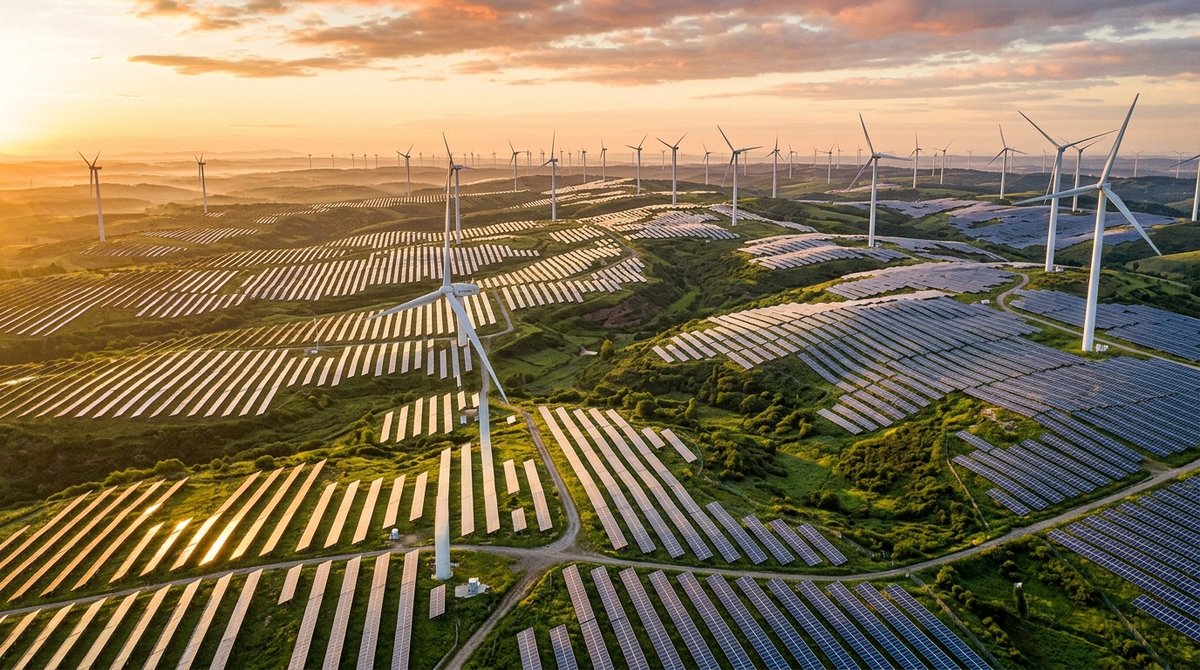
Getting atmospheric CO2 to stabilize means reaching net zero, where the amount we emit equals the amount being absorbed. We’re nowhere near that right now. Emissions have stopped growing, which is genuinely good news. But they need to fall, steeply and fast, while we simultaneously protect the natural carbon sinks that serve as our planetary safety net.
That means ending deforestation, not just slowing it. Protecting ocean ecosystems. Scaling carbon removal technologies alongside emissions reductions. And completing the full transition away from fossil fuels. Oceanic CO2 removal research is picking up speed, and that matters, but no single technology gets us there without slashing emissions at the source first. The tools exist. The question is speed and political will.
Frequently asked questions
Why CO2 keeps rising even when emissions flatten
If emissions have stopped growing, shouldn’t CO2 levels stabilize too?
Not immediately. CO2 concentrations reflect the cumulative buildup of decades of emissions. Billions of tonnes still pour into the atmosphere every year, even when the total isn’t climbing. Concentrations only stabilize when emissions reach net zero.
How much does El Niño affect CO2 levels?
Significantly in the short term. Strong El Niño years push atmospheric CO2 readings higher by reducing rainfall in tropical forests and warming ocean surfaces. The 2023 to 2024 event was strong enough to drive a record jump in the annual CO2 figures for that period.
Are carbon sinks still working?
- Oceans and land ecosystems still absorb around half of the CO2 humans emit each year, but that capacity is shrinking as warming intensifies.
- But their capacity is declining as warming intensifies, adding approximately 8% more CO2 to the atmosphere since the 1960s compared to fully functional sinks.
- Some forest regions have already flipped from sinks to sources.
What needs to happen to actually fix this
What does reaching net zero actually involve?
- Eliminating fossil fuel combustion across energy, transport, and industry.
- Halting and reversing deforestation globally.
- Scaling up natural and technological carbon removal to absorb residual emissions.
- Protecting ocean and wetland ecosystems that act as critical sinks.
Is the progress on renewables meaningful or just a distraction?
Both, honestly. Renewables expanding faster than at any point in history is genuinely important. But fossil fuel use hasn’t fallen fast enough to compensate, and total atmospheric CO2 keeps climbing.
Why does monitoring emissions matter so much?
Because you can’t cut what you can’t measure accurately. Detailed, independent emissions data tells policymakers where reductions are happening and whether carbon sink behavior is changing. Weakening scientific monitoring programs directly undermines climate action.
Can individual or national action make a real difference?
Yes, but context matters enormously. National policies and industrial transitions drive the largest shifts. Individual action matters most when it creates demand signals, builds political pressure, and compounds across communities.
Simple to state, hard to act on: we’ve made real progress, and it isn’t close to enough. The atmosphere doesn’t grade on a curve. CO2 levels reflect what we’ve collectively put up there over centuries, and they’ll only stabilize when we stop adding to them faster than nature can absorb them. That’s still a solvable problem. The window, though, keeps narrowing.
Sources: NOAA Global Monitoring Laboratory; Global Carbon Project 2023 Budget Report; Zeke Hausfather / Carbon Brief counterfactual emissions analysis; IPCC AR6 Working Group I (2021); Nature (2023), “Amazon forest carbon dynamics”; World Meteorological Organization Greenhouse Gas Bulletin.
This article is for informational purposes only.
Reference: https://www.youtube.com/watch?v=WlD2UN7gPmg


Dr. Alexander Tabibi is an entrepreneur, investor, and advocate for sustainable innovation with a deep commitment to leveraging technology for environmental and social good. As a thought leader at the intersection of business and sustainability, Dr. Tabibi brings a strategic vision to Green.org, helping guide its mission to inspire global climate awareness and actionable change.
With a background in both medicine and business, Dr. Tabibi combines analytical rigor with entrepreneurial insight.